11-Year-Old Finds 48-Million-Year-Old Turtle in Wyoming
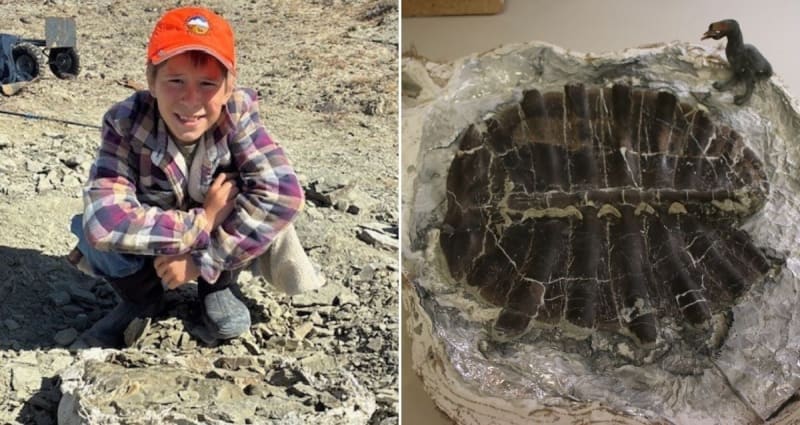
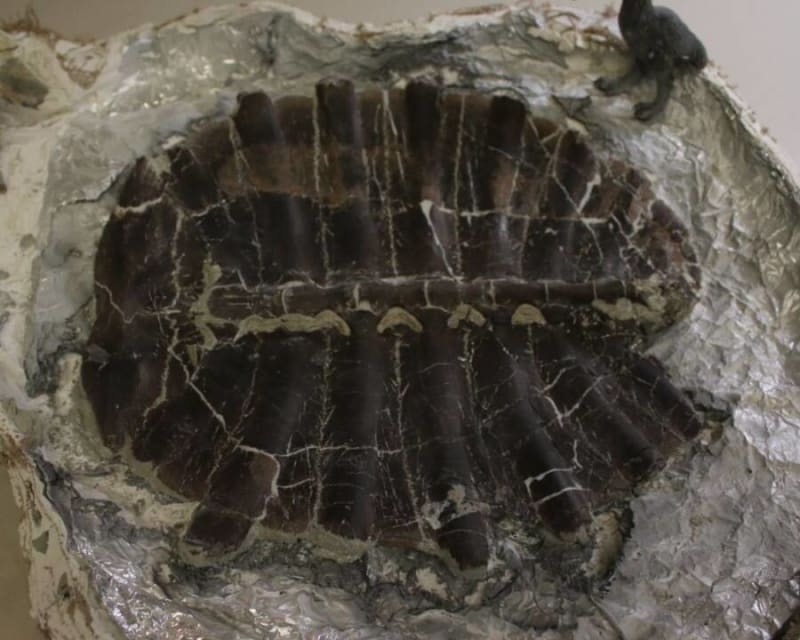
A young boy rock hunting with his grandparents discovered a nearly complete fossilized turtle shell from an era when Wyoming was a subtropical paradise. Paleontologists rewarded him by letting him help excavate the fossil and name it "Little Timmy."
Most kids find cool rocks on family trips. Touren Pope found a window into prehistoric Wyoming.
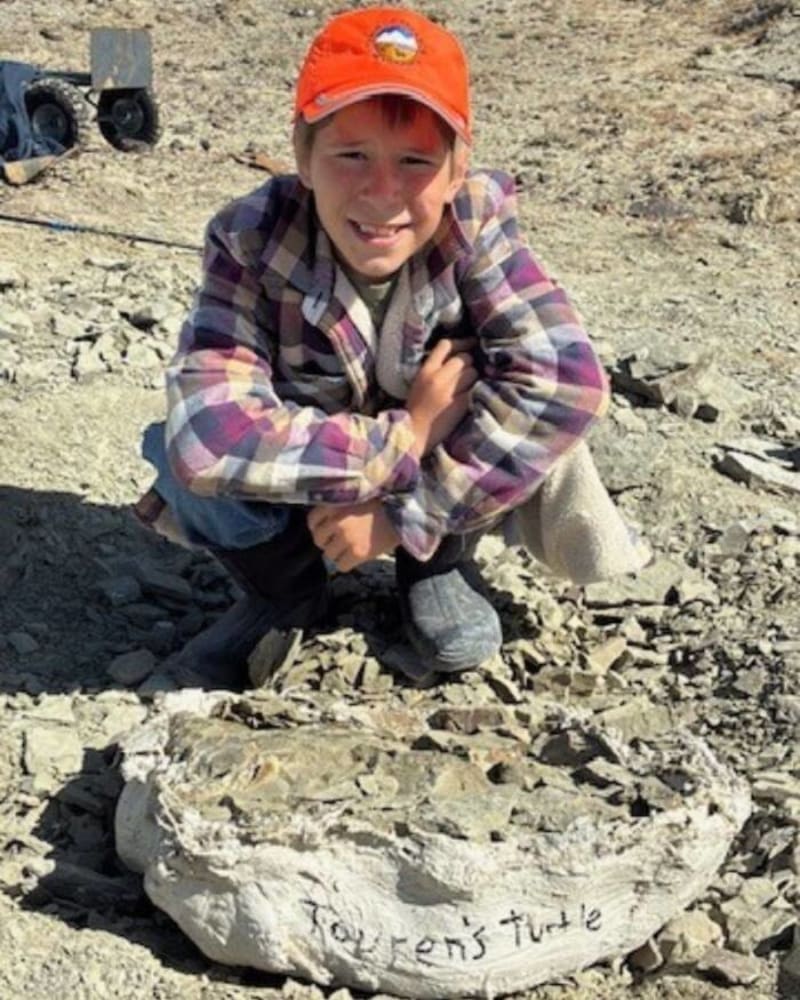
The 11-year-old from Nevada was visiting his grandparents in southwest Wyoming this year, hunting for quartz crystals on public land. While searching near some fossilized clams, Touren spotted an unusual rock formation jutting from the ground.
His grandparents, amateur geologists Tom and Patti Patterson, knew this wasn't an ordinary find. Instead of digging it up themselves, they contacted the Bureau of Land Management, who brought in professional paleontologists to investigate.
Within minutes of arriving at the site, experts confirmed Touren had discovered something remarkable: a nearly complete turtle shell dating back 48 million years. J.P. Cavigelli, a collections specialist at the Tate Geological Museum, explained that while shell fragments turn up occasionally, complete carapaces are rare. In his 21 years at the museum, this was only the fourth complete shell collected.
The fossil belongs to the Trionychidae family, soft-shelled turtles with leathery, flexible carapaces. The creature died during a time when Wyoming looked nothing like today's high desert landscape.
Back then, the region was hot and humid, crisscrossed by rivers and lakes. Crocodiles basked on muddy banks, monkeys climbed through trees, and various mammals roamed forests similar to the modern Carolinas. When the turtle died, sediment quickly covered its body, beginning a fossilization process that would preserve it for tens of millions of years.
Erosion eventually exposed the fossil at just the right moment. If Touren hadn't spotted it, the shell would have weathered away within years or even months.
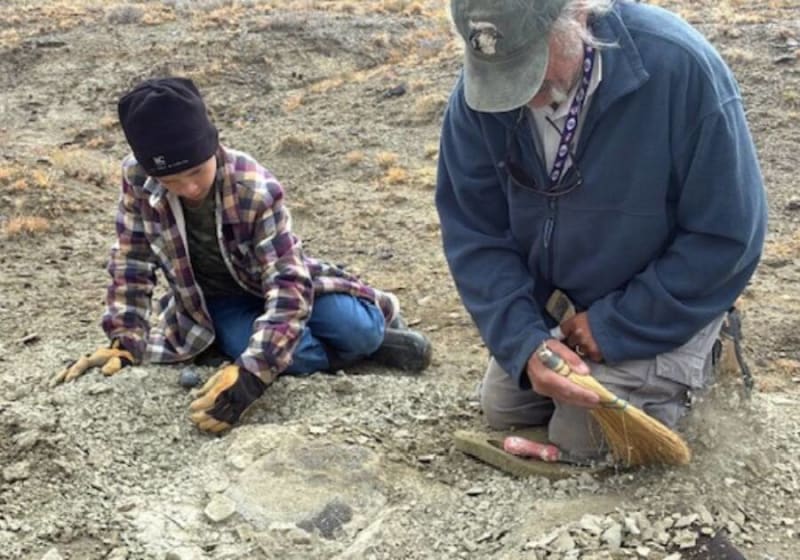
Paleontologists invited Touren to help excavate his discovery. He worked alongside professionals to carefully extract the rock containing the fossil, then helped carry it to their truck through three rest stops. "Then we had lunch, the best part," Touren recalled.
The team transported the fossil to Tate Geological Museum for cleaning and analysis. There, Touren got another honor: naming the ancient turtle. He chose "Little Timmy."
Sunny's Take
This story captures everything wonderful about curiosity and doing the right thing. Touren could have pocketed his find or tried digging it up himself. Instead, his family reported it to authorities, ensuring proper preservation and scientific study.
The Bureau of Land Management praised this decision, noting that the discovery "highlighted the role the public plays in protecting and responsibly reporting scientific resources found on public lands." For a kid who got hooked on paleontology after watching Jurassic World and fills notebooks with dinosaur facts, this real-life adventure beats any movie.
Researchers hope to display Little Timmy to the public soon, where the fossil will inspire future young scientists for generations to come.
More Images
Based on reporting by Google: fossil discovery
This story was written by BrightWire based on verified news reports.
Spread the positivity!
Share this good news with someone who needs it