
Afghanistan Canal Solar Project Saves Water and Powers Homes
A massive solar panel system designed for Afghanistan's new irrigation canal could generate enough electricity for thousands of homes while saving 445 million cubic meters of water over 25 years. The innovative design places panels over the canal to reduce evaporation in one of the world's most water-stressed regions.
Imagine solving two of the world's biggest problems with one elegant solution: clean energy and water conservation.
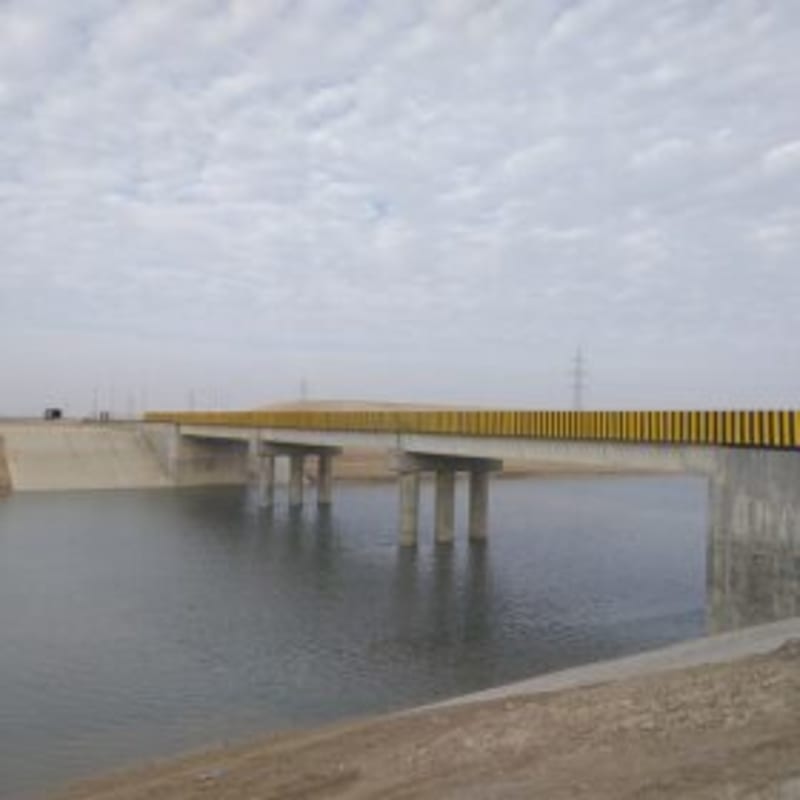
Researchers from Japan and Afghanistan have designed a groundbreaking solar power system for the Qush-Tepa Canal, a massive irrigation project currently under construction in northern Afghanistan. Instead of using scarce land, the 836-megawatt solar installation would sit directly over the water, generating electricity while preventing precious water from evaporating under the desert sun.
The numbers are staggering. The system could produce 1,465 gigawatt-hours of electricity annually, enough to power over 60,000 rural households in the region. At the same time, shading the canal would prevent 20% of water loss from evaporation, conserving roughly 445 million cubic meters over 25 years.
The Qush-Tepa Canal itself represents hope for the region. When completed in 2028, the 285-kilometer waterway will irrigate 550,000 hectares of farmland, bringing agriculture and stability to communities that desperately need both.
Lead researcher Hameedullah Zaheb calls the water savings as strategically important as the electricity generation itself. In a region where every drop counts, preventing evaporation delivers massive economic value estimated at $200 million over the project's lifetime.
The team developed a comprehensive framework called ITEEA (Integrated Techno-Economic-Environmental Assessment) to evaluate the system. This approach measures energy production, water conservation, land savings, and financial performance all together, recognizing that infrastructure in developing regions must serve multiple purposes simultaneously.
The design uses standard crystalline silicon solar panels tilted at optimal angles for maximum energy capture. The modular system can be adapted and scaled, making it transferable to similar projects across India, Pakistan, North and East Africa, and Southeast Asia.
The Ripple Effect
This dual-purpose infrastructure model could transform how water-stressed regions approach development. Countries facing both energy poverty and water scarcity no longer need to choose between precious resources.
The framework proves that infrastructure investments can multiply their impact when designed holistically. By preventing water loss while generating clean energy, canal-top solar systems deliver two essential services for the price of one installation.
The research team plans to extend their framework to other canal systems across Central and South Asia, potentially unlocking similar benefits for hundreds of millions of people living in resource-constrained regions.
With initial investment estimated at $1.08 billion, the system demonstrates positive economic returns under favorable conditions. The real-time monitoring built into the framework will allow continuous optimization as the technology proves itself in one of the world's most challenging environments.
One innovative project in Afghanistan shows how smart design can turn infrastructure into a multiplier for human flourishing.
More Images

Based on reporting by PV Magazine
This story was written by BrightWire based on verified news reports.
Spread the positivity! 🌟
Share this good news with someone who needs it
_1.png)

