AI Chatbots Could Help Diagnose Mental Health Conditions
Psychiatrists are developing AI tools that analyze voice patterns, facial expressions, and body movements to help diagnose mental illness more accurately. The technology could create personalized treatment plans and catch relapses before they become crises.
Mental health diagnosis might soon get a major upgrade thanks to artificial intelligence that spots patterns invisible to the human eye.
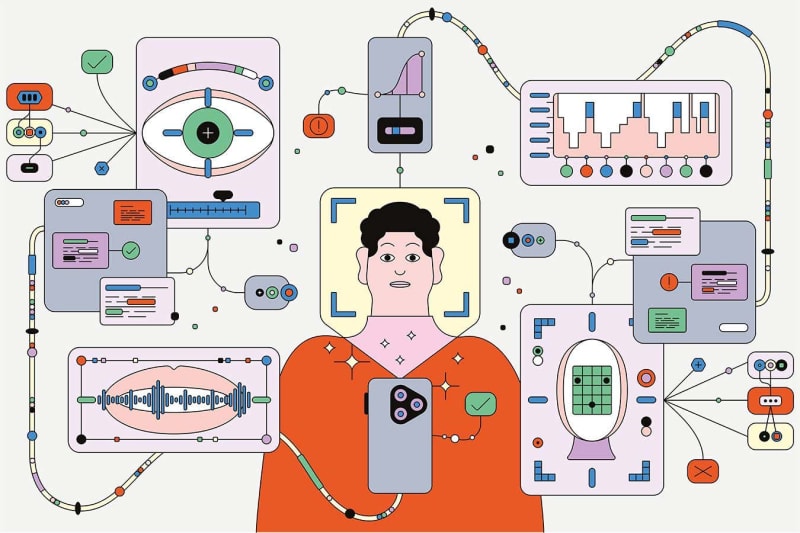
Researchers are training chatbot systems to conduct mental health assessments by analyzing dozens of physical signals during conversations. These AI interviewers ask questions about mood, sleep, and daily habits while tracking voice cadence, facial micro-expressions, heart rate changes, and body movements.
The goal is to establish "digital biomarkers" that provide psychiatrists with objective data alongside traditional assessments. Much of this information already exists on smartphones and wearable devices we use every day, giving doctors an unprecedented window into someone's daily life between appointments.
Early testing shows promise for creating more personalized treatment approaches. The technology could help doctors tailor medications and therapy to individual patterns rather than relying solely on patient self-reports, which can be influenced by memory gaps or the challenge of describing internal experiences.
Perhaps most importantly, continuous monitoring could catch warning signs of relapse before someone reaches a crisis point. Instead of waiting for a scheduled appointment, the system could alert care teams when multiple biomarkers indicate someone's condition is deteriorating.
The approach represents a fundamental shift in psychiatric care, which has historically relied on subjective assessments and patient descriptions. Physical medicine has long used objective tests like blood work and imaging, but mental health has lacked equivalent tools until now.
The Bright Side
This technology could finally make mental health care as personalized and data-driven as treatment for physical conditions. For the millions struggling with depression, anxiety, and other disorders, having objective measures might reduce misdiagnosis and speed up the process of finding treatments that actually work.
The system could be especially valuable in underserved communities where access to specialized psychiatric care is limited. A well-trained AI interviewer doesn't get tired, maintains consistency across thousands of assessments, and could conduct preliminary screenings that help direct people to appropriate resources faster.
Researchers acknowledge important questions remain about diagnostic reliability and patient privacy. Storing sensitive mental health data alongside biometric information requires robust security protections, and patients will need clear control over who accesses their information.
The technology is still being refined and tested, but early results suggest we're moving toward a future where mental health care is more precise, proactive, and accessible to everyone who needs it.
More Images




Based on reporting by New Scientist
This story was written by BrightWire based on verified news reports.
Spread the positivity! 🌟
Share this good news with someone who needs it

