Ancient Discovery Confirms Legendary King's Devotion to Preserving Sacred Heritage
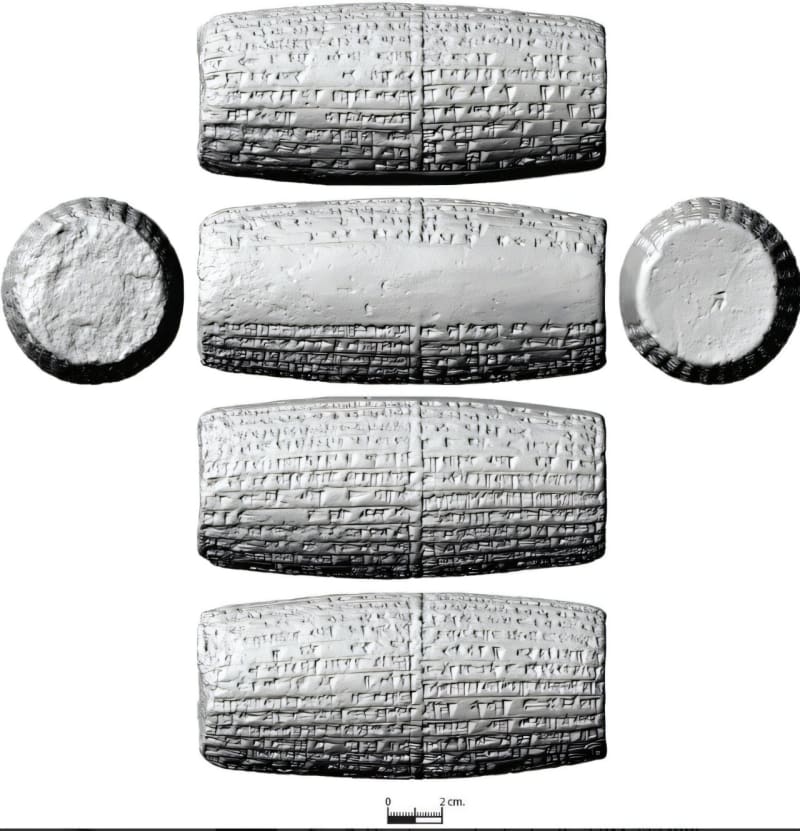
Two remarkable clay cylinders discovered in Iraq provide the first written evidence of King Nebuchadnezzar II's restoration of a 3,700-year-old ziggurat, beautifully confirming ancient traditions of caring for sacred spaces. This heartwarming find showcases how communities work together to preserve their heritage for future generations.
In a wonderful example of civic responsibility meeting archaeological discovery, two local Iraqi citizens made a decision in 2013 that would illuminate a remarkable chapter of ancient history. Rather than keeping their find to themselves, they chose to hand over two inscribed clay cylinders to Iraq's State Board of Antiquities and Heritage—a choice that has now given the world its first written documentation of one of history's most famous kings restoring a sacred monument.
The cylinders tell the inspiring story of King Nebuchadnezzar II, who ruled Babylon from 604 to 562 BC, and his dedication to preserving the ziggurat of Kish. This ancient stepped temple, originally built around 1756 BC by King Hammurabi, had fallen into disrepair over the centuries. The newly translated inscriptions reveal how Nebuchadnezzar II felt called to restore this sacred structure dedicated to the god Zababa and goddess Ishtar.
What makes this discovery particularly heartwarming is how it confirms what archaeologists had long suspected. Previous excavations had uncovered bricks stamped with Nebuchadnezzar II's name, hinting at his restoration work, but these cylinders provide the first complete narrative in the king's own words.
Dr. Ahmed Ali Jawad, one of the researchers who studied these precious artifacts, helped bring this ancient story to life. The cylinders describe how Nebuchadnezzar II, introducing himself as the king of Babylon appointed by the gods, turned his attention to the ziggurat that had been built and previously restored by earlier kings. He found its walls buckling and damaged by rain, and felt inspired to restore it to its former glory.
In the king's own poetic words, he "embellished its outward appearance and made it shine like the daylight" for the deities honored there. It's a beautiful testament to the timeless human desire to preserve what generations before us created, and to leave something better for those who come after.
The ziggurat itself represents multiple acts of restoration over centuries, showing how different civilizations valued continuity and respect for sacred spaces. Originally built by Hammurabi, then restored by his son, and later repaired again by Adad-apla-iddina, the structure finally received Nebuchadnezzar II's careful attention—a chain of preservation spanning over a thousand years.
This discovery also highlights the positive impact of heritage protection programs. The State Board of Antiquities and Heritage's work in recording and preserving these cylinders ensures that Iraq's rich history remains accessible to researchers and the public. The cylinders were found on the surface of Tell Al-Uhaimir, where the ziggurat ruins still stand today.
Using modern 3D scanning technology, researchers have been able to study these ancient documents in remarkable detail, bridging ancient craftsmanship with contemporary scientific methods. This blend of old and new shows how we continue to honor the past while embracing the future.
The story these cylinders tell reminds us that caring for our shared heritage is a tradition as old as civilization itself, and that every generation has the opportunity to preserve and protect the treasures entrusted to us.
Based on reporting by Phys.org
This story was written by BrightWire based on verified news reports.
Spread the positivity! 🌟
Share this good news with someone who needs it
More Good News
 🚀 Innovation
Ancient Innovation: 60,000-Year-Old Discovery Reveals Our Ancestors' Remarkable Intelligence
 🚀 Innovation
Ancient Discovery Reveals Human Ancestors' Remarkable Plant Knowledge 60,000 Years Ago
 🚀 Innovation
Scientists Make Exciting Breakthrough in Quest to Discover Leonardo da Vinci's DNA
Joke of the Day
Why did the librarian get kicked out of class?
Explore Categories
Quote of the Day
"Do not go where the path may lead, go instead where there is no path and leave a trail."
— Ralph Waldo Emerson