Ancient Rice Terraces Show Climate Solutions That Work
Indigenous farmers in the Philippines have used mountain terraces for 400 years to survive droughts and floods. Their time-tested methods are proving essential as climate pressures intensify worldwide.
For nearly four centuries, Indigenous farmers in the northern Philippines have been quietly solving problems that modern agriculture is just starting to face.
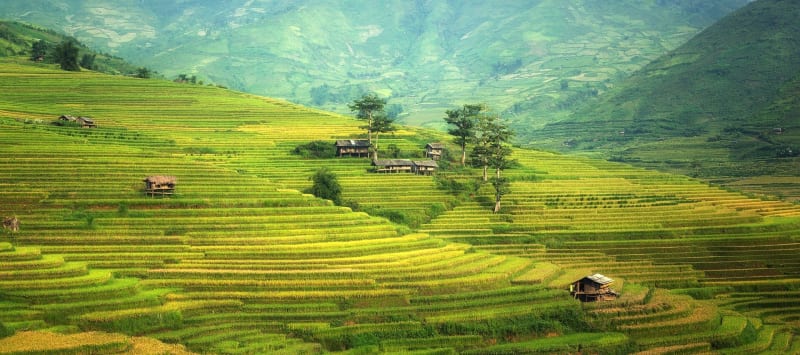
The Ifugao rice terraces, built around the 1600s, transform steep mountainsides into stepped fields that capture water and prevent soil from washing away. These aren't just beautiful landscapes. They're living examples of climate adaptation that works.
Anthropological archaeologist Stephen Acabado has spent two decades studying how these terraces function. The results are remarkable. Terraced fields retain 15% to 30% more moisture than sloping fields, sometimes significantly more. That extra water helps crops survive the dry spells between intense rainstorms.
The region receives between 6 and 13 feet of rain annually, mostly in short, powerful downpours. Without terraces, water would strip the mountainside bare in torrents. Instead, each level catches rainfall and lets it soak in gradually, keeping soil fertile and crops hydrated.
Ifugao farmers spread their risk by planting different rice varieties across different terraces. They grow multiple types of traditional Tinawon rice, each suited to specific conditions. Some varieties thrive in cooler, wetter areas. Others tolerate shallow soils or brief droughts.
Farmers also watch for subtle environmental signals. They notice when springs flow more slowly than usual or when earthworm activity increases before rains. These observations guide crucial decisions about reinforcing terrace walls, clearing canals, or adjusting planting dates.
This knowledge passes between generations through careful observation and shared learning. The terraces themselves serve as archives, with repair layers and sediment deposits documenting centuries of adaptation decisions.
Modern challenges are testing these ancient systems. Major typhoons in 2018 and 2022 brought intense rainfall that damaged terraces across the region. Fewer young people work in agriculture now, making government support increasingly important for repairs and maintenance.
Why This Inspires
These terraces prove that communities have been successfully managing climate uncertainty for centuries using observation, diversity, and flexibility. While the Ifugao built their systems during Spanish colonial expansion, the principles behind them remain relevant today.
Researchers are now studying similar terrace systems in Morocco and other mountainous regions worldwide. Each system reflects local knowledge developed through generations of careful attention to weather, water, and soil.
The solutions aren't high-tech or expensive, but they work because they're designed for the specific challenges of each place. As climate pressures intensify globally, these time-tested strategies offer hope that communities can adapt and thrive with the right combination of traditional knowledge and modern support.
More Images


Based on reporting by Phys.org
This story was written by BrightWire based on verified news reports.
Spread the positivity! 🌟
Share this good news with someone who needs it


