Antarctic Scientists Celebrate New Year with Fascinating South Pole Tradition
Every January 1st, scientists at Antarctica's South Pole Station participate in a unique celebration that combines science, tradition, and community spirit. The annual ceremony of relocating the geographic South Pole marker showcases the dedication of researchers working in one of Earth's most extreme environments while teaching us about our dynamic planet.
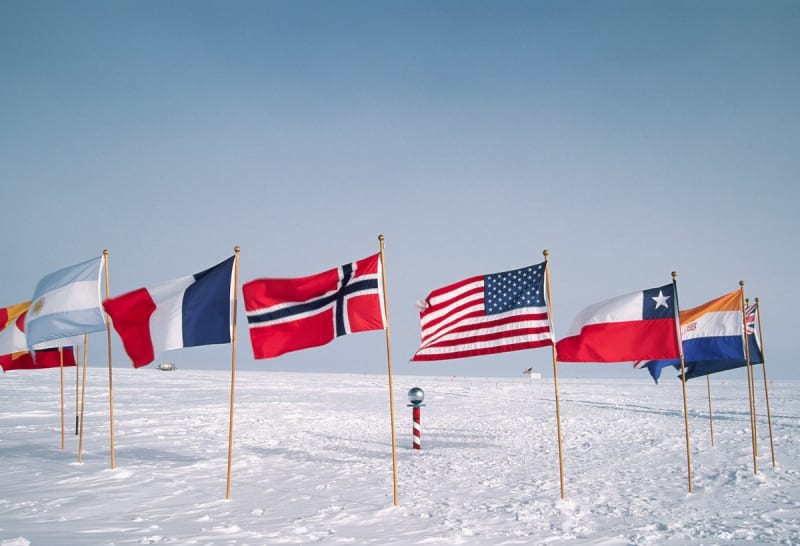
While most of us celebrated the arrival of 2026 with fireworks and champagne, scientists stationed at Antarctica's Amundsen-Scott South Pole Station marked the occasion with one of the world's most unique New Year's traditions: physically moving the South Pole marker.
This delightful annual ceremony isn't just pageantry—it's a testament to both scientific precision and the human spirit of exploration. The event, complete with bagpipes, a stuffed penguin mascot, and an unveiling of a newly designed marker, brings together the small community of researchers who call this frozen frontier home during the harsh Antarctic summer.
But why move the South Pole at all? The answer reveals a fascinating aspect of our living, breathing planet. While we often imagine the geographic South Pole as a fixed point at the southern tip of Earth's axis, the ice sheet beneath the marker is actually part of a massive, slow-moving frozen river. The Antarctic ice flows continuously toward the sea at approximately 10 meters per year, carrying everything on its surface along for the ride.
This means that without the annual adjustment, the marker would gradually drift away from the true geographic South Pole position. The ceremony ensures that visitors and researchers always know exactly where they're standing in relation to Earth's axis—a remarkable example of how human ingenuity helps us navigate and understand our dynamic world.
The tradition also highlights an important distinction that many people find surprising: there are actually multiple "South Poles." The geographic South Pole sits at the southern end of Earth's rotational axis, but the magnetic and geomagnetic South Poles—related to our planet's magnetic field—are located elsewhere on the continent and are constantly shifting as Earth's core changes. It's a beautiful reminder of how complex and ever-changing our planet truly is.
The dedication of the scientists who maintain this tradition deserves celebration. Living and working at the South Pole requires extraordinary commitment, as researchers endure months of isolation in one of the planet's most inhospitable environments. Yet they continue their important work studying climate, astronomy, and glaciology, contributing invaluable knowledge about our world.
Each year's marker features a unique design, often created by the station's residents, turning a scientific necessity into a creative expression and a piece of history. These markers become time capsules, eventually buried deep within the ice as the sheet continues its ancient journey toward the sea.
This charming tradition reminds us that science isn't just about data and measurements—it's also about human connection, celebration, and our endless curiosity about the world around us. The annual South Pole ceremony represents the best of scientific exploration: rigorous accuracy combined with joy, community, and wonder at the natural forces that shape our extraordinary planet.
As we embark on a new year, there's something inspiring about knowing that a dedicated group of scientists celebrated in one of the most remote places on Earth, honoring both precision and tradition in equal measure.
More Images
Based on reporting by Scientific American
This story was written by BrightWire based on verified news reports.
Spread the positivity! 🌟
Share this good news with someone who needs it
More Good News
%2Fhttps%3A%2F%2Ftf-cmsv2-smithsonianmag-media.s3.amazonaws.com%2Ffiler_public%2F1f%2F96%2F1f966e8c-d14a-4d67-88ae-d38f45396042%2Fnasa_satellite_view_of_southern_ocean_phytoplankton_bloom_crop.jpg) 🌍 Planet Wins
🌍 Planet WinsAntarctic Earthquakes Create Spectacular Blooms That Nourish Ocean Life
 🌍 Planet Wins
Madhav Gadgil's Revolutionary Legacy: Champion of People and Nature Together
 🌍 Planet Wins
The Beautiful Bridge Between Nature Connection and Scientific Wonder
Joke of the Day
Why did the librarian get kicked out of class?
Explore Categories
Quote of the Day
"Do not go where the path may lead, go instead where there is no path and leave a trail."
— Ralph Waldo Emerson