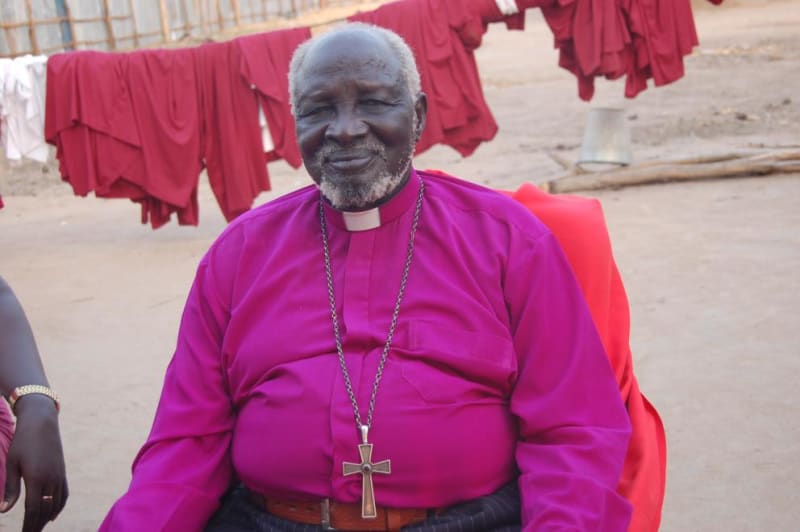
Bishop Nathaniel Garang's 42 Years Brought Peace to Sudan
Bishop Nathaniel Garang spent decades bringing hope to war-torn South Sudan, even earning the nickname "The Lost Bishop" when he disappeared into villages to serve his people. The 86-year-old Anglican leader who became the nation's first South Sudanese bishop died in Nairobi, leaving behind a legacy of courage and reconciliation.
For years during South Sudan's liberation struggle, Bishop Nathaniel Garang simply vanished from the outside world. He hadn't abandoned his calling. He'd gone deeper into it.
When attacks forced him from his diocese seat in 1984, the newly consecrated bishop followed his congregation into isolated villages. He lived and ministered there for six years with no contact beyond his community. At the 1988 Lambeth Conference, fellow church leaders could only describe him as "The Lost Bishop."
Garang died February 24 in Nairobi at age 86, but his impact on South Sudan's journey toward peace remains permanent. Born in 1940 in Bor County during a time of conflict, he pursued his theological education across the border in Kenya, earning his diploma in 1974 and ordination the following year.
His work went far beyond traditional church walls. During the liberation struggle, Garang traveled across the country preaching to both civilians and rebel fighters. He ventured into refugee camps, bringing spiritual guidance to displaced families who'd lost everything except hope.
"He served the people with humility, courage, and a pastoral heart," said Archbishop Justin Bandi Arama, praising Garang's decades of service. Even South Sudanese President Salva Kiir Mayardit honored him for his "vigorous evangelism" and defense of Christians during times of state-sponsored religious persecution.
Why This Inspires
Bishop Garang chose proximity over safety. When violence came, he didn't flee to comfort but moved closer to those suffering most. His six years of isolation weren't lost years but foundational ones, building trust and community when both were scarce.
His approach to peace wasn't theoretical. He walked into war zones, sat with fighters and refugees alike, and demonstrated that reconciliation starts with showing up. That example shaped a generation of South Sudanese church leaders who continue his work.
Rev. Tut Kony Nyang called him "a father of faith" whose influence extended well beyond his 2011 retirement. The general secretary of the South Sudan Council of Churches noted that Garang "guided and encouraged many" even in his later years.
Forty-two years of ministry in one of the world's most challenging environments left South Sudan with more than memories. It left a roadmap for how faith leaders can serve during the darkest times, choosing presence over preservation and people over personal safety.
Based on reporting by Google News - Reconciliation
This story was written by BrightWire based on verified news reports.
Spread the positivity!
Share this good news with someone who needs it
%2Ffile%2Fauthors%2F1891279819693498821.jpg)