Brain-Inspired Computers Unlock Revolutionary Future for Science and Medicine
Scientists at Sandia National Laboratories have developed groundbreaking neuromorphic computers that mimic the human brain, solving complex mathematical problems with remarkable efficiency. This exciting breakthrough could revolutionize everything from weather prediction to understanding and treating brain diseases, all while using dramatically less energy than traditional supercomputers.
Imagine a computer that thinks like a human brain—processing information efficiently, solving complex problems effortlessly, and using a fraction of the energy required by today's supercomputers. That future is becoming reality, thanks to an inspiring breakthrough by researchers at Sandia National Laboratories.
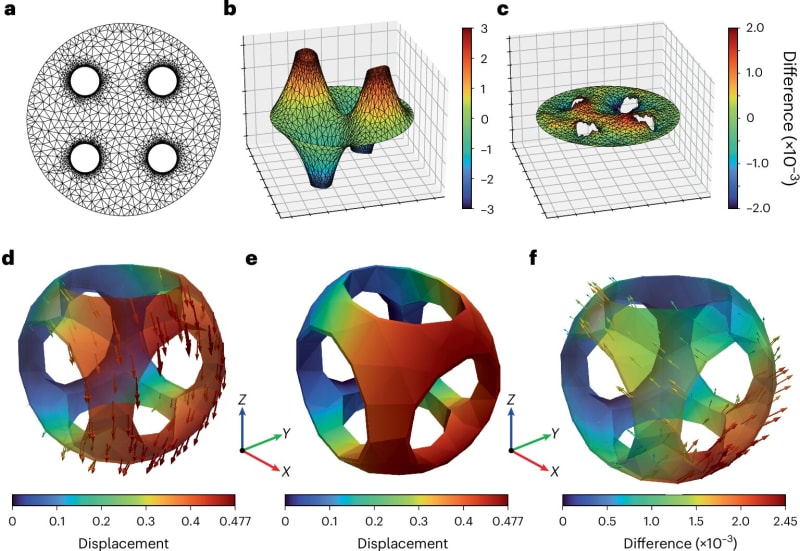
In an exciting development published in Nature Machine Intelligence, computational neuroscientists Brad Theilman and Brad Aimone have created a revolutionary algorithm that enables brain-inspired computers to tackle some of the most challenging mathematical problems in science and engineering. Their work demonstrates that neuromorphic computers—designed to mimic how our brains process information—can solve partial differential equations with stunning efficiency.
These equations form the mathematical foundation for understanding our world, from predicting weather patterns to modeling how materials respond under stress. Traditionally, solving them requires enormous computational power and energy. But neuromorphic computers offer something beautifully different: they work the way nature intended.
"We're just starting to have computational systems that can exhibit intelligent-like behavior," Theilman explains with enthusiasm. The key insight? Our brains are already performing incredibly sophisticated computations every day. "Pick any sort of motor control task—like hitting a tennis ball or swinging a bat at a baseball," Aimone notes. "These are very sophisticated computations that our brains are capable of doing very cheaply."
For decades, experts believed brain-inspired computers were best suited for pattern recognition tasks. Few imagined they could excel at rigorous mathematical problems. But Theilman and Aimone saw potential where others saw limitations, and their optimism has paid off spectacularly.
The implications are thrilling and far-reaching. These energy-efficient computers could dramatically reduce the power consumption of scientific simulations while maintaining incredible computational capability. This means more sustainable computing for climate research, materials science, and countless other fields that benefit humanity.
Perhaps most exciting is what this breakthrough reveals about the human brain itself. The algorithm developed by the researchers closely mirrors the structure of cortical networks in our brains, offering a window into understanding how we think and process information.
"We've shown the model has a natural but non-obvious link to partial differential equations," Theilman shares. "That link hasn't been made until now—12 years after the model was introduced."
This connection between neuromorphic computing and neuroscience opens wonderful possibilities for medical research. "Diseases of the brain could be diseases of computation," Aimone suggests. If they're right, this technology could help scientists better understand and develop treatments for neurological conditions like Alzheimer's and Parkinson's disease.
The research team envisions a bright future where neuromorphic supercomputers become central tools for solving humanity's greatest challenges. They're eager to collaborate with mathematicians, neuroscientists, and engineers to explore the full potential of this transformative technology.
While neuromorphic computing is still emerging, Sandia's groundbreaking work is laying a foundation for remarkable advancements. By proving that "you can solve real physics problems with brain-like computation," these researchers are opening doors to a more efficient, sustainable, and innovative future.
This breakthrough reminds us that some of our best innovations come from looking to nature for inspiration. Our brains have spent millions of years perfecting efficient computation—and now we're learning to harness that wisdom for the benefit of science, medicine, and society.
More Images


Based on reporting by Phys.org
This story was written by BrightWire based on verified news reports.
Spread the positivity! 🌟
Share this good news with someone who needs it
More Good News
 🚀 Innovation
Private Philanthropy Launches Era of Discovery with Four Revolutionary Telescopes
 🚀 Innovation
Israel Shines as Global AI Innovation Leader, Empowering Progress for All
 🚀 Innovation
AI Access Expands Globally as Affordable Tools Bridge Digital Divide
Joke of the Day
Why did the librarian get kicked out of class?
Explore Categories
Quote of the Day
"Do not go where the path may lead, go instead where there is no path and leave a trail."
— Ralph Waldo Emerson