Brazilian Scientists Crack Code on Pig-to-Human Kidney Transplants
A groundbreaking study led by Brazilian researchers has mapped the immune system's response to the first pig kidney transplant in a living patient, bringing us closer to solving the global organ shortage crisis. The detailed findings are paving the way for life-saving treatments that could help millions waiting for transplants.
In a landmark achievement that could transform the future of organ transplantation, Brazilian scientists have made an incredible breakthrough in understanding how the human body responds to genetically modified pig kidney transplants. The research, published in Nature Medicine, offers hope to millions of people worldwide waiting for life-saving organs.
Led by Brazilian nephrologist Leonardo Riella at Massachusetts General Hospital and Harvard Medical School, along with researcher Thiago Borges, the team conducted an unprecedented, high-resolution analysis of the immune response in the first living patient to receive a pig kidney transplant. The 62-year-old patient underwent the historic surgery at Massachusetts General Hospital in March 2024.
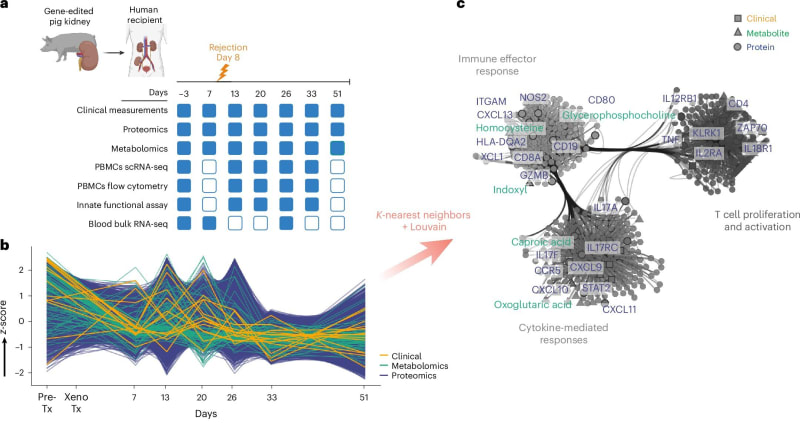
What makes this study remarkable is its comprehensive approach. The scientists used cutting-edge techniques including transcriptomic, proteomic, metabolomic, and spatial analyses to create the most detailed picture yet of how our bodies interact with organs from other species. This level of detail had never been achieved before in xenotransplantation research.
The findings reveal crucial insights that bring us closer to making animal-to-human organ transplants a viable reality. The research team discovered that the pig kidney, which had 69 genetic modifications to increase compatibility, was initially accepted by the patient's body. They also identified a promising new monitoring method using DNA fragments from the transplanted organ in the bloodstream, which could reduce the need for invasive biopsies in future patients.
Perhaps most importantly, the study pinpointed exactly what needs to be improved: combining therapies that target the body's innate immune response with even more advanced genetic engineering in donor pigs. This roadmap provides clear direction for researchers working to perfect this life-saving technology.
Why It Matters: The organ shortage crisis affects millions globally. In Brazil alone, approximately 10 to 12 million people have some form of kidney disease, with about 6,670 kidney transplants performed in 2025—far fewer than needed. As populations age and conditions like diabetes and high blood pressure become more common, the demand for organs continues to grow. Xenotransplantation could provide an unlimited supply of organs, potentially ending transplant waiting lists forever.
The Brazilian team's contribution to this field showcases the country's growing leadership in cutting-edge medical research. Their detailed findings are now guiding scientists worldwide in developing the next generation of treatments that could make cross-species transplants routine and safe.
While there's still work to be done, this research represents a giant leap forward. The team's identification of specific immune pathways and potential biomarkers means researchers now know exactly where to focus their efforts. Each discovery brings us closer to a future where no one dies waiting for an organ transplant.
The collaboration between Brazilian scientists and Harvard Medical School also highlights how international partnerships are accelerating medical breakthroughs that benefit humanity. With continued research and the clear pathway now established, the dream of readily available organs for those in need is becoming increasingly achievable.
More Images


Based on reporting by Medical Xpress
This story was written by BrightWire based on verified news reports.
Spread the positivity! 🌟
Share this good news with someone who needs it
More Good News
 Health & Wellness
UC San Diego Breakthrough: Personalized Cancer Treatment Improves Patient Survival
 Health & Wellness
Scientists Fast-Track hMPV Vaccine After Breakthrough Challenge Study Success
 Health & Wellness
Stanford Scientists Discover Breakthrough That Could End Joint Replacement Surgery
DAILY MORALE
Why did the dog apply for a job at the bank?
EXPLORE INTEL
MISSION DIRECTIVE
The greatest thing you'll ever learn is just to love and be loved in return.
Moulin Rouge (from the film, popularized by Ewan McGregor)