Breakthrough Imaging Tool Brings New Hope for Bladder Cancer Patients
Scientists have developed an innovative radiotracer that helps doctors identify which bladder cancer patients will benefit most from targeted therapies. The molecule, called NECT-224, has already been successfully used in its first human patient, marking an exciting milestone in personalized cancer care.
In a heartening development for cancer treatment, researchers at the Helmholtz-Zentrum Dresden-Rossendorf (HZDR) in Germany have created a groundbreaking tool that promises to revolutionize how doctors choose the best treatments for bladder cancer patients.
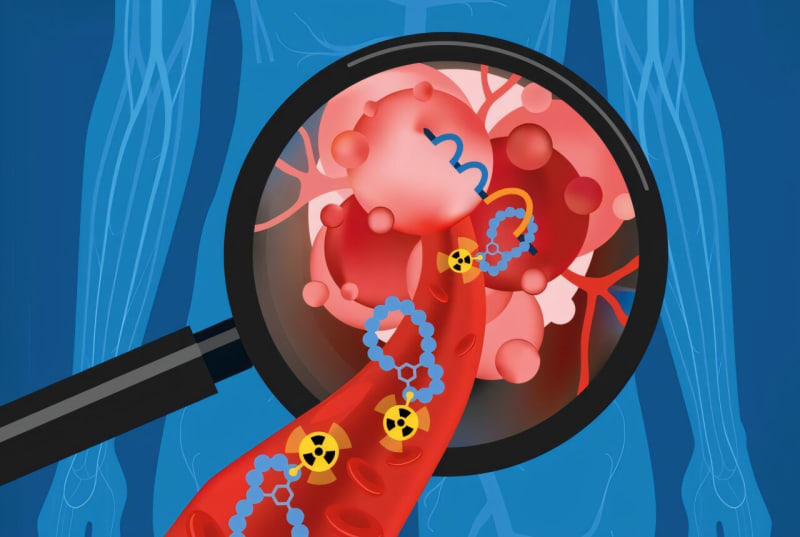
The innovative radiopharmaceutical molecule, named NECT-224, acts like a precise beacon that lights up tumors carrying a specific protein called Nectin-4. This protein appears predominantly in urothelial carcinoma, one of the most common forms of bladder cancer. What makes this discovery truly exciting is that it empowers doctors to see exactly which patients will respond best to cutting-edge targeted therapies—bringing us closer to truly personalized medicine.
Dr. Robert Wodtke, a research associate at HZDR's Institute of Radiopharmaceutical Cancer Research, explains the significance with enthusiasm: "Using NECT-224, we can reveal whether a tumor really does carry Nectin-4 so that we can judge whether the patient affected will respond to targeted therapies." This means patients can now avoid treatments that won't work for them and quickly move to therapies that will.
The journey to this breakthrough showcases the power of innovative thinking. The research team cleverly modified an existing bicyclic peptide—a class of molecules known for their remarkable accuracy and stability in the body. By attaching radioactive markers like Gallium-68 and Copper-64, they created tracers that can be detected using PET imaging technology. These tracers flow through the bloodstream and bind specifically to Nectin-4 proteins on tumor cells, creating clear, detailed images that reveal exactly where the cancer is and how much of the target protein it contains.
What's particularly promising is that the team developed two variants, each with unique advantages. The Gallium-68 version enables same-day imaging, giving patients and doctors rapid answers. The Copper-64 version, with its longer half-life, can produce even higher-contrast images for more detailed examination.
After rigorous testing in laboratory settings and pre-clinical trials that demonstrated impressive results—including high binding specificity, clear tumor localization, and rapid clearance from surrounding tissue—NECT-224 reached an exciting milestone in summer 2025. At Carl Gustav Carus University Hospital Dresden, doctors successfully used the tracer on a human patient for the first time. The PET images beautifully presented the tumor, confirming that this tool has real-world clinical value.
The research team, whose work has been published in the prestigious Journal of Medicinal Chemistry, isn't stopping here. They're already working on enhancing NECT-224 even further, aiming to extend how long it stays in tumor tissue and exploring its potential for "theranostic" approaches—an exciting frontier where diagnosis and therapy merge seamlessly.
Looking toward the future, this innovation could do more than help select appropriate therapies. It may serve as the foundation for entirely new treatment strategies called "targeted radioligand therapies," opening doors to possibilities we're only beginning to imagine.
For bladder cancer patients and their families, this represents genuine hope: a future where treatments are chosen with precision, where trial-and-error approaches give way to confident, personalized care, and where every therapy decision is guided by clear, reliable information.
More Images




Based on reporting by Medical Xpress
This story was written by BrightWire based on verified news reports.
Spread the positivity! 🌟
Share this good news with someone who needs it
More Good News
 🧘 Health & Wellness
Scientists Fast-Track hMPV Vaccine After Breakthrough Challenge Study Success
 🧘 Health & Wellness
Stanford Scientists Discover Breakthrough That Could End Joint Replacement Surgery
 🧘 Health & Wellness
St. Louis Scientists Map 1.4M Cells to Revolutionize Cancer Survival Hope
Joke of the Day
Why did the dog apply for a job at the bank?
Explore Categories
Quote of the Day
"The greatest thing you'll ever learn is just to love and be loved in return."
— Moulin Rouge (from the film, popularized by Ewan McGregor)