Breakthrough Sensor Brings Hope in Fight Against Drug-Facilitated Crime
Scientists at Spain's Technical University of Valencia have created an innovative sensor that detects scopolamine in under five minutes, offering a powerful new tool for prevention and protection. This breakthrough technology represents a major step forward in keeping people safe and could revolutionize how we detect dangerous substances in real-time.
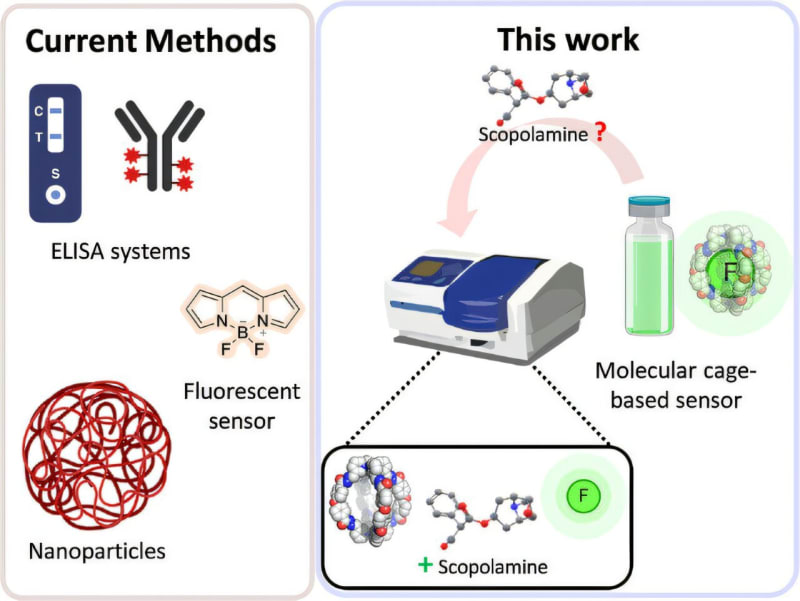
In an exciting development that promises to enhance public safety, researchers at the Universitat Politècnica de València have successfully created a groundbreaking sensor capable of detecting scopolamine—a substance sometimes used in drug-facilitated crimes—in less than five minutes.
This remarkable innovation, published in the prestigious journal Angewandte Chemie International Edition, represents a significant leap forward in protective technology and demonstrates how scientific ingenuity can create real-world solutions that keep communities safer.
The sensor works through an elegantly simple yet sophisticated mechanism. When scopolamine comes into contact with the device, it triggers a reaction that produces a bright fluorescent light. The more substance present, the brighter the signal glows—making detection both immediate and quantifiable. Best of all, it requires no complex equipment or specialized training, making it accessible for widespread use.
"This is what allows our sensor to detect extremely low amounts of drugs and makes it particularly useful for rapid analysis," explains researcher Giovanni Montà-González, highlighting how the technology could empower individuals and authorities alike.
At the heart of this innovation lies brilliant chemical engineering: a "molecular cage" specifically designed to recognize and trap scopolamine molecules with remarkable precision. Dr. Vicente Martí Centelles from the university's IDM Institute notes that conventional detection methods struggle with this particular substance, especially in beverages, which made developing a simple, immediate solution particularly important.
The potential applications are tremendously encouraging. From preventive settings like bars and clubs to forensic and law enforcement contexts, this tool could provide rapid answers when they matter most. The research team is already developing a practical device that will work across various environments and sample types, including drinks, saliva, and urine.
What makes this story even more inspiring is that it doesn't stop here. The dedicated team of scientists, including co-authors Eva Garrido and Estela Climent, is already working on similar sensors for detecting other substances of concern. This commitment to ongoing innovation shows how science continues to evolve to address real societal challenges.
The collaborative effort brought together multiple prestigious institutions, including CIBER for Bioengineering, Biomaterials and Nanomedicine, and joint research units from UPV focusing on disease mechanisms, nanomedicine, and sensors. This kind of cooperative scientific work exemplifies how pooling expertise and resources creates solutions that benefit everyone.
As we look toward the future, technologies like this sensor represent hope and empowerment. They put powerful protective tools into the hands of individuals and communities, shifting the balance toward prevention and safety. The ability to quickly and easily detect potentially dangerous substances means people can make informed decisions and take action to protect themselves and others.
This breakthrough reminds us that behind every scientific advancement are dedicated researchers working to make the world safer and better. Their innovation doesn't just represent technical achievement—it represents care, commitment, and the belief that science can be a force for protection and positive change in our communities.
More Images



Based on reporting by Phys.org
This story was written by BrightWire based on verified news reports.
Spread the positivity! 🌟
Share this good news with someone who needs it
More Good News
 🚀 Innovation
Israeli Startup's Life-Saving Tech Protects Crowds at Events Worldwide
 🚀 Innovation
AI Slashes Medical Device Design Time from Days to Minutes in Healthcare Breakthrough
 🚀 Innovation
Private Philanthropy Launches Era of Discovery with Four Revolutionary Telescopes
Joke of the Day
Why did the dog apply for a job at the bank?
Explore Categories
Quote of the Day
"The greatest thing you'll ever learn is just to love and be loved in return."
— Moulin Rouge (from the film, popularized by Ewan McGregor)