Catholic Church and African Union Sign Peace Pact
Africa's Catholic leadership and the African Union just formalized a partnership to tackle conflict, strengthen democracy, and protect vulnerable communities across the continent. The agreement creates a framework for grassroots peace efforts in regions facing violence and instability.
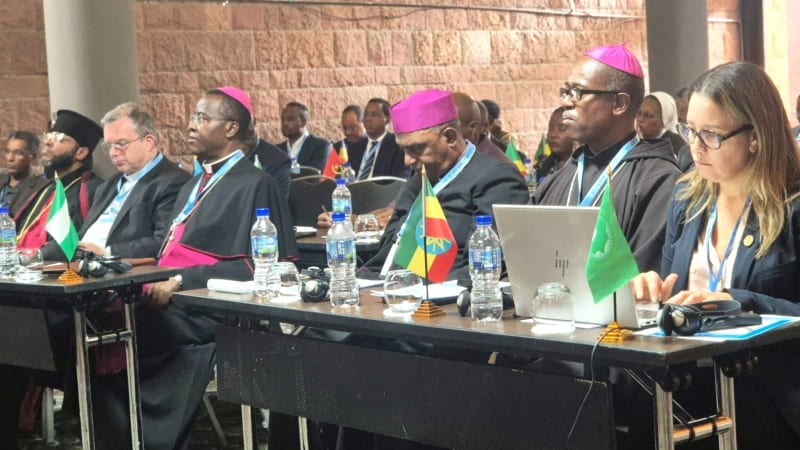
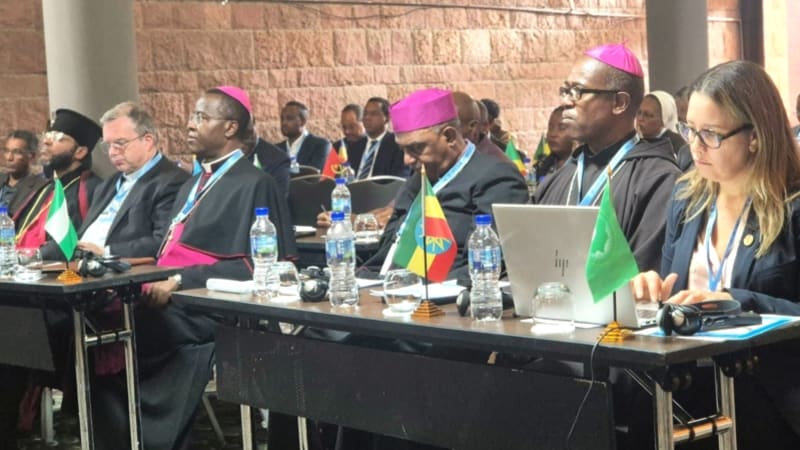
The Catholic Church's continental leadership body and the African Union signed a renewed partnership agreement on February 13 in Ethiopia, bringing faith-based networks into formal collaboration with Africa's main governmental organization on peacebuilding and humanitarian work.
The Symposium of Episcopal Conferences of Africa and Madagascar (SECAM) and the African Union Commission finalized the deal in Addis Ababa, updating a previous agreement from 2015. Cardinal Fridolin Ambongo Besungu, SECAM's president and archbishop of Kinshasa, signed alongside AU Commissioner Bankole Adeoye.
The partnership focuses on five key areas: preventing conflicts through community mediation, monitoring elections and teaching civic participation, rebuilding trust in divided societies, encouraging dialogue between different faiths, and protecting human rights. These efforts build on work Catholic institutions already do across Africa but now receive official recognition and coordination with governments.
"You know that across Africa today there are conflicts everywhere," Ambongo said after the signing. He explained that church networks can help prevent violence through local peace initiatives, especially in fragile regions where tensions run high.
Election monitoring represents another major focus. Catholic organizations in several countries already run civic education programs that help ensure transparent democratic processes. The new framework allows these efforts to align with AU objectives for strengthening governance.
The Ripple Effect
The partnership's real power lies in the Catholic Church's extensive grassroots presence across the continent. When displacement crises or disasters strike, faith-based groups often provide the first wave of assistance in remote communities where government resources struggle to reach.
The agreement also tackles practical development challenges. During the same week as the signing, SECAM organized discussions on water access and sanitation, issues affecting millions of Africans without reliable clean water. These conversations produced commitments that could translate into joint church-AU projects improving daily living conditions.
Ambongo emphasized the church acts as a "social partner based on moral values" rather than a political competitor to governments. The memorandum aims to prevent perceptions that religious institutions challenge state authority while encouraging cooperation on issues that directly benefit citizens.
The cardinal acknowledged the African Union has sometimes struggled to respond effectively to crises, particularly in Central Africa's Great Lakes region. He suggested the partnership could strengthen AU initiatives by contributing the church's community networks and mediation experience.
The agreement prioritizes protecting vulnerable groups including women, children, elderly people, and marginalized communities. Officials said Africa's religious diversity should become a constructive force for unity rather than division.
Despite ongoing conflicts and hardships across parts of the continent, Ambongo said leaders involved in the partnership believe there's genuine reason for optimism about Africa's future.
More Images

Based on reporting by Google: peace agreement signed
This story was written by BrightWire based on verified news reports.
Spread the positivity!
Share this good news with someone who needs it