Catholic Leaders Call for Healing After Minnesota Tensions
Top Catholic leaders gathered in Minnesota to advocate for compassion toward migrants while urging communities torn apart by recent immigration enforcement to find common ground. Their message of reconciliation comes as the state works to heal from a winter of protests and tragedy.
When two American cardinals and the Vatican's U.S. ambassador traveled to St. Paul this week, they brought a message both sides of the immigration debate needed to hear: it's time to heal.
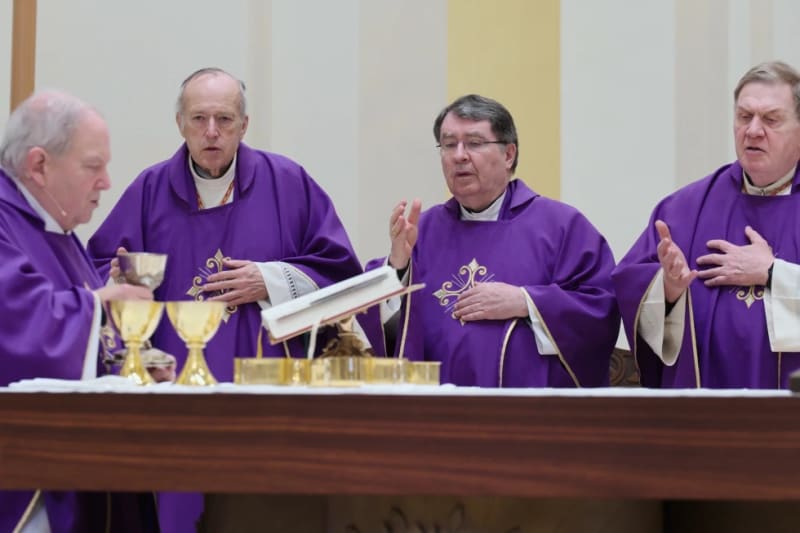
Cardinal Robert McElroy of Washington joined Cardinal Joseph Tobin of Newark and more than two dozen bishops for a special Mass celebrating migrants at the University of St. Thomas. Their visit acknowledged the pain Minnesota communities have endured during this winter's intense immigration enforcement while calling everyone to work together on solutions.
"Catholic teaching supports the nation's right to control its border and deport those convicted of serious crimes," McElroy explained. But he drew a line at the scale of current deportations, describing enforcement as "almost a siege" when it targets families who've lived in America for decades and children who know no other home.
Minnesota became a focal point of national immigration tensions this winter when thousands of federal officers arrived for daily enforcement operations. The surge sparked massive protests, including demonstrations where about 100 clergy were arrested at the Twin Cities airport. Two U.S. citizens died during confrontations in Minneapolis.
Archbishop Bernard Hebda of St. Paul admitted he felt anger when immigrant families became too afraid to attend church. But standing before a chapel packed with seminarians and school principals, he preached a different path forward.
"That ministry of reconciliation has to be ours, in the Twin Cities and around the world," Hebda told the congregation. He encouraged focusing on kindness and peace rather than letting division deepen.
The Ripple Effect
The church leaders' approach offers a model for bridging divides in polarized communities nationwide. Rather than taking hardline positions, they acknowledged complexity while centering human dignity.
McElroy said prayers were needed for everyone affected: migrant families, people helping them, and Immigration and Customs Enforcement agents themselves. "We all need to engage in healing and reconciliation," he said. "It will take a long time."
When asked if advocating for migrants was too political for a church, Cardinal Tobin pointed to Scripture's frequent reminders to welcome strangers. "The Creator figured there was a better chance we'd love people who we thought looked like us," he said. "We had to be reminded frequently about everybody else."
The gathering reflected continuing priorities under Pope Leo, America's first pontiff, who has maintained the Catholic Church's call for immigration reform and humane treatment of immigrants worldwide.
Hebda captured the challenge facing not just Minnesota but the entire nation: "The longer we refuse to grapple with this issue in the political arena, the more divisive and violent it becomes." His words acknowledge that lasting solutions require difficult conversations and genuine willingness to see each other's humanity.
The cardinals left Minnesota with a simple ask: that communities choose reconciliation over resentment as they navigate one of America's most difficult issues.
More Images
Based on reporting by Google News - Reconciliation
This story was written by BrightWire based on verified news reports.
Spread the positivity!
Share this good news with someone who needs it