China's Groundbreaking Hypergravity Lab Unveils Revolutionary Scientific Research Capabilities
Chinese scientists have developed a remarkable hypergravity facility capable of compressing time and space at unprecedented scales. The CHIEF complex represents a major leap forward in understanding complex physical phenomena through advanced experimental techniques.
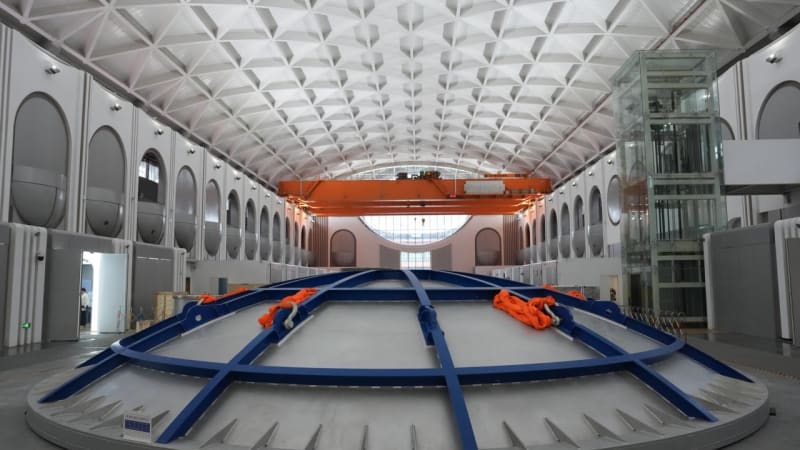
In a remarkable breakthrough for scientific research, China has constructed a revolutionary hypergravity machine that promises to transform our understanding of complex physical processes. The Centrifugal Hypergravity and Interdisciplinary Experiment Facility (CHIEF), nestled 15 metres beneath a university campus, represents a cutting-edge national laboratory designed to minimize vibration and ensure precise experimental conditions.
The facility's crown jewel, CHIEF1900, has shattered international records by surpassing the previous gravitational capacity benchmark held by the US Army Corps of Engineers. While typical household washing machines rarely exceed 2 g·tonne during spin cycles, this extraordinary machine can generate forces hundreds or thousands of times stronger than Earth's natural gravitational pull.
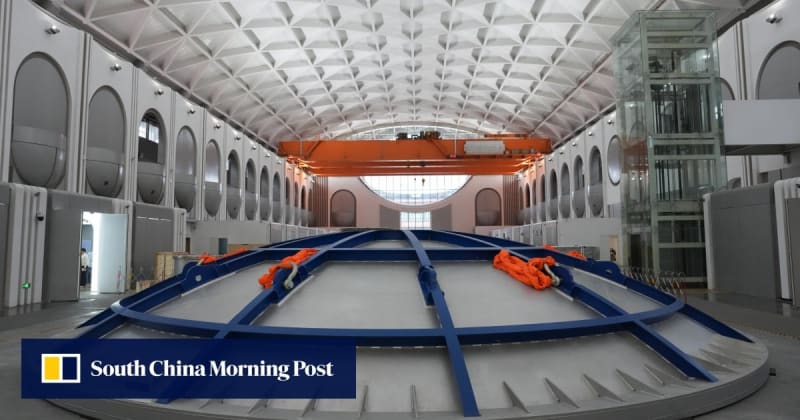
Approved in 2021 with an impressive budget of 2 billion yuan (approximately US$285 million), the CHIEF complex embodies China's commitment to expanding advanced research infrastructure. The facility welcomes researchers from universities, research institutes, and industries both domestically and internationally, highlighting a collaborative approach to scientific discovery.
By generating extreme centrifugal forces, scientists can now compress time and distance dramatically, enabling the study of phenomena that would traditionally require decades of observation or span enormous geographical distances. For instance, researchers can assess the structural stability of a 300-metre dam by constructing a three-metre model and subjecting it to 100g forces, effectively replicating real-world stress conditions within a controlled laboratory environment.
In a complementary development, China recently launched the Shenzhou-21 spacecraft carrying four mice for a six-month experiment, further demonstrating the nation's ambitious scientific research agenda. These innovations underscore a broader strategic vision of pushing technological boundaries and fostering international scientific cooperation through groundbreaking research infrastructure.
Based on reporting by South China Morning Post
This story was written by BrightWire based on verified news reports.