
Chinese Scientists Crack Nature's Code to Revolutionize Sustainable Farming
Researchers in China have unlocked the molecular "secret handshake" between plants and bacteria that could transform agriculture worldwide. This groundbreaking discovery paves the way for reducing chemical fertilizer use and extending natural nitrogen-fixing abilities to crops like rice and corn.
In a stunning breakthrough that could reshape the future of sustainable agriculture, scientists at the Chinese Academy of Sciences have decoded nature's elegant communication system between legume plants and beneficial bacteria. Published in the prestigious journal Science, this research reveals for the first time exactly how plants and rhizobia bacteria recognize each other to form one of nature's most productive partnerships.
The discovery centers on what researchers affectionately call a "secret handshake" between peas, soybeans, alfalfa and their bacterial partners. For millions of years, these organisms have been perfecting their relationship, creating what amounts to tiny nitrogen fertilizer factories right in the soil. Inside root nodules, plants feed the bacteria while the bacteria convert atmospheric nitrogen into nutrients the plants can use. It's a beautiful exchange that has sustained agriculture for millennia.
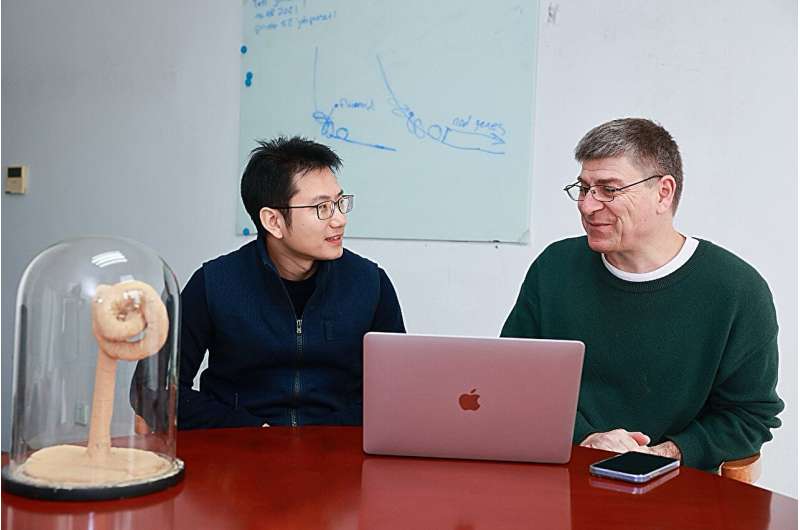
Led by Professors Jeremy Murray and Zhang Yu at the Center for Excellence in Molecular Plant Sciences, the research team solved a puzzle that has intrigued scientists for decades. They revealed the precise three-dimensional structure of how a bacterial protein called NodD recognizes specific chemical signals, called flavonoids, that plants release from their roots. Think of it as nature's sophisticated security system, ensuring that only the right bacterial partners gain entry.
The specificity is remarkable and necessary. Plant roots exist in bustling underground neighborhoods teeming with countless bacteria. The newly discovered "double lock and key" system ensures legumes partner with exactly the right rhizobia strain. The bacteria recognize unique flavonoid signals from specific plants, and the plants recognize specific bacterial signals in return. This prevents mix-ups when multiple species grow side by side, a precision honed through millions of years of coevolution.
What makes this discovery particularly exciting is its practical applications. The research team identified the exact amino acids and binding pockets that determine which flavonoids activate which bacterial proteins. By comparing NodD proteins from pea and alfalfa rhizobia, which share 80% similarity but have very different flavonoid preferences, they've essentially cracked the code for designing custom partnerships.
The Ripple Effect
This breakthrough extends far beyond understanding an interesting natural phenomenon. It opens the door to engineering efficient, crop-specific rhizobia that could be tailor-made for enhanced nitrogen fixation. Even more thrilling is the potential to extend nitrogen-fixing abilities to non-legume crops like rice and corn, staples that feed billions of people worldwide.
Reducing agriculture's dependence on chemical nitrogen fertilizers would represent a monumental step toward sustainability. Chemical fertilizers require enormous energy to produce, contribute to water pollution, and represent a significant cost for farmers. By harnessing nature's own nitrogen-fixing systems, we could see cleaner waterways, reduced greenhouse gas emissions from fertilizer production, and more affordable food production.
The research represents years of painstaking work, including extensive domain-swapping experiments and point mutation studies to identify the critical components of this molecular recognition system. The team's dedication to understanding nature's wisdom has given humanity a powerful tool for addressing some of agriculture's most pressing challenges.
As we face the dual challenges of feeding a growing global population while protecting our environment, this discovery couldn't come at a better time. It's a beautiful reminder that solutions to our modern problems often already exist in nature, waiting for us to understand and apply them wisely.
More Images


Based on reporting by Phys.org
This story was written by BrightWire based on verified news reports.
Spread the positivity! 🌟
Share this good news with someone who needs it
More Good News
 Planet Wins
Scientists Discover Arctic Ocean Could Store 1 Billion Tonnes of CO2 Yearly
 Planet Wins
UVA Researchers Map 10M Trees to Help Save Coastal Forests from Sea Rise
 Planet Wins
Delaware Firm's Breakthrough Tech Turns Toxic Superfund Sites Into Safe Spaces Faster
DAILY MORALE
What did the thermometer say to the graduated cylinder?
EXPLORE INTEL
DAILY INSPIRATION
Hope is the thing with feathers that perches in the soul and sings the tune without the words and never stops at all.
Emily Dickinson