Cities Cut Construction Emissions Without Building Less
A groundbreaking study of 1,000+ cities reveals construction creates up to 20% of global emissions, but the solution isn't stopping growth. Smarter materials like engineered wood and multi-unit housing could keep cities building while meeting climate goals.
Cities worldwide just got a blueprint for growing sustainably, and it doesn't require hitting the brakes on construction.
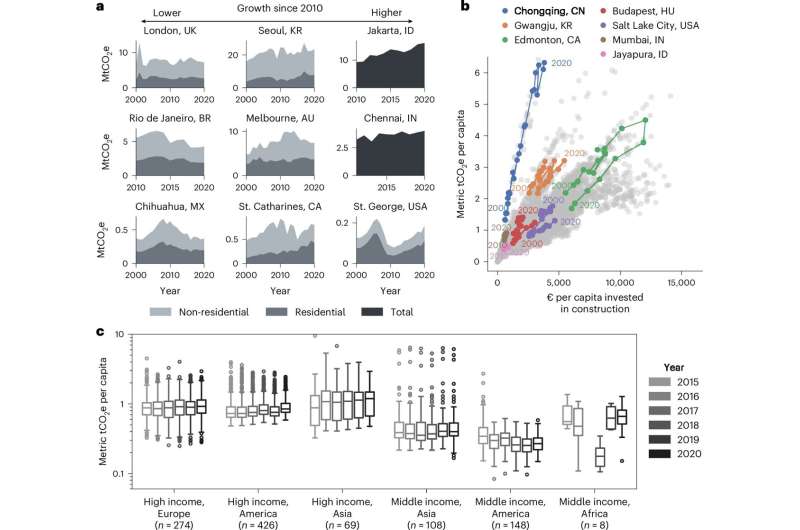
A new study published in Nature Cities examined over 1,000 cities and discovered construction emissions are far higher than previously estimated, accounting for 10 to 20% of all global greenhouse gases. That's roughly one to three metric tons per person every year, enough to potentially consume the entire carbon budget needed to keep warming under 2°C.
Here's the surprising part: 60% of these emissions come from smaller cities with fewer than 500,000 people, not just major metropolitan areas. At current rates, construction alone could blow past the Paris Agreement climate limits.
But the researchers didn't stop at identifying the problem. They developed practical solutions that let cities keep building the homes and infrastructure people need.
The key is switching from concrete and steel to engineered wood, a low-carbon alternative that performs just as well. Cities can also build smarter by prioritizing multi-unit apartments over sprawling single-family homes, using space more efficiently while reducing materials.
For cities with extremely high construction demand, the study suggests a balanced approach. These places might need to decarbonize their transportation and energy sectors faster, freeing up carbon budget for necessary building projects.
The Bright Side
The research team created an open-access dashboard where urban planners, officials, and citizens can track their city's construction emissions in real time. This transparency gives communities the data they need to make science-backed decisions about future development.
"Cities must take a leading role in building a future within climate limits," the researchers wrote. Their tool transforms abstract climate targets into actionable local strategies.
The findings prove cities don't have to choose between growth and sustainability. Many are already making progress on building efficiency, renewable energy, and reducing traffic congestion. Now they have a roadmap for tackling the construction piece too.
The dashboard helps stakeholders "create science-backed plans for meeting future construction demand within climate targets," giving every city the power to build responsibly. By adopting engineered wood, designing efficient housing, and tracking emissions transparently, urban areas can continue expanding while staying within planetary boundaries.
Cities can grow and thrive without sacrificing the climate we all depend on.
More Images


Based on reporting by Phys.org
This story was written by BrightWire based on verified news reports.
Spread the positivity! 🌟
Share this good news with someone who needs it