Cities Learn How to Make Experiments Stick for Good
After studying 2,000 urban experiments worldwide, researchers discovered why most climate and sustainability projects fail to create lasting change. Their 10 lessons could help cities turn temporary pilots into permanent solutions.
Cities around the world are testing bold ideas to fight climate change, from new bike lanes to green energy pilots, but most of these experiments disappear when the funding runs out.
Researchers at Monash University in Australia studied nearly 2,000 urban experiments over two decades and found a troubling pattern. Most stayed small, worked in isolation, or vanished completely instead of transforming how cities operate.
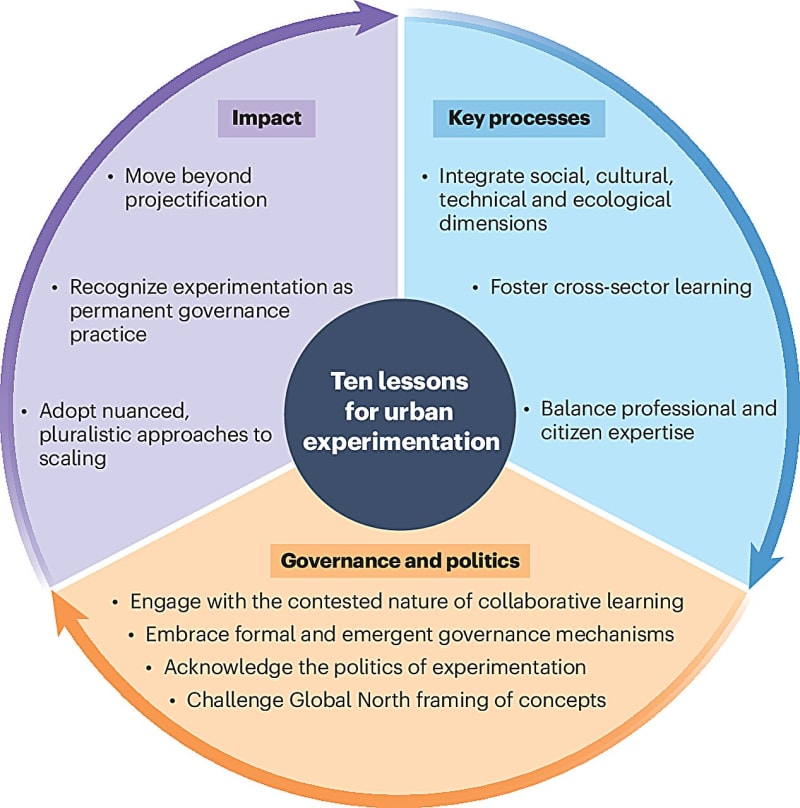
The team published their findings in Nature Cities this February with good news: they identified exactly what separates experiments that fade from those that create real change. Professor Rob Raven and his colleagues distilled their research into 10 practical lessons that focus on design, power dynamics, and long-term impact.
"Our findings challenge the idea that urban experiments are simply small, temporary pilots that should either scale up or be abandoned," Professor Raven explained. The breakthrough thinking treats experimentation not as a side project but as a core way cities should govern complex challenges.
This matters because these experiments shape daily life in ways most people never notice. They influence housing, energy systems, transportation, green spaces, food access, and how prepared cities are for climate disasters.
When experiments work well, they create more inclusive and livable cities. When they fail, they waste public money and can even make inequality worse.
The Ripple Effect
The research offers cities a roadmap to avoid repeating mistakes. Professor Megan Farrelly, who co-authored the study, says the lessons help cities pause and ask whether their innovative efforts actually deliver long-term change.
The framework encourages cities to blend technical solutions with social and cultural understanding. It pushes for better collaboration between experts and everyday citizens, recognizing that local knowledge matters as much as professional expertise.
One key insight challenges how we think about success. Instead of obsessing over scaling up winning projects, cities should build the capacity to keep experimenting intelligently over time.
The lessons also expose power imbalances in how experiments get designed and who benefits. Many approaches carry biases from wealthy countries that don't fit other contexts, and the research pushes back against one-size-fits-all solutions.
State and federal governments have a bigger role to play too. Rather than just writing checks, they can connect cities so successful ideas travel faster and communities stop reinventing solutions that already exist elsewhere.
This collaboration brought together leading international scholars who've spent years working on urban climate responses, creating a guide for current and future decision-makers to maximize their innovative efforts.
Cities now have a clear framework to turn temporary experiments into permanent improvements that make urban life better for everyone.
More Images
Based on reporting by Phys.org - Earth
This story was written by BrightWire based on verified news reports.
Spread the positivity!
Share this good news with someone who needs it