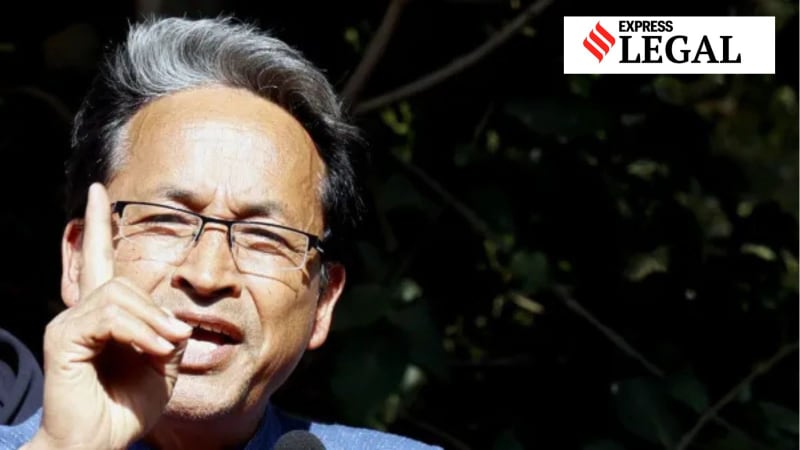
Climate Activist Sonam Wangchuk's Case Highlights Importance of Peaceful Dialogue
Renowned climate activist and education reformer Sonam Wangchuk's legal team argues before India's Supreme Court that his intentions were to promote peace, not violence. The case underscores the vital role of constructive communication in addressing regional concerns and protecting civil liberties.
In a significant development highlighting the balance between security and civil rights, the Supreme Court of India is carefully examining the detention case of Sonam Wangchuk, a celebrated climate activist and education reformer known for his three decades of positive contributions to Ladakh.
Senior Advocate Kapil Sibal, representing Gitanjali Angmo, Wangchuk's wife, presented compelling arguments before the apex court on Thursday, emphasizing that the activist's speech ending a hunger strike was intended to calm tensions rather than incite them. "The tenor of the speech was not in any sense with intent to propagate violence but to quell it," Sibal explained, noting it was the opposite of what detention orders suggested.
Wangchuk's inspiring journey began in 1966 in a remote village in Leh. After becoming a mechanical engineer, he transformed himself into an education reformer and founded the Students Educational and Cultural Movement of Ladakh (SECMOL), an alternative school that has positively impacted countless young lives. His innovative approach to education and tireless work highlighting climate change's impact on Ladakh's delicate ecosystem has earned him recognition as both an innovator and environmental champion.
The legal proceedings demonstrate India's robust judicial system at work, with the Supreme Court thoroughly examining questions of due process and constitutional rights. Sibal raised important procedural concerns, arguing that Wangchuk was not provided complete grounds for his detention and wasn't afforded proper opportunity to respond—fundamental rights protected under Indian law.
The case centers on events from September 2025, when Wangchuk was detained under the National Security Act while leading a peaceful movement seeking statehood and constitutional protections for Ladakh. His detention followed protests in the region, though his legal team maintains his role was focused on de-escalation.
What makes this case particularly noteworthy is how it showcases the strength of India's democratic institutions. The Supreme Court is methodically reviewing detention procedures, ensuring that constitutional safeguards are properly followed. This careful judicial oversight reflects the country's commitment to balancing security concerns with individual liberties.
The hearing, scheduled to continue on January 12, represents an important moment for civil society and demonstrates how India's legal framework provides multiple layers of protection for citizens' rights. The case has drawn attention to the broader conversation about how societies can address legitimate regional concerns through constructive dialogue rather than confrontation.
Wangchuk's legacy of positive contributions—from revolutionary educational reforms to environmental advocacy—remains undisputed. His work transforming education in remote Himalayan regions and raising awareness about climate challenges facing mountain ecosystems has inspired many across India and beyond.
As the legal process unfolds, there is hope that this case will strengthen precedents for protecting peaceful activism while addressing security concerns through proper legal channels. The Supreme Court's thorough examination of procedural requirements sends a positive message about the importance of due process in a democratic society.
The matter continues to receive attention from those who believe that environmental advocacy and regional development concerns deserve platforms for peaceful expression and constructive engagement with authorities.
Based on reporting by Indian Express
This story was written by BrightWire based on verified news reports.
Spread the positivity! 🌟
Share this good news with someone who needs it
More Good News
 💡 Solutions
Zamfara Saves $330M, Digitizes Education to Help 6,000 Real Students Succeed
 💡 Solutions
New NYC Mayor Mamdani Takes Bold First Steps, Prioritizing Housing and Community Unity
 💡 Solutions
UP Government Takes Bold Stand for Fair Education Recruitment, Orders Fresh Exam
Joke of the Day
Why did the dog apply for a job at the bank?
Explore Categories
Quote of the Day
"The greatest thing you'll ever learn is just to love and be loved in return."
— Moulin Rouge (from the film, popularized by Ewan McGregor)