Conservation or Displacement? The Complex Story of Tanzania's Game Reserves
Tanzania's expanding game reserves are reshaping landscapes and livelihoods, creating tension between conservation efforts and indigenous Maasai communities. The story of Lake Natron reveals complex challenges at the intersection of environmental protection and human rights.
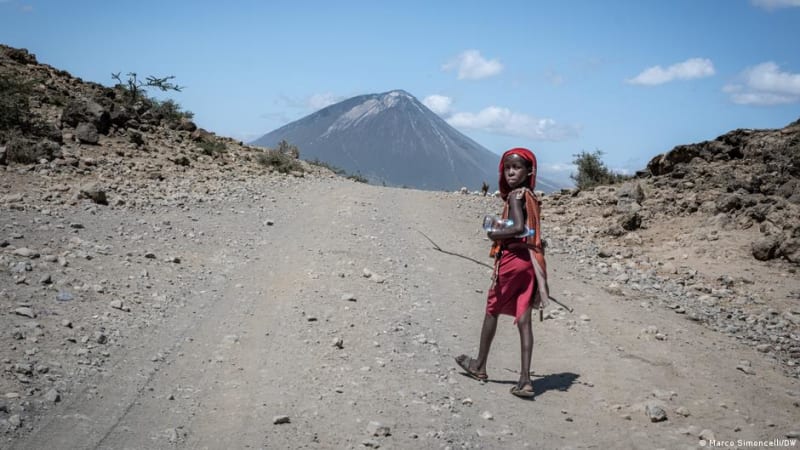
In the shadow of Ol'doinyo Lengai, the sacred 'Mountain of God' rising dramatically near Lake Natron, a profound human story unfolds about land, identity, and survival. This landscape—home to 75% of the world's lesser flamingos and generations of Maasai people—is now at the center of a critical environmental and human rights dialogue.
The Tanzanian government's recent establishment of the Pololeti Game Reserve in 2022 has dramatically reshaped the lives of thousands, including 36-year-old Nesikar Daudi, who was forcibly removed from her ancestral home. 'We suffered a lot because of this takeover. We lost our livestock, and bulldozers demolished our homes,' Daudi shared, now relocated to Lake Natron's surrounding region.
Since the 1990s, Tanzania has expanded its protected areas by 20%, a trend that Maasai lawyer and activist Joseph Oleshengay views with deep skepticism. 'It is essentially a mechanism for land dispossession,' he argues, suggesting that behind environmental protection rhetoric lie economic interests linked to tourism and trophy hunting. The government's approach allows land reclassification under the broad umbrella of 'public interest,' giving state leaders significant unilateral power over community territories.
Tanzania's complex conservation landscape includes game-controlled areas (GCAs), wildlife management areas (WMAs), and game reserves—each with distinct regulations affecting local communities. While WMAs permit residence and limited agriculture, game reserves like Pololeti completely prohibit human presence. Currently, approximately 43% of Tanzania's territory falls within protected areas, covering roughly 159,000 square kilometers—an expanse larger than neighboring Malawi.
An internal Ministry of Natural Resources and Tourism report reveals ambitious plans to convert 15 new areas totaling nearly 7,000 square kilometers from GCAs to game reserves. This includes 4,000 square kilometers around Lake Natron, a region already classified as a game-controlled area with four hunting blocks leased to private companies. For local Maasai communities like Daudi's, these plans represent an existential threat. 'We are not happy about this at all. It would mean yet another mass eviction,' she explains, highlighting the potential catastrophic impact on traditional pastoralist lifestyles.
Navaya Ole Ndaskoi, a Maasai academic and Pastoralists Indigenous NGOs Forum member, provides critical context: 'For years, the government has tried to evict residents because, from a tourism perspective, it is a strategic area.' The tension between conservation goals, economic interests, and indigenous rights remains a complex, unresolved challenge that demands nuanced, compassionate solutions.
As Tanzania continues to balance environmental preservation with human community needs, the story of Ol'doinyo Lengai and Lake Natron serves as a powerful reminder of the delicate interconnections between land, wildlife, and human dignity. The ongoing dialogue represents not just a local issue, but a global conversation about sustainable development and indigenous rights.
Based on reporting by DW News
This story was written by BrightWire based on verified news reports.
More Good News
 🌍 Planet
Innovative Solar Solution: ZOUPW 450W Portable Panel Revolutionizes Off-Grid Power Generation
 🌍 Planet
Electric Vehicle Giants BYD and Tesla Dominate Global Battery Electric Vehicle Market
 🌍 Planet
How Winter Salt Can Quietly Destroy Our Water and Environment
Start Your Day With Good News
Join 50,000+ readers who wake up to stories that inspire. Delivered fresh every morning.
No spam, ever. Unsubscribe anytime.