DC Students Soar in Math with 20-Year Investment Payoff
Washington DC's two-decade commitment to better math teaching is paying off big time. Fourth graders now score just 3 points below the national average, up from 21 points behind in 2003.
A city once struggling with math scores is proving that patient investment and bold ideas can transform student achievement.
Washington DC has quietly become a math success story. The city's fourth graders scored within 3 points of the national average on 2024 national tests, compared to trailing by 21 points two decades ago. Even more impressive: DC students outperformed peers in 11 other large American cities.
The secret? There isn't one magic solution. Instead, DC combined conventional strategies with creative approaches over 20 years.
Teachers now earn an average salary of $110,000, funded by increased per-pupil spending. Schools adopted high-quality teaching materials and expanded professional development. But the city also tried unconventional tactics like math field trips and partnerships between public, charter, and private schools.
"It really is a story of investment," says Paul Kihn, deputy mayor for education. "None of this stuff happens in a vacuum."
Recent test results show the momentum building. In 2025, 31% of elementary students met or exceeded math expectations, up from 28% the year before. Middle schoolers jumped from 22% to 26%. High schoolers climbed from 11% to 15%.
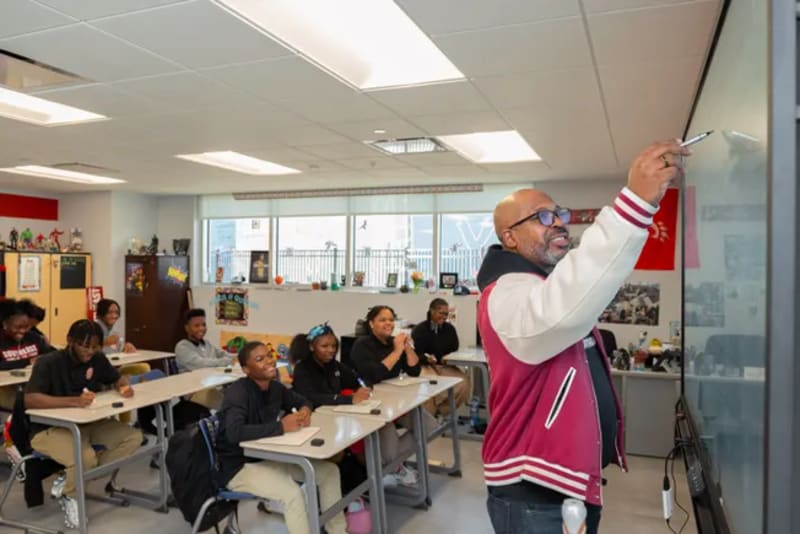
At Congress Heights campus of Center City Public Charter Schools, the transformation feels personal. Principal Niya White arrived in 2012 to find a struggling school with five principals in five years. Today, 70% of her eighth graders meet math expectations in Ward 8, the city's lowest-income area where only 15% of eighth graders typically succeed.
The school's approach centers on one core belief: every student can excel at math.
A $20 million public-private partnership called the Capital Math Collective is pushing even further. The goal sounds ambitious: make DC the first major city where every student beats the national math average by 2030.
The Ripple Effect
DC's gains prove that closing achievement gaps takes time, money, and creativity working together. Other cities are watching closely as DC demonstrates what sustained commitment can achieve.
Challenges remain. Black students still score 65 points below White students on national tests, a gap unchanged since 2003. Economically disadvantaged students trail others by 45 points.
The toughest barrier isn't funding or materials. It's mindset. Too many students, parents, and even teachers believe some people just aren't "math people."
"Part of our work here is the mindset work to help everyone understand that we are all math people," Kihn says.
DC's journey shows transformation doesn't require overnight miracles. Sometimes the brightest success stories unfold one year, one classroom, and one believing student at a time.
More Images



Based on reporting by Google News - Student Achievement
This story was written by BrightWire based on verified news reports.
Spread the positivity!
Share this good news with someone who needs it