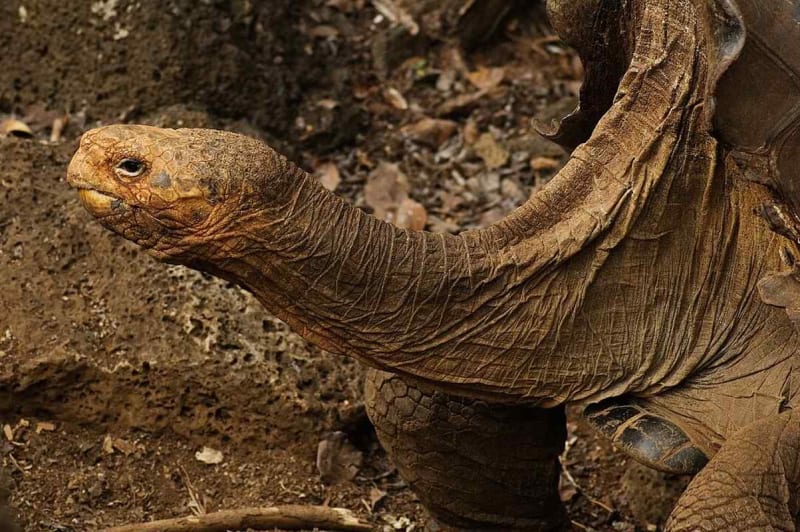
Diego the Tortoise Saves His Species, Fathers 900 Babies
A giant tortoise living at the San Diego Zoo single-handedly saved his species from extinction by fathering over 900 offspring before retiring to his native Galapagos Islands. Diego's decades of dedicated parenting helped boost the wild Hood Island tortoise population from just 15 individuals to over 2,000.
One very productive tortoise just saved an entire species from disappearing forever.
Diego, a Hood Island giant tortoise, spent decades at the San Diego Zoo as part of a captive breeding program that became one of conservation's greatest success stories. When scientists identified him through DNA testing in the 1970s, only 15 Hood Island tortoises remained in the wild.
Diego was captured as a young adult and shipped to the United States, eventually landing at the San Diego Zoo by the late 1940s. For years, nobody knew exactly which Galapagos species he belonged to.
In 1976, conservationists launched an emergency breeding program to save the critically endangered Hood Island tortoises. Diego got the call to duty and was transferred to Santa Cruz Island to join 14 other survivors.
That's when Diego really got to work. Over the following decades, his exceptional breeding efforts produced more than 900 offspring who were gradually released back onto Española Island in the Galapagos.
The program exceeded everyone's wildest hopes. The wild Hood Island tortoise population exploded from 15 individuals to over 2,000, pulling the species back from the brink of extinction.
Each island in the Galapagos Archipelago hosts its own unique tortoise species, making Diego's contribution even more critical. Without his remarkable reproductive success, the Hood Island giant tortoise would likely have vanished forever.
The Ripple Effect
Diego's story shows how targeted conservation efforts can reverse even desperate situations. The breeding program's success has inspired similar rescue missions for other endangered Galapagos species.
His offspring now roam freely across Española Island, establishing territories and starting families of their own. Each new generation strengthens the population's genetic diversity and long-term survival prospects.
In January 2020, conservationists declared the breeding program complete and began preparing Diego for his long-awaited homecoming. By June, he finally returned to Española Island, retiring with full honors after decades of service.
Diego now spends his golden years in the wild homeland he left as a young tortoise decades ago. At over 100 years old and still going strong, he can watch his descendants thrive across the island he helped repopulate.
One determined tortoise proved that even species on the edge of extinction can bounce back with the right help.
More Images


Based on reporting by Good News Network
This story was written by BrightWire based on verified news reports.
Spread the positivity! 🌟
Share this good news with someone who needs it


%2Fhttps%3A%2F%2Ftf-cmsv2-smithsonianmag-media.s3.amazonaws.com%2Ffiler_public%2F1a%2Fa1%2F1aa1528e-ca8e-47b2-b5e0-09872e827007%2Fsloth_bear_den_ptz_1_5_2026_3_57_08_pm_est_-_cropped.png)