Dutch Battery Project Targets €50/kWh Storage Breakthrough
A Dutch consortium just secured €30 million to develop batteries that store renewable energy for up to 100 hours at revolutionary low costs. This could finally solve the biggest challenge holding back solar and wind power.
The Netherlands is betting big on solving renewable energy's toughest problem: storing sunshine and wind for when we actually need them.
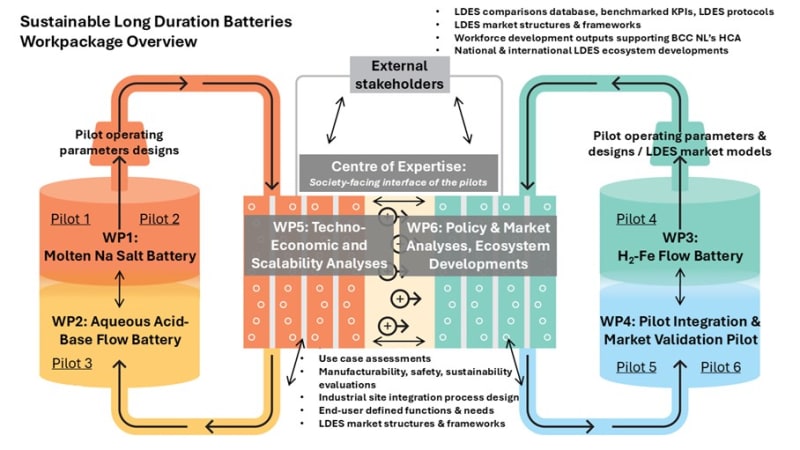
A team of Dutch startups and energy giants just launched the country's largest battery research project with over €30 million in funding. Their mission? Create batteries that can store clean energy for 8 to 100 hours at costs below €50 per kilowatt-hour.
That price point matters enormously. Today's energy storage systems cost far more, making it expensive to save solar power from sunny afternoons for dark winter evenings. If this project succeeds, storing renewable energy could become affordable enough to replace fossil fuel backup plants entirely.
Three innovative Dutch companies lead the charge: AQUABATTERY, Elestor, and Exergy Storage. They're working alongside major players like chemical company Nobian and international energy operator RWE, plus four technical universities across the Netherlands.
The project tackles what engineers call "grid congestion," the traffic jam that happens when too much renewable energy floods the system at once. Without affordable storage, utilities sometimes pay wind farms to shut down on breezy days or waste excess solar power.
The Ripple Effect
Success here could transform energy systems far beyond Dutch borders. Long-duration storage represents the missing piece in the global renewable energy puzzle, the technology that could let countries run entirely on wind and solar.
The €30 million comes from the Nationaal Groeifonds and Rijksdienst voor Ondernemend Nederland, showing government confidence in homegrown innovation. Battery Competence Cluster NL coordinates the effort, connecting researchers and companies to accelerate progress.
"The goal of this project is to develop and deploy battery technologies with the potential to achieve costs below €50/kWh, addressing challenges related to grid congestion," says Hylke van Bennekom, CEO of Elestor. His team and partners aim to reach what's called "TRL 7," meaning technologies ready for real-world demonstration at meaningful scale.
The timing couldn't be better. Europe faces an urgent need to store massive amounts of renewable energy as countries race toward climate targets. The Netherlands wants solutions that work for 100 hours, not just the few hours today's lithium batteries provide.
If Dutch ingenuity cracks this code, those breezy North Sea winds and rooftop solar panels could power homes reliably around the clock.
More Images


Based on reporting by PV Magazine
This story was written by BrightWire based on verified news reports.
Spread the positivity! 🌟
Share this good news with someone who needs it
_1.png)

