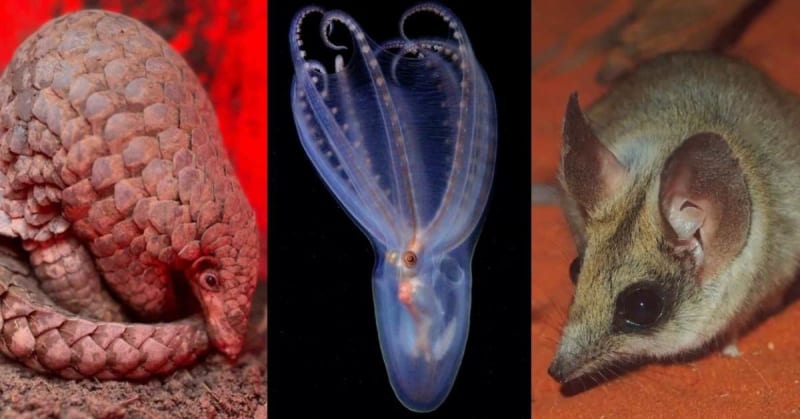
Earth's Biodiversity Boom: Scientists Discover 16,000 New Species Annually, Offering Hope for Conservation
Scientists are discovering 16,000 new species annually, revealing a planet far more biodiverse than previously thought. These discoveries offer hope for conservation and potential medical breakthroughs.
Imagine an intergalactic visitor arriving on Earth, curious about the planet's incredible diversity of life. This isn't just a science fiction scenario, but a thought experiment posed by renowned Australian ecologist Robert May, who challenged scientists to estimate the total number of species inhabiting our extraordinary planet.
According to groundbreaking research by University of Arizona professor John Wiens and his international colleagues, our world is teeming with far more life than previously imagined. While current taxonomic records list approximately 2.5 million known species, researchers suggest the true number could range from 3 million to potentially hundreds of millions or even low billions of distinct life forms.
In a comprehensive study analyzing the taxonomic histories of roughly 2 million species, Wiens and his co-authors Xin Li, Ding Yang, and Liang Wang made a remarkable discovery: between 2015 and 2020, scientists were introducing an average of 16,000 new species to scientific records annually. These aren't just microscopic organisms, but include complex life like insects, plants, fungi, and hundreds of new vertebrate species.
Contrary to previous assumptions that species discovery was slowing down, the research reveals an accelerating pace of scientific identification. In a complementary study released in October, Wiens and colleague Kristen Saban found that species discovery rates significantly outpace extinction rates, with only approximately 10 species going extinct per year - a beacon of hope for global biodiversity.
Wiens emphasizes that this discovery doesn't diminish the need for conservation efforts, but actually underscores their importance. "Discovering new species is crucial because these organisms can't be protected until they're scientifically described," he explains. "Documentation is the first step in conservation – we can't safeguard a species from extinction if we don't know it exists."
Beyond conservation, these newly discovered species hold tremendous potential for human advancement. Researchers have already found that spider and snake venoms, along with substances from various plants and fungi, could offer breakthrough treatments for pain management and cancer research. As Wiens poignantly notes, "We're still just scratching the surface of what these species can do for humanity."
This ongoing exploration of Earth's biodiversity represents more than scientific curiosity - it's a testament to our planet's remarkable resilience and the endless mysteries waiting to be uncovered. Each new species discovered is a reminder of the intricate, interconnected web of life that sustains our global ecosystem.
Based on reporting by Good Good Good
This story was written by BrightWire based on verified news reports.
More Good News
 🌍 Planet
Beyond the Horizon: 15 Game-Changing Forces That Could Transform Conservation
 🌍 Planet
Miracle on the River: Grey Seal Pup Rescued in Unexpected Holiday Encounter
 🌍 Planet
How Tesla Revolutionized Electric Vehicle Policy in the European Union
Start Your Day With Good News
Join 50,000+ readers who wake up to stories that inspire. Delivered fresh every morning.
No spam, ever. Unsubscribe anytime.