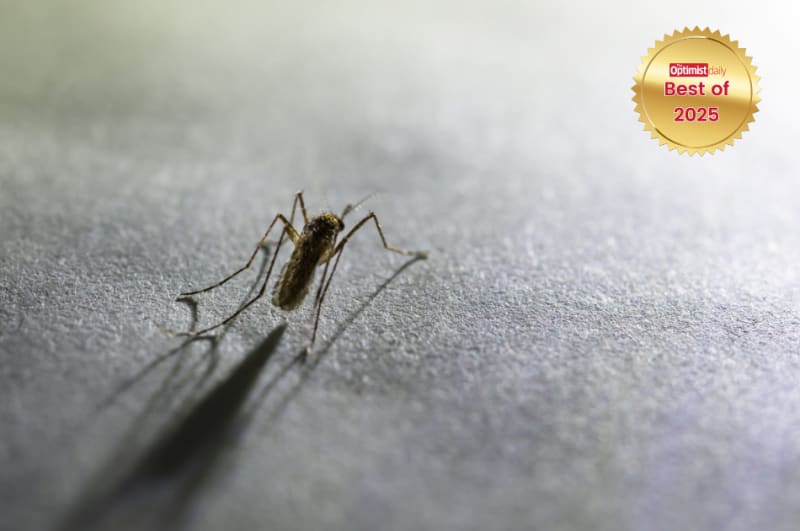
Groundbreaking Gene Edit Brings Hope in Fight Against Malaria
Scientists have achieved a remarkable breakthrough using CRISPR technology to make mosquitoes immune to malaria with a single genetic tweak. This innovative approach could complement existing interventions and help protect millions from one of humanity's deadliest diseases.
In a stunning display of scientific ingenuity, researchers from the University of California, San Diego and Johns Hopkins University have discovered a remarkably elegant solution to one of humanity's oldest health challenges. By changing just one amino acid in a mosquito gene, they've found a way to block malaria transmission entirely—and they did it by working with nature rather than against it.
The breakthrough centers on a mosquito protein called FREP1, which inadvertently helps malaria parasites journey from a mosquito's gut to its salivary glands before infecting humans. Scientists discovered that swapping a single amino acid—replacing leucine with glutamine at one specific spot—transforms mosquitoes into an inhospitable environment for both major types of human malaria parasites. It's a microscopic change with massive implications.
What makes this achievement even more exciting is how the researchers designed their approach with ecological responsibility in mind. Rather than creating a permanent genetic modification that would persist indefinitely in wild populations, they developed what they call a "phantom" allelic drive. This clever system allows the beneficial gene variant to spread through mosquito populations when needed, but naturally fades over time, avoiding long-term environmental consequences that have raised concerns about other gene-editing approaches.
UCSD biologist Ethan Bier, who led the research team, emphasized that this innovation isn't meant to work alone. Instead, it's designed to join forces with existing malaria prevention methods, creating a comprehensive toolkit for combating the disease. This collaborative approach to problem-solving reflects the best of modern science—building on what works while adding new, complementary solutions.
The timing couldn't be better. As mosquitoes continue developing resistance to insecticides and malaria parasites find ways around existing drugs, fresh strategies are desperately needed. Maciej Maselko, a mosquito genetics researcher at Macquarie University who reviewed the study, highlighted that with global public health funding facing pressure, cost-effective and scalable solutions like this are urgently needed.
The research team has already demonstrated success in the laboratory, showing strong resistance to infection in edited mosquitoes without harming the insects themselves. Now, the exciting next phase involves field trials in real-world settings, where the approach will be tested under actual conditions.
This breakthrough represents more than just a scientific achievement—it's a beacon of hope for the hundreds of millions of people affected by malaria each year. By working with naturally occurring genetic variations and respecting ecological balance, researchers have shown that smart, sustainable solutions to complex global health challenges are within reach.
As we continue to face evolving health threats, this research reminds us that human creativity, technological innovation, and respect for nature can combine to create powerful tools for good. The fight against malaria has always required adaptation and resilience, and this microscopic genetic tweak could write a new chapter in that ongoing story—one filled with promise and possibility.
More Images




Based on reporting by Optimist Daily
This story was written by BrightWire based on verified news reports.
Spread the positivity! 🌟
Share this good news with someone who needs it
More Good News
 🚀 Innovation
UK and Singapore Join Forces to Bring Life-Saving Treatments to Patients Faster
 🚀 Innovation
Breakthrough Treatment Brings Hope of Functional Cure for 250 Million Hepatitis B Patients
 🚀 Innovation
Breakthrough Gene Therapy Promises Pain Relief Without Addiction Risk
Joke of the Day
Why did the librarian get kicked out of class?
Explore Categories
Quote of the Day
"Do not go where the path may lead, go instead where there is no path and leave a trail."
— Ralph Waldo Emerson