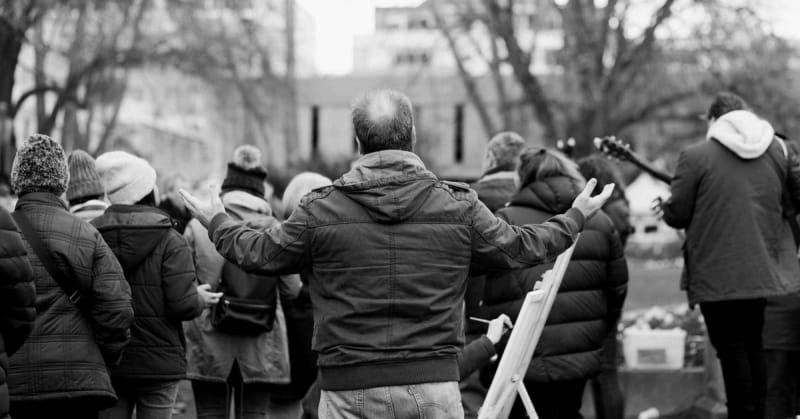
Historic Freedom Songs Unite Clergy Protesting in Minnesota
When hundreds of clergy gathered in Minneapolis to protest violence, they turned to the same songs that powered the Civil Rights Movement 60 years ago. "We Shall Overcome" and "Amazing Grace" are proving their power once again.
The songs that once echoed through Birmingham jails are filling the streets of Minneapolis again. Hundreds of clergy from across America converged on the city in late January, singing the same freedom songs that gave courage to protesters in the 1960s.
Many were arrested while blocking a road near the airport. As they faced police, they sang "We Shall Overcome," "Amazing Grace," and "This Little Light of Mine," the same songs that unnerved segregationist authorities decades ago.
These aren't just nostalgic choices. Research shows that singing together creates real physical solidarity, coming from our core and binding groups together in moments of fear or danger. Civil rights activists in the Deep South spoke of how these songs gave them courage when facing armed deputies and violent mobs.
The songs work because they're battle-tested. Written to be memorable and easy to sing, they've been crowd-tested for generations. Unlike newer protest anthems that require learning lyrics or melodies, almost everyone knows these tunes from church or school.
Protesters can adapt them too. Civil rights activists added "We are not afraid" to "We Shall Overcome." Modern protesters craft new verses for today's challenges while keeping the familiar melodies that bring people together.
"We Shall Overcome" started as a 1900 Methodist hymn before striking Black tobacco workers sang it in 1945. Folk singer Pete Seeger helped spread it worldwide, and it's been sung everywhere from South Africa's anti-apartheid rallies to South Korea and Northern Ireland.
"Amazing Grace" traveled an even longer path. Written by an 18th-century former slave ship captain turned abolitionist, gospel singer Mahalia Jackson brought it to the Civil Rights Movement. Folk singer Judy Collins took it to number 15 on the Billboard charts in 1970.
The Ripple Effect
These freedom songs create bonds across time. When clergy sing them in Minneapolis today, they're linking arms with activists who sang the same words in Birmingham jails, at the March on Washington, and in Mississippi during Freedom Summer. The songs carry forward the values of nonviolence and courage that defined one of America's most successful movements.
For the faith leaders who traveled to Minneapolis, the religious roots matter deeply. These songs express the spiritual values driving their willingness to risk arrest for vulnerable neighbors. When Birmingham's police commissioner released young protesters in the 1960s, he complained their singing "made him sick." Authorities knew then what we're seeing now: songs of hope are harder to silence than shouted slogans.
Music researchers point to another reason these songs endure while newer protest anthems fade. They were written for moments exactly like this, to turn fear into courage and individuals into movements. Every generation that sings them adds new power to voices that refused to be quiet.
More Images


Based on reporting by Good Good Good
This story was written by BrightWire based on verified news reports.
Spread the positivity!
Share this good news with someone who needs it