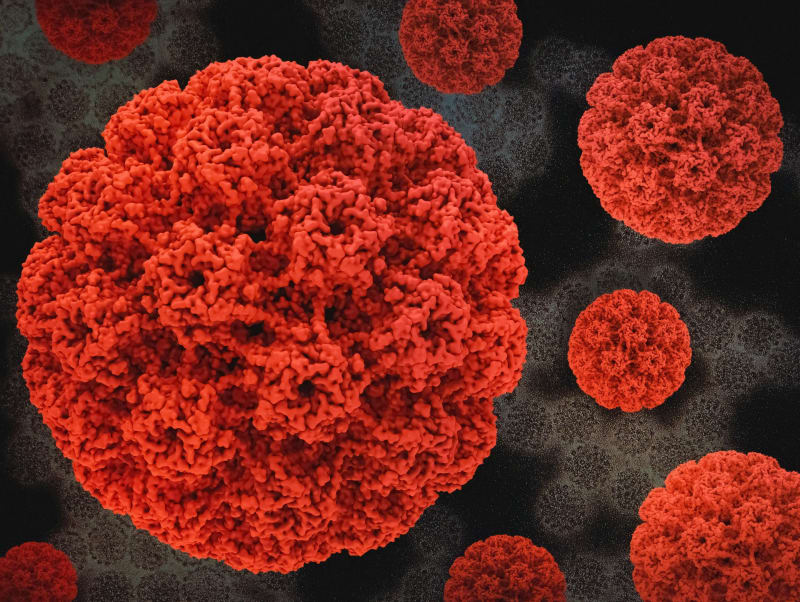
HPV Vaccine Cuts Cervical Cancer Risk 79% After 18 Years
A groundbreaking 18-year study from Sweden shows the HPV vaccine provides lasting protection against cervical cancer, with no signs of weakening over time. Nearly a million women participated in research that could help eliminate cervical cancer as a public health threat.
Cervical cancer rates are plummeting in vaccinated women, and scientists now have proof the protection lasts for decades.
Researchers in Sweden tracked 926,362 women over 18 years to measure how well the HPV vaccine prevents invasive cervical cancer. The results, published in The British Medical Journal, reveal something remarkable: the protection doesn't fade with time.
Women who received the vaccine before age 17 showed a stunning 79% lower risk of developing cervical cancer compared to unvaccinated women. Even 13 to 15 years after vaccination, that protection remained incredibly strong at 77%.
The timing matters, but later vaccination still helps significantly. Women vaccinated at age 17 or older saw a 37% reduced risk overall, which actually improved over time to 77% protection after 13 to 15 years.
Out of 930 cervical cancer cases identified during the study, only 97 occurred in vaccinated individuals while 833 happened in unvaccinated women. Those numbers tell a powerful story about prevention working in real time.
The population-level impact is equally impressive. Women born between 1985 and 1988 faced cervical cancer rates of around 250 cases per 100,000 by age 38. For women born between 1999 and 2001, that rate dropped to just four cases per 100,000 by age 24.
Sweden's nationwide health registers allowed researchers to track outcomes with exceptional accuracy. They accounted for factors like age, residence, family medical history, and socioeconomic status to ensure the findings reflected real vaccine effectiveness.
The HPV vaccine protects against human papillomavirus, one of the most common sexually transmitted infections and the primary cause of cervical cancer. Many countries now offer this vaccine to young people before they become sexually active.
The Ripple Effect
This research strengthens global efforts to eliminate cervical cancer entirely as a public health problem. The World Health Organization has set ambitious targets for HPV vaccination coverage, and studies like this show those goals are achievable.
The findings also provide reassurance to parents making vaccination decisions for their children. Knowing the protection lasts well into adulthood removes concerns about needing repeated doses or booster shots down the line.
Countries with established vaccination programs are already seeing dramatic declines in cervical cancer rates among younger generations. As more nations adopt similar strategies, experts predict cervical cancer could become increasingly rare worldwide.
The research team emphasizes that achieving high vaccination coverage remains crucial for maximizing these benefits across entire populations.
Eighteen years of data proves what scientists hoped: a simple vaccine given in adolescence can prevent a devastating cancer for decades to come.
More Images


Based on reporting by Medical Xpress
This story was written by BrightWire based on verified news reports.
Spread the positivity!
Share this good news with someone who needs it