
Illinois Scientists Turn Sugar Into Eco-Friendly Chemicals Worth $20 Billion
Researchers at the University of Illinois have achieved a groundbreaking milestone in sustainable manufacturing, engineering a remarkable yeast that transforms plant sugars into valuable chemicals used in everyday products. This innovation could revolutionize a $20 billion industry while dramatically reducing our dependence on petroleum-based production.
Scientists at the University of Illinois Urbana-Champaign and Penn State University are celebrating a major breakthrough that could transform how we make everyday products, from disposable diapers to acrylic paint, in a way that's better for our planet and our economy.
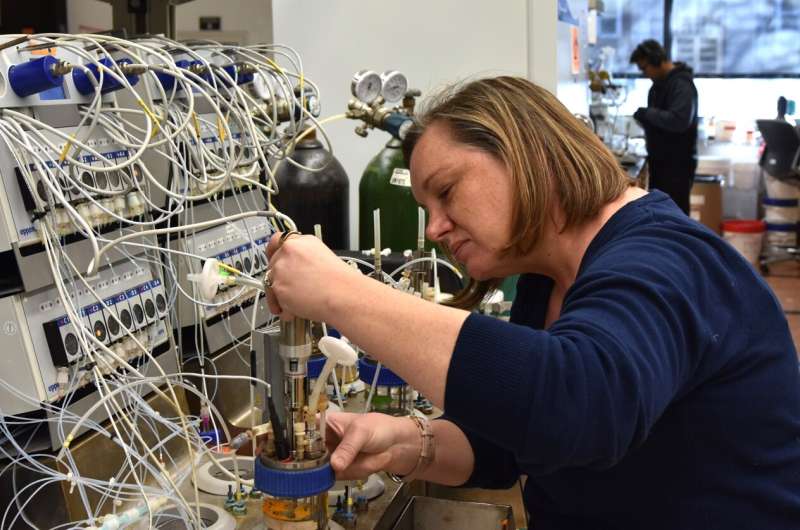
The research team, working through the Center for Advanced Bioenergy and Bioproducts Innovation (CABBI), has successfully engineered a tiny but mighty yeast called Issatchenkia orientalis to produce 3-hydroxypropanoic acid, or 3-HP, a crucial chemical building block. What makes this achievement so exciting is that they've finally cracked the code on making this process both environmentally sustainable and commercially profitable, something that has eluded scientists for decades.
"The high-level production of this chemical from yeast can provide a pathway to acrylic acid production, significantly boosting the agricultural economy," explained Professor Huimin Zhao, who led the study published in Nature Communications. The implications are staggering: the acrylic acid market alone is estimated at $20 billion, with global demand reaching approximately 6.6 million tons annually.
Currently, 3-HP is made almost exclusively from petroleum through an energy-intensive chemical process. The CABBI team's breakthrough means we can now produce this valuable chemical from renewable plant materials instead, marking a significant step toward a more sustainable future.
The research team made several clever innovations to achieve their success. They selected I. orientalis specifically because this hardy yeast thrives in acidic environments, which eliminated costly processing steps required by other microbes. Using a genetic toolbox they had previously developed, the scientists identified the optimal genetic pathway and discovered three highly productive gene variants that dramatically improved efficiency.
The results speak for themselves. The team achieved a 70% yield, producing 0.7 grams of 3-HP for every gram of glucose consumed, with a concentration of 92 grams per liter. According to Zhao, these numbers represent the highest reported yield and titer for 3-HP production among all engineered bacteria and yeast hosts, exceeding the thresholds needed for commercial viability.
The Ripple Effect
This breakthrough has the potential to create positive change that extends far beyond the laboratory. By replacing petroleum-based production with bio-based manufacturing using renewable plant materials, this innovation could significantly reduce the carbon footprint of countless everyday products we use without thinking twice.
The agricultural economy stands to benefit enormously as well. Farmers could see new markets for their crops as plant sugars become the feedstock for this valuable chemical production. Major companies like BASF and Cargill have been pursuing this goal for decades, and now it's finally within reach.
Teresa Martin, research coordinator in Zhao's lab, along with postdoctoral researcher Harry Tan and the entire team, have demonstrated that sustainable manufacturing isn't just an idealistic dream. It's an achievable reality that can work at commercial scale while benefiting both the environment and the economy.
This is exactly the kind of innovation our world needs: practical, profitable, and planet-friendly solutions that prove we don't have to choose between economic prosperity and environmental responsibility.
More Images



Based on reporting by Phys.org
This story was written by BrightWire based on verified news reports.
Spread the positivity! 🌟
Share this good news with someone who needs it
More Good News
 Innovation
Chile Observatory Finds Fastest-Spinning Asteroid at 1.88 Minutes Per Rotation
 Innovation
Scientists Pioneer 'Atomic Spray Painting' in Groundbreaking Lab Discovery
 Innovation
Baby Galaxy Cluster Breaks Records, Hotter Than Sun's Surface at 12 Billion Years Old
DAILY MORALE
What did the thermometer say to the graduated cylinder?
EXPLORE INTEL
DAILY INSPIRATION
Hope is the thing with feathers that perches in the soul and sings the tune without the words and never stops at all.
Emily Dickinson