India School Takes Plastic Bags as Tuition, Teaches 100 Students to Save Planet
In Assam, India, an innovative school accepts plastic waste instead of money for tuition fees, transforming 100 students into environmental champions. The Akshar Forum collects over nine kilograms of plastic monthly, turning it into eco-friendly building materials while providing free education and vocational training to children who might otherwise drop out.
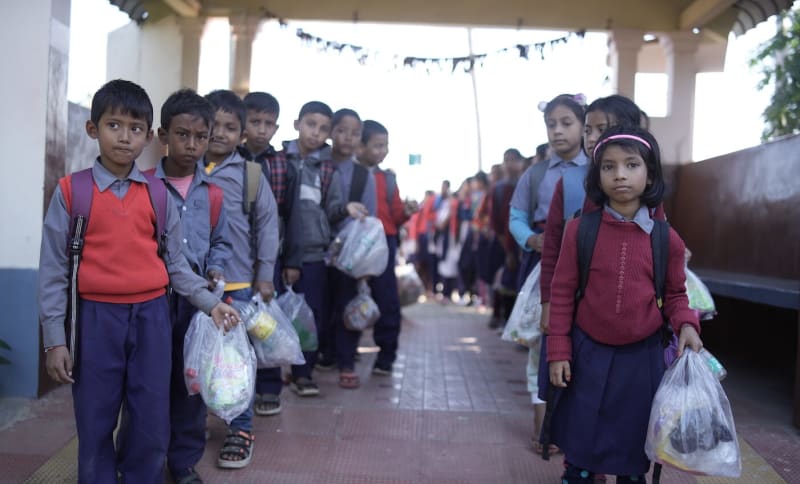
In the village of Pamohi in northeast India, students arrive at school each Thursday morning carrying something unusual alongside their textbooks: 25 carefully cleaned and sorted plastic bags and bottles. This isn't just a recycling project. It's their tuition payment, and it's changing everything.
The Akshar Forum, established in 2016 by Parmita Sarma and Mazin Mukhtar, has created an education model that tackles two of India's most pressing challenges at once. By accepting plastic waste as school fees, they're keeping children in classrooms while simultaneously fighting the region's overwhelming pollution crisis. Assam's capital city alone produces 500 metric tons of waste daily, with less than a third being properly processed.
"Instead of waiving the tuition fee in our school, we decided to take it in the form of plastic waste," Sarma explains. The approach is brilliantly simple: families who might struggle to afford education can now send their children to school by collecting something that's literally cluttering their environment.
But here's where the story gets even better. The school isn't just collecting plastic and hoping for the best. Students are learning to transform this waste into something valuable. In an airy bamboo shed in the school's garden, 100 students press clean plastic bags and wrappers into PET bottles using sticks, creating what they call Eco Bricks. These innovative building blocks replace conventional bricks for garden paths, tree boundaries, and fences.
Fifteen-year-old Piyush Kalita has become passionate about the process. "I can't get over how many bags we're able to fill in a single plastic bottle," he marvels. "At least by doing this we're preventing some of it from being burned." The vocational workshop next door takes the learning further, where older students like Kalita recycle thicker plastics into planters and tabletops using machines based on open-source designs.
The school collects over nine kilograms of plastic monthly, transforming it into approximately 50 eco-bricks. While principal Akanchha Dubey acknowledges they haven't yet found a steady market for their products, the educational impact is invaluable. Students are gaining hands-on experience with different grades of plastic, sustainable building techniques, and environmental responsibility.
The Ripple Effect: The impact of this small village school is spreading far beyond Pamohi. Students have become teachers themselves, training other local schools to make Eco Bricks. Kalita recently traveled 1,000 miles to Ladakh in the Himalayas to share their knowledge with students there. The Assam government has taken notice too, building a model childcare center using 14,000 plastic bottles and planning 100 more such structures across the state.
What started as one school's creative solution to afford education for disadvantaged children has sparked a movement. Other schools globally are adopting similar models, from Lagos to the Philippines, proving that environmental challenges can become opportunities for innovation and education.
Young Kalita wonders aloud why more people don't segregate their waste properly. Thanks to his school, he and his classmates aren't just wondering. They're showing their entire community how to turn a pollution problem into pathways, both literal ones made of eco-bricks and educational ones that keep children learning and dreaming.
Based on reporting by Reasons to be Cheerful
This story was written by BrightWire based on verified news reports.
Spread the positivity! 🌟
Share this good news with someone who needs it
More Good News
 Solutions
Morocco Students Host Inspiring Forum Uniting Africa's Hospitality Future
 Solutions
Tamil Nadu Launches India's First Deep Tech Policy with $12M Innovation Fund
 Solutions
Ghana Youth Program Trains 120 in Green Business, Creates Climate-Smart Jobs
DAILY MORALE
What did the thermometer say to the graduated cylinder?
EXPLORE INTEL
DAILY INSPIRATION
Hope is the thing with feathers that perches in the soul and sings the tune without the words and never stops at all.
Emily Dickinson