India's Space Agency Makes Breakthrough Discovery to Protect Future Astronauts
ISRO has achieved a remarkable milestone by successfully detecting cosmic dust particles entering Earth's atmosphere every 16 minutes. This groundbreaking discovery will help safeguard astronauts on India's upcoming Gaganyaan missions and advance our understanding of space weather for safer space exploration.
India's space program has reached an exciting new frontier with a discovery that promises to make space travel safer for future astronauts and protect valuable satellites orbiting our planet.
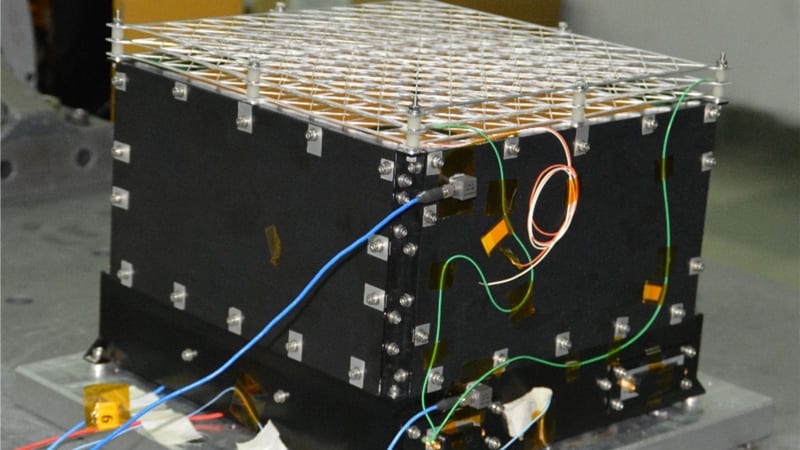
The Indian Space Research Organisation (ISRO) announced on Monday a remarkable achievement: their innovative Dust EXperiment (DEX) instrument has successfully confirmed that interplanetary dust particles enter Earth's atmosphere approximately every 1,000 seconds—roughly once every 16 minutes. This groundbreaking finding represents a major leap forward in understanding and protecting against space hazards.
Weighing just 3 kilograms, the ingenious DEX instrument was launched aboard the XPoSat mission on January 1, 2024. Developed by the Physical Research Laboratory, this first-of-its-kind technology demonstrates India's growing capabilities in cutting-edge space science. The instrument's wide-view detector successfully logged crucial data during its experimental phase in early 2024, capturing valuable information about these microscopic travelers from space.
What makes this discovery particularly exciting is its direct application to human spaceflight. As India prepares for its ambitious Gaganyaan missions—which will carry Indian astronauts into space and eventually to the Moon—understanding the space environment becomes critical for crew safety. The data collected by DEX will help scientists and engineers design better protection systems for spacecraft and plan safer mission routes.
The sophisticated detector operates on remarkably low power—just 4.5 watts—yet can capture high-speed space dust impacts with impressive precision. During testing, ISRO measured dust flux rates that confirm the constant presence of these particles in our atmosphere. Rather than being cause for alarm, this knowledge empowers scientists to develop innovative solutions for spacecraft protection.
Beyond astronaut safety, this discovery opens exciting possibilities for planetary exploration. ISRO plans to deploy DEX-like instruments on future missions to Mars and Venus, where they will study atmospheric compositions and enhance our understanding of these neighboring worlds. Each mission will add valuable pieces to the puzzle of our solar system's story.
The implications extend to everyday life on Earth as well. The satellites we depend on for communication, weather forecasting, and navigation all benefit from better understanding of the space environment. By tracking space weather and dust particles, scientists can better protect these vital assets, ensuring continued reliable service for people around the globe.
This achievement showcases the incredible ingenuity and dedication of India's space scientists and engineers. The successful development and deployment of such a sensitive, specialized instrument demonstrates that innovation knows no boundaries. It's a testament to what can be accomplished when brilliant minds work together toward advancing human knowledge.
As we look toward the stars with hope and curiosity, discoveries like this remind us that each step forward in space exploration brings practical benefits closer to home. India's commitment to understanding and safely navigating the space environment paves the way for a future where space travel becomes increasingly accessible and secure.
The DEX experiment represents more than just scientific achievement—it's an investment in humanity's future among the stars, ensuring that when Indian astronauts venture into space, they'll be protected by some of the most advanced knowledge and technology available.
Based on reporting by Indian Express
This story was written by BrightWire based on verified news reports.
Spread the positivity! 🌟
Share this good news with someone who needs it
More Good News
 🚀 Innovation
Indian Spacetech Startup Dhruva Space Makes History with Multi-Mission Satellite Launch
 🚀 Innovation
Clemson Researcher's Space Fire Safety Work Could Protect Future Moon and Mars Explorers
 🚀 Innovation
Private Philanthropy Launches New Era of Space Exploration with Lazuli Telescope
Joke of the Day
Why don't scientists trust atoms?
Explore Categories
Quote of the Day
"The only way to do great work is to love what you do."
— Steve Jobs