
January's Night Sky Gift: Jupiter Shines Brilliantly for Stargazers Everywhere
Jupiter, our solar system's magnificent giant planet, is putting on a spectacular show this January, reaching its closest approach to Earth and offering breathtaking views for anyone with binoculars or a telescope. This is the perfect month to discover the wonders of the king of planets and its dancing moons.
What a wonderful time to be a stargazer! Jupiter, the largest and most fascinating planet in our solar system, is treating us to an absolutely spectacular celestial display throughout January.
Look toward the east-northeast sky as evening falls, and you'll spot Jupiter shining like a brilliant silvery "star" among the constellation Gemini the Twins. The planet forms a beautiful triangle with the famous "Twin Stars" Pollux and Castor—a sight you simply cannot miss, even from light-polluted cities.
The show reaches its peak on Saturday, January 10, when Jupiter arrives at opposition, meaning it sits directly opposite the sun in our sky. Just hours earlier, on Friday, January 9, Earth makes its closest approach to this giant world, bringing us within 393.3 million miles of Jupiter. This cosmic alignment means we're getting the best possible views of the king of planets!
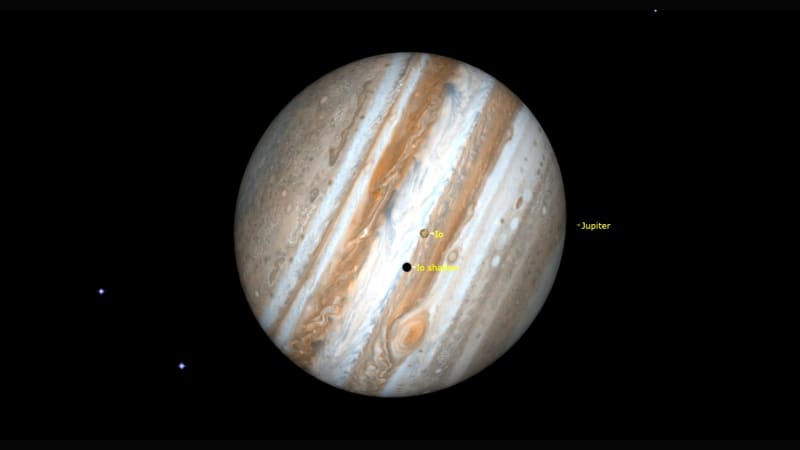
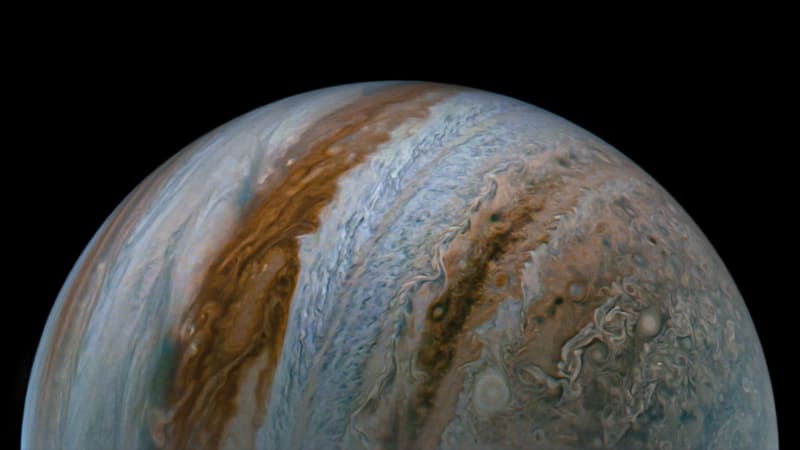
What makes Jupiter so captivating? This magnificent world holds nearly 2.5 times more mass than all other planets combined and spans an impressive 88,846 miles across its equator. It's a colossal ball of swirling hydrogen and helium, decorated with stunning multi-colored cloud bands that constantly shift and dance.
Even modest equipment reveals Jupiter's treasures. Through binoculars, you'll see a tiny disk, while a medium-sized telescope unveils an intricate landscape of dark belts, bright zones, and countless fascinating features. Jupiter rotates faster than any other planet in our solar system, completing a full spin in less than ten hours—you can actually watch features move across its face during a single evening!
Perhaps most delightful are Jupiter's four Galilean moons—Io, Europa, Ganymede, and Callisto—which perform an enchanting celestial ballet around their giant parent. Even simple 7-power binoculars reveal these tiny "stars" lined up near Jupiter, and their positions change noticeably from hour to hour. It's like watching a cosmic dance unfold in real-time! On January 10, for instance, three moons will appear on one side of Jupiter while Callisto stands alone on the opposite side.
Scientists continue making exciting discoveries about Jupiter, with NASA's Juno mission recently revealing that the planet likely has a "dilute" core where heavy elements dissolve into a thick mantle of metallic hydrogen. In fact, Jupiter came remarkably close to becoming a star itself—had it been born just a bit larger, we'd be living in a binary star system!
The best news? January's long nights mean you can observe nearly every side of Jupiter's rotating globe, and the planet will remain prominent in our evening sky for months to come. By late evening, Jupiter climbs high in the southern sky, offering steady, clear views perfect for detailed observation.
Whether you're a seasoned astronomer or someone who's never looked through a telescope, Jupiter's January performance is an invitation to connect with the cosmos. Grab any optical aid you have, step outside, and prepare to be amazed by the wonders waiting in our celestial neighborhood.
More Images


Based on reporting by Space.com
This story was written by BrightWire based on verified news reports.
Spread the positivity! 🌟
Share this good news with someone who needs it
More Good News
 🌍 Planet Wins
Spectacular Northern Lights Show Could Delight Stargazers Across 12 States Tonight!
 🌍 Planet Wins
Writer Discovers Breathtaking Wonder of True Dark Skies in Canary Islands
 🌍 Planet Wins
California Breaks Free of Drought After 25 Years of Waiting
Joke of the Day
Why don't scientists trust atoms?
Explore Categories
Quote of the Day
"The only way to do great work is to love what you do."
— Steve Jobs