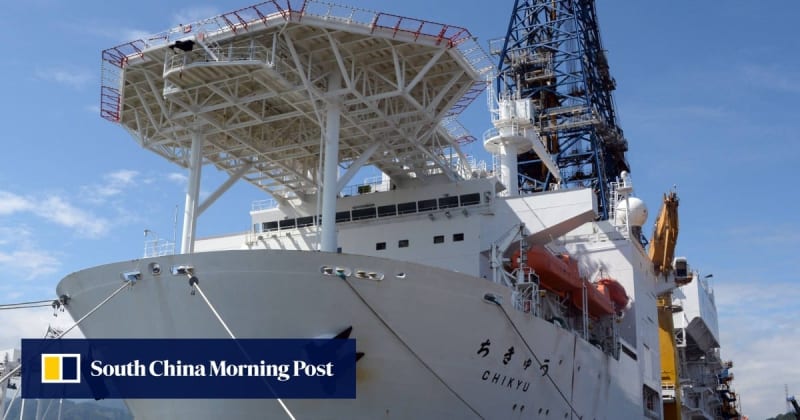
Japan Tests World's First Deep Sea Rare Earth Mining
Japan just launched a groundbreaking mission to mine rare earth minerals from 6,000 meters beneath the ocean, a world first that could reshape how nations secure materials for modern technology. The innovative project could help countries reduce dependence on single suppliers for the critical minerals that power everything from smartphones to electric cars.
A Japanese research vessel departed Monday on a mission that's never been attempted before: continuously lifting rare earth minerals from the ocean floor 6,000 meters below the surface.
The ship Chikyu is heading to Minamitori island, a remote coral atoll 1,900 kilometers southeast of Tokyo. Over the next month, crews will test whether they can successfully extract rare earth rich mud from depths that would swallow Mount Everest with room to spare.
The stakes extend far beyond Japan's shores. Rare earth minerals are the hidden ingredients in nearly every piece of modern technology, from the phone in your pocket to electric vehicles to advanced medical equipment. Yet production of these critical materials has been concentrated in just a few locations worldwide, creating vulnerability in global supply chains.
"One of our missions is to build a supply chain for domestically produced rare earths to ensure a stable supply of minerals essential to industry," said Shoichi Ishii, head of the government-backed project. The vessel departed from Shizuoka on a clear day with snow-capped Mount Fuji watching in the background.
The timing reflects growing urgency around mineral independence. Japan and other nations have been working to diversify their sources of rare earths, particularly as international tensions have occasionally disrupted trade flows. Recent export restrictions have reinforced the importance of developing alternative supply chains.
The Ripple Effect
If successful, this technology could open new possibilities for countries seeking to secure their own mineral supplies. The ocean floor contains vast deposits of rare earths that have remained untapped because of the technical challenges of deep sea extraction.
The innovation could also ease pressure on land-based mining operations, which often face environmental and social challenges. While deep sea mining raises its own environmental questions that researchers continue to study, having multiple sourcing options gives nations more flexibility in building sustainable supply chains.
Japan's success with this mission could inspire similar projects worldwide. Several countries are exploring their own offshore mineral deposits, and proven extraction technology would accelerate those efforts.
The Chikyu's month-long trial will test whether engineering can overcome the extreme pressures and technical hurdles of working at such depths. Success would mark a significant milestone in humanity's ability to responsibly access resources needed for the clean energy transition and modern life.
As the vessel steams toward Minamitori, it carries not just mining equipment but the possibility of a more resilient global supply chain for the materials that power our future.
More Images


Based on reporting by South China Morning Post
This story was written by BrightWire based on verified news reports.
Spread the positivity! 🌟
Share this good news with someone who needs it


