
Korean Scientists Discover Brain Cancer Origins, Opening Door to Early Treatment
A groundbreaking collaboration between KAIST and Yonsei University researchers has identified where the most common malignant brain tumor in young adults begins, potentially revolutionizing early diagnosis and prevention. This remarkable discovery could help save countless lives by catching cancer before visible tumors even form.
In an extraordinary scientific breakthrough that could transform how we fight brain cancer, researchers from South Korea have unlocked a crucial mystery that has puzzled medicine for decades. They've discovered exactly where and how the most common malignant brain tumor in young adults actually begins, opening an exciting new chapter in cancer treatment and prevention.
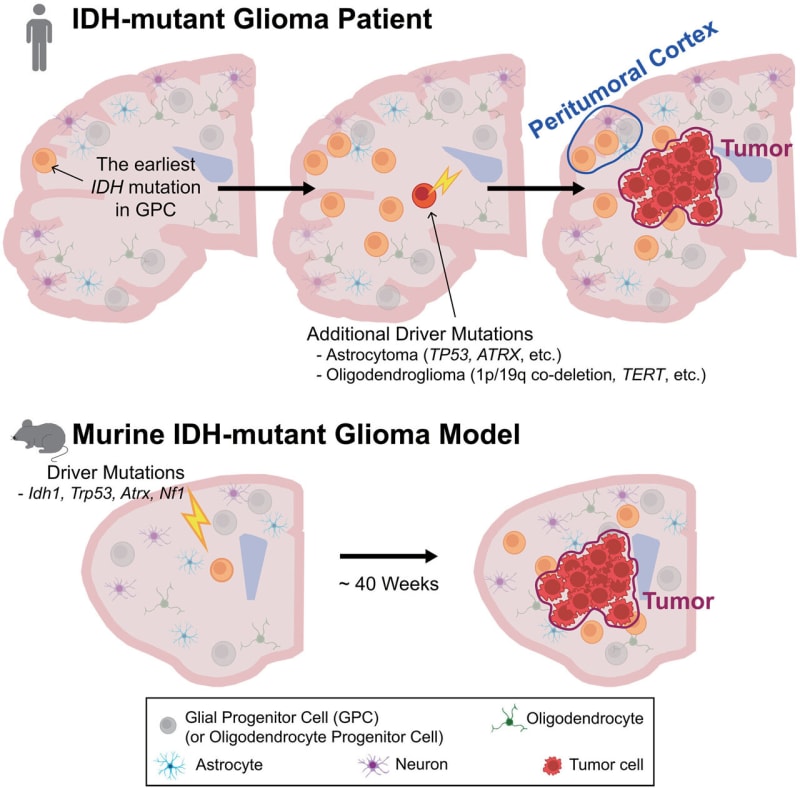
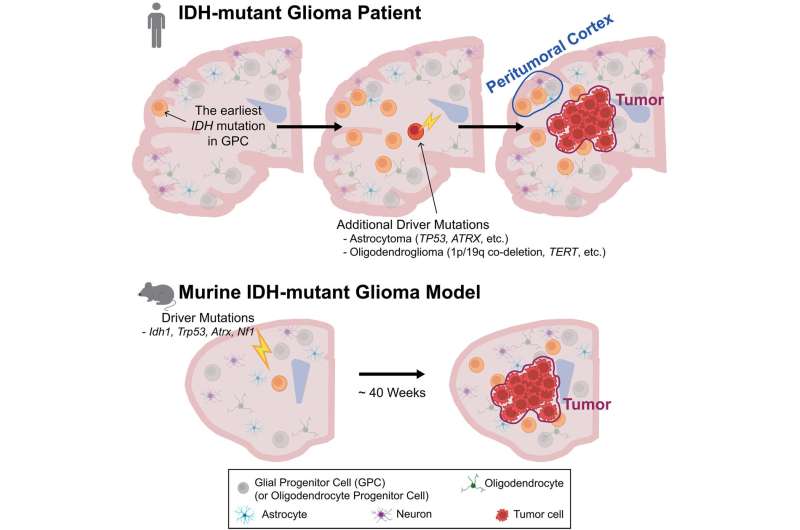
Professor Jeong Ho Lee from the Korea Advanced Institute of Science and Technology (KAIST) and Professor Seok-Gu Kang from Yonsei University Severance Hospital led this pioneering research, published in the prestigious journal Science. Their team identified that IDH-mutant gliomas, which primarily affect people under 50, originate from glial progenitor cells living quietly in normal brain tissue, long before any visible tumor appears.
What makes this discovery truly hopeful is the timeline it reveals. Rather than brain cancer appearing suddenly and without warning, these researchers showed that the process begins slowly, with normal brain cells acquiring initial mutations and spreading gradually through the cortex over an extended period. This means there's potentially a window of opportunity, sometimes years long, where early intervention could prevent the tumor from ever fully developing.
Dr. Jung Won Park, a neurosurgeon and the study's first author, shared the personal motivation behind this work. "The question I kept asking while treating patients was 'Where does this tumor originate?'" he explained. His curiosity, combined with KAIST's world-class research capabilities and the clinical expertise of Yonsei Severance Hospital, created the perfect environment for this breakthrough.
The research team used cutting-edge spatial transcriptomics technology, which allowed them to see which genes were operating in specific locations throughout the brain tissue. Through meticulous analysis of tumor tissue and surrounding areas that appeared completely normal, they made their game-changing discovery. They even successfully recreated the tumor development process in animal models, confirming their findings and paving the way for future treatments.
The Ripple Effect
This research is already creating waves of positive change beyond the laboratory. Sovagen Co., Ltd, a startup founded by KAIST faculty, is developing innovative RNA-based drugs specifically designed to suppress the evolution and recurrence of these brain tumors. Meanwhile, Severance Hospital is working on advanced technologies to detect and control early mutant cells through an international Korea-US research partnership.
Professor Kang emphasized the paradigm shift this represents. "Brain tumors may not start exactly where the tumor mass is visible," he noted. By targeting the origin cells and their location based on specific tumor subtypes, doctors could revolutionize both early diagnosis and recurrence prevention.
For young adults facing this diagnosis and their families, this research brings something precious: hope. The possibility of catching cancer before it becomes a visible tumor, of stopping the disease in its earliest stages, represents a fundamental change in how we approach one of medicine's most challenging conditions. While more research and development lie ahead, this discovery marks a significant step toward turning a difficult-to-treat cancer into one that might be prevented entirely.
More Images
Based on reporting by Medical Xpress
This story was written by BrightWire based on verified news reports.
Spread the positivity! 🌟
Share this good news with someone who needs it
More Good News
 Health & Wellness
How a 14-Year-Old Boy Helped Save Millions from Diabetes
Tezpur University Scientists Discover Blood Test Breakthrough for Cancer Detection
 Health & Wellness
FDA Grants Breakthrough Orphan Drug Status for Rare Blood Cancer Treatment
DAILY MORALE
What did the thermometer say to the graduated cylinder?
EXPLORE INTEL
DAILY INSPIRATION
Hope is the thing with feathers that perches in the soul and sings the tune without the words and never stops at all.
Emily Dickinson