Malaysia Opens First AI-Powered VR Vet School Lab
Veterinary students in Malaysia can now practice surgery on virtual cows and exotic animals without any risk, thanks to the country's first immersive learning lab. The technology lets them make mistakes and learn in a safe environment before treating real patients.
Veterinary students at Universiti Putra Malaysia (UPM) are putting on VR headsets and stepping into a groundbreaking new way to learn their craft.
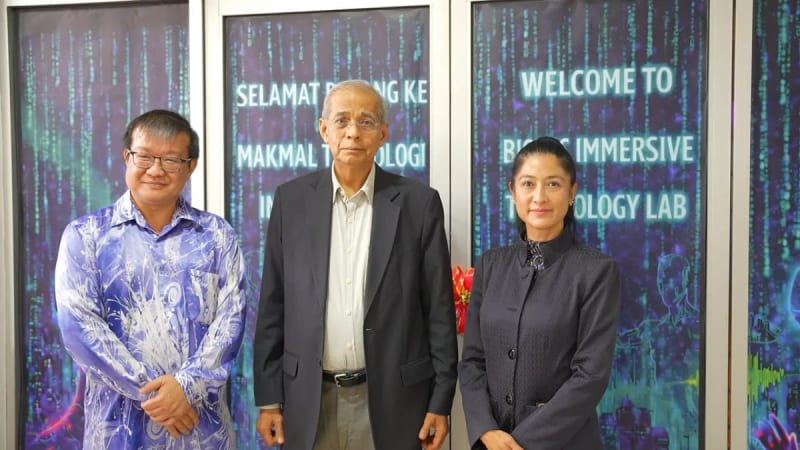
G Plus Tech has sponsored Malaysia's first AI-driven virtual reality learning lab at UPM's veterinary faculty, letting students practice complex procedures on simulated animals before ever touching a real patient. The Bionic Immersive Lab combines virtual reality, augmented reality, and artificial intelligence to recreate realistic veterinary scenarios without the safety risks or high costs of traditional training.
The timing couldn't be better. UPM's 614 veterinary students must master clinical skills across eight different animal categories, from livestock and horses to wildlife and exotic species. Transporting students to field sites or working with large animals like cows and horses can be dangerous and expensive.
"With immersive technology, students can practice procedures repeatedly without safety risks," said Professor Dr. Goh Yong Meng, dean of the veterinary faculty. Large animals pose injury risks even to trained handlers, but in VR, students can make mistakes without real consequences.
The lab addresses another practical challenge. During clinical rotations, not all students can be assigned to hospital duties at once. Now those waiting their turn can continue practicing remotely, keeping their skills sharp without replacing hands-on training entirely.
G Plus Tech has already developed over 100 medical simulations. CEO Dr. Nurliza Md Azzam said students and junior doctors can now practice procedures 10, 20, or even 30 times in virtual reality before treating real patients. Patient safety and animal welfare have become the top priorities.
The Ripple Effect
The technology's potential reaches far beyond veterinary medicine. The same platform can transform training in engineering, aviation, police work, and military operations anywhere that physical equipment and live simulations cost too much.
"You cannot buy an aeroplane just to teach students. You build it in VR," Nurliza explained. The system adapts to any faculty curriculum or industry requirement, making advanced training accessible to more institutions.
UPM sees the lab as more than an internal teaching tool. The university plans to open it for practicing professionals, other faculties, and even the public. Interest has already come from industry players exploring applications in medical and public health training.
G Plus Tech, which also operates in Australia, chose to bring this technology back to Malaysia first. The company hopes this prototype will inspire government support to scale similar labs nationwide, positioning Malaysia as a regional hub for immersive learning solutions.
This is just the beginning of Malaysia's new wave of education.
More Images
Based on reporting by Regional: malaysia technology (MY)
This story was written by BrightWire based on verified news reports.
Spread the positivity!
Share this good news with someone who needs it