Medical Mystery: Rare Skin Condition Transforms Man's Hands After Washing
A young man in China discovered a bizarre medical condition that caused his hands to develop strange scales and lesions whenever they touched water. Doctors uncovered a rare syndrome that puzzled medical experts.
In an extraordinary medical case that highlights the complexity of human biology, a young man in China experienced a perplexing skin transformation that occurred exclusively when his hands made contact with water.
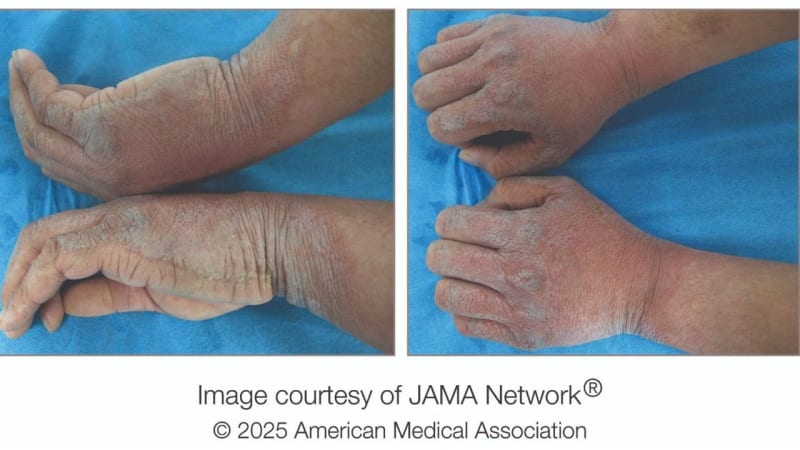
The patient, in his twenties, had been struggling with an unusual condition for nearly three years that caused his hand skin to dramatically change after washing. Whenever he submerged his hands in water, the backs of his hands would develop thick, wrinkly skin with white bumps, accompanied by intense itching and a burning sensation that was particularly pronounced during summer months.
Initially misdiagnosed with chronic eczema and treated with a retinoid ointment, the man's condition continued to worsen. The unusual symptoms gradually spread from his hands to his wrists and elbows, creating significant concern about the underlying medical issue.
During a comprehensive medical examination, doctors conducted a fascinating experiment by immersing the patient's hands in water for ten minutes. The results were startling: his hand skin immediately turned red, developed scaly textures, and formed white lesions that intriguingly stopped in a precise straight line, leaving his palms completely unaffected.
Medical experts performed a skin biopsy that revealed critical insights into the patient's condition. The tests showed significantly widened sweat ducts and an overproduction of keratin, a protein responsible for skin thickness. This led to a rare diagnosis of aquagenic syringeal acrokeratoderma (ASA), a condition so uncommon that this case deviated from typical presentations by affecting the backs of hands rather than palms.
The medical team treated the patient with a topical hydrocortisone urea ointment and recommended minimizing water exposure. Remarkably, within just one month of treatment, the patient's symptoms substantially improved, offering hope and relief.
This extraordinary case underscores the incredible complexity of human physiology and the ongoing importance of careful medical investigation. While the exact cause of ASA remains unknown, researchers believe it might be linked to unique sweat gland abnormalities, presenting an intriguing avenue for future medical research.
The patient's journey serves as a powerful reminder of medical science's ability to unravel even the most mysterious health challenges, providing hope and understanding for individuals facing rare and complex conditions.
Based on reporting by Live Science
This story was written by BrightWire based on verified news reports.
More Good News
 🚀 Innovation
First Opinion Essays of 2025: A Revealing Window into Healthcare's Most Urgent Conversations
 🚀 Innovation
Fusion Power Revolution: How Startups Are Racing to Harness the Sun's Energy
 🚀 Innovation