
Mississippi Mom Victoria Gray: First Person Cured by Nobel-Winning CRISPR Gene Therapy
Victoria Gray from Mississippi became the first person in the world to receive life-changing CRISPR gene therapy for sickle cell disease in 2019, transforming her from a mother who spent her children's birthdays in the hospital to a woman freed from decades of unbearable pain. The revolutionary treatment, discovered at UC Berkeley, earned its creators a Nobel Prize and is now bringing hope to 8 million people worldwide living with the genetic disorder.
In 2019, Victoria Gray of Goodman, Mississippi, made medical history by becoming the first person in the world to receive a revolutionary CRISPR gene therapy treatment for sickle cell disease. Today, she stands as a beacon of hope for millions, living proof that what once seemed impossible has become beautifully real.
Victoria's journey began with heartbreak. Diagnosed at just three months old, she was given a devastating prognosis: she might not live to see her seventh birthday. For decades, sickle cell disease, a genetic blood disorder that blocks oxygen flow throughout the body, controlled every aspect of her life. She spent countless birthdays, including her children's special days, in hospital rooms receiving blood transfusions instead of celebrating at home.
"I felt like I was cheating my children out of their childhood," Victoria shares. The pain was so severe she describes it as "getting struck by lightning and hit by a truck." By her early thirties, she had stopped dreaming about the future.
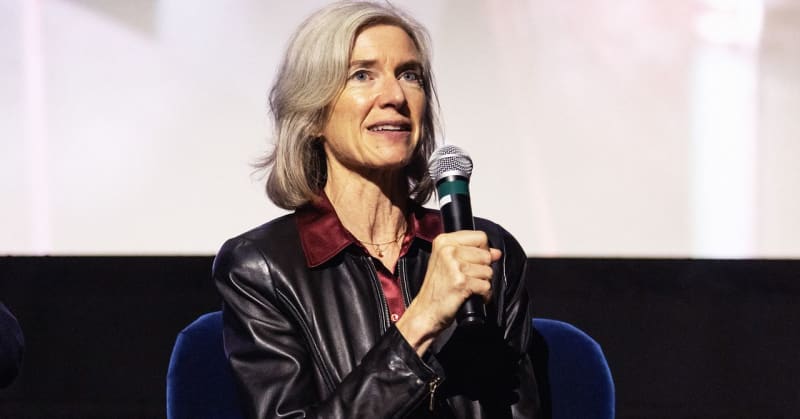
But 2,000 miles away at UC Berkeley, biochemist Jennifer Doudna and her team were working on something extraordinary. Growing up in Hawaii, Doudna had been captivated by the unique evolution of plants and animals around her. That childhood wonder eventually led her to explore the very code of life itself.
In 2012, Doudna and French microbiologist Emmanuelle Charpentier published groundbreaking research on CRISPR-Cas9, a gene-editing tool that allows scientists to precisely rewrite DNA. The discovery was so transformative that the pair received the Nobel Prize in Chemistry in 2020, just one year after Victoria's treatment.
For Victoria, the CRISPR therapy felt like an answered prayer. At 34 years old, she received treatment that would fundamentally change her life. The gene editing worked by correcting the genetic mutation causing her disease, allowing her body to produce healthy red blood cells for the first time.
"CRISPR not only freed me, it freed my children," Victoria says with profound gratitude.
The Ripple Effect of Victoria's courage in becoming the first patient extends far beyond her own family. Sickle cell disease affects at least 100,000 Americans, more than 90 percent of whom are Black, and an estimated 8 million people worldwide, particularly in sub-Saharan Africa and India. For decades, these communities have desperately needed better treatment options.
Thanks to Victoria's pioneering spirit and the dedication of researchers at UC Berkeley, what was once a death sentence in early childhood now has a potential cure. Modern treatments have already extended life expectancy for those born with sickle cell disease to around 50 years, and CRISPR therapy promises to extend that even further while dramatically improving quality of life.
Professor Doudna emphasizes the importance of working at a public university where discoveries can have real-world impact. "I want our discoveries to have real-world impact," she explains, reflecting the mission that drives innovation at Berkeley.
Victoria's story demonstrates that when brilliant minds pursue curiosity-driven research and brave patients are willing to take risks on new treatments, miracles can happen. She now looks forward to a long life, dreams again about the future, and most importantly, gets to celebrate her children's birthdays at home, exactly where a mother wants to be.
Based on reporting by Google News - Disease Cure
This story was written by BrightWire based on verified news reports.
Spread the positivity! 🌟
Share this good news with someone who needs it
More Good News
 Innovation
Nobel Winner Jennifer Doudna Launches Startup to Save Kids with Rare Diseases
 Innovation
MIT Scientists Use AI to Create Breakthrough Antibiotics That Defeat Superbugs
 Innovation
Eli Lilly's Zepbound Shows Promising Results for Psoriatic Arthritis Patients
DAILY MORALE
Why did the dog apply for a job at the bank?
EXPLORE INTEL
MISSION DIRECTIVE
The greatest thing you'll ever learn is just to love and be loved in return.
Moulin Rouge (from the film, popularized by Ewan McGregor)