MIT Creates Pop-Up 3D Structures With Just One String Pull
Researchers at MIT developed a method to transform flat tile patterns into complex 3D structures with a single tug of a string. The breakthrough could revolutionize everything from emergency shelters to medical devices.
📺 Watch the full story above
Imagine pulling a string and watching a flat sheet transform into a fully formed chair, emergency shelter, or medical splint in seconds.
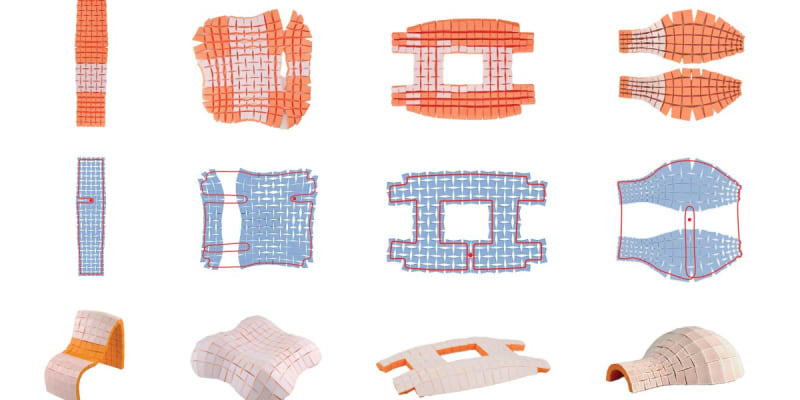
MIT researchers just made that possible. A team at the Computer Science and Artificial Intelligence Laboratory created an algorithm that turns any 3D design into a flat pattern of connected tiles that springs to life with one pull.
The inspiration came from kirigami, the Japanese art of paper cutting. Lead researcher Mina Konaković Luković and her team took that ancient craft and added modern computing power to solve a challenging engineering problem.
Here's how it works: Users specify the 3D structure they want to create. The algorithm then calculates the perfect flat tile pattern and determines the optimal path for a string to weave through it.
When someone pulls that string, the tiles rotate at their corner hinges and lock into the desired 3D shape. Pull again in reverse, and the structure flattens back down for easy storage.
The team already built working prototypes ranging from medical splints and posture correctors to a full-size human chair. Graduate student Akib Zaman, who led the research, says the simplicity is the real breakthrough.
"The user just needs to provide their intended design, and then our method optimizes it," Zaman explains. No complex machinery or multiple steps required.
The Ripple Effect
This technology solves a massive logistics challenge. Shipping bulky 3D objects is expensive and inefficient. Transporting flat patterns that deploy on-site could transform disaster response, space exploration, and healthcare delivery.
Emergency shelters could arrive flat-packed and deploy in minutes after natural disasters. Field hospitals could be set up rapidly in crisis zones. Medical devices could be personalized and transported at a fraction of current costs.
The applications stretch even further. Engineers envision foldable robots that flatten to squeeze into tight spaces for search and rescue. Space agencies could send flat-packed habitats to Mars for robots to deploy before humans arrive.
The patterns can be manufactured using 3D printing, CNC milling, or molding, making the technology accessible with existing equipment. The team is now working on self-deploying mechanisms that wouldn't even need a human or robot to pull the string.
From tiny devices that could deploy inside the human body to architectural building frames assembled by cranes, the size range appears limitless.
The future of 3D structures might just be hiding in plain sight, waiting flat and patient until the moment someone needs them.
Based on reporting by MIT Technology Review
This story was written by BrightWire based on verified news reports.
Spread the positivity!
Share this good news with someone who needs it