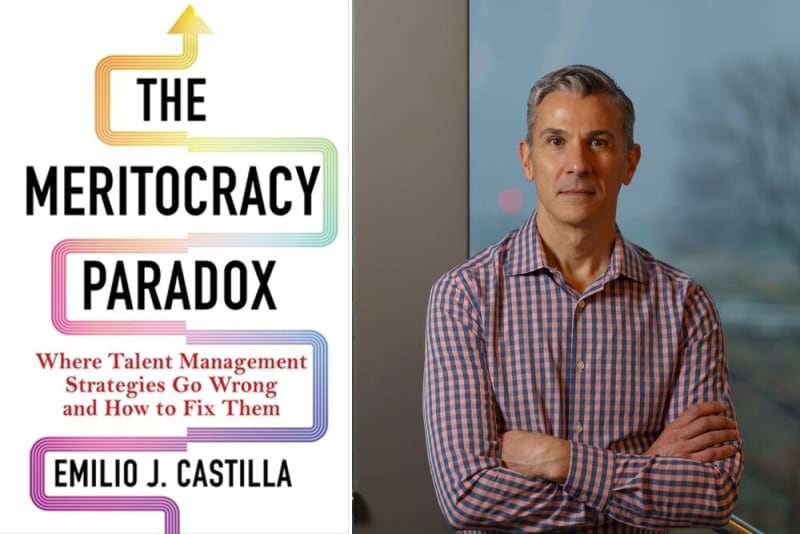
MIT Professor Shows How Organizations Can Build Fairer, More Meritocratic Workplaces
MIT's Professor Emilio Castilla offers hopeful solutions for creating truly fair workplaces in his new book. His research reveals practical, affordable strategies that any organization can implement to recognize talent more equitably and build higher-performing teams.
Great news for organizations committed to fairness: achieving a truly meritocratic workplace is within reach, and it doesn't require complex or expensive solutions. That's the encouraging message from MIT Sloan Professor Emilio J. Castilla, whose new book "The Meritocracy Paradox" offers a roadmap for building fairer, more effective workplaces.
As co-director of MIT's Institute for Work and Employment Research, Castilla has spent decades studying how organizations can better recognize and reward talent. His research brings hope to leaders who want to create workplaces where everyone has an equal opportunity to succeed based on their abilities and contributions.
While Castilla acknowledges that achieving perfect meritocracy presents challenges, his work focuses on practical solutions that organizations can implement today. The most encouraging finding? Making talent management processes fairer doesn't have to be complicated or costly. It simply requires commitment from leadership and two key ingredients: transparency and accountability.
Transparency means being crystal clear about the criteria and procedures used in hiring, evaluation, promotion, and reward decisions. When organizations establish specific, well-defined merit-based criteria, they create pathways for reducing bias and ensuring everyone understands how success is measured. This clarity empowers employees and managers alike to make more objective decisions.
Accountability adds another powerful layer of fairness. When organizations designate people to monitor talent management processes and outcomes, managers naturally become more thoughtful about their decisions. Knowing that choices will be reviewed encourages careful consideration and helps counteract unconscious biases that might otherwise influence outcomes.
Castilla's research reveals fascinating insights about how organizations can improve. His studies show that even well-intentioned emphasis on meritocracy needs to be backed by concrete processes and oversight. The good news is that these systems work—when implemented properly, they help organizations identify and advance their most talented employees regardless of demographic background.
The benefits of striving for meritocracy extend far beyond fairness. Organizations that successfully hire, reward, and promote based on talent and hard work position themselves for long-term success and higher performance. This isn't just theory—it's a principle with deep historical roots. Castilla points out that one of the world's earliest formal meritocracies emerged in China over 2,000 years ago, when emperors developed civil service exams to identify talented officials. Those ancient leaders understood something fundamental: organizations perform best when they select people based on competence rather than connections.
Today's organizations have even more tools at their disposal to achieve fairness. With modern understanding of bias and proven strategies to counteract it, companies can create workplaces where merit truly matters. As organizations grow, making talent decisions based on ability rather than nepotism, social class, or friendship becomes not just ethical but essential for effectiveness.
Castilla's message is ultimately one of optimism. While perfection may be elusive, meaningful progress toward workplace fairness is absolutely achievable. Organizations willing to embrace transparency, implement accountability measures, and commit to continuous improvement can build cultures where talent is recognized, diverse perspectives are valued, and everyone has the opportunity to contribute their best work. That's a future worth working toward—and one that's closer than many might think.
Based on reporting by MIT News
This story was written by BrightWire based on verified news reports.
Spread the positivity! 🌟
Share this good news with someone who needs it
More Good News
 💡 Solutions
Nigerian Army Opens Doors to Future Leaders with Free Officer Training Program
 💡 Solutions
Words Over Numbers: How Narrative Reviews Help Employees Thrive
 💡 Solutions
Companies Doing Good Are Thriving: ESG Practices Boost Value and Market Success
Joke of the Day
Why did the librarian get kicked out of class?
Explore Categories
Quote of the Day
"Do not go where the path may lead, go instead where there is no path and leave a trail."
— Ralph Waldo Emerson