MIT Summit Expands College Access in Massachusetts Prisons
Massachusetts colleges and corrections partners gathered at MIT to expand higher education in prisons, creating pathways that transform lives. Author Shaka Senghor shared how reading and learning changed his life from trauma to hope.
Education behind bars is opening new doors across Massachusetts, and the results are changing lives from the inside out.
In December, educators, policymakers, and community partners gathered at MIT for a groundbreaking summit focused on bringing quality college education to incarcerated students. The Massachusetts Prison Education Consortium brought together community colleges and county corrections facilities to create a statewide network that makes higher education accessible to people serving time.
The summit tackled real challenges with practical solutions. Participants developed concrete plans to help students transfer credits when they move between facilities and to staff hybrid classrooms that combine in-person and remote instruction. They also focused on connecting education programs with regional job markets so students have real career pathways waiting when they're released.
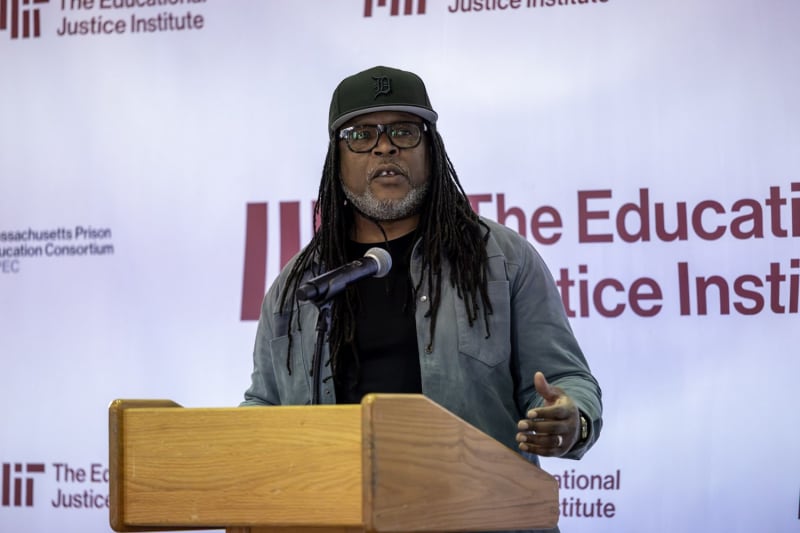
Author and resilience expert Shaka Senghor delivered the keynote address, sharing his personal journey from incarceration to transformation. He emphasized how reading and writing changed everything for him. "What else can you do with your mind?" he asked, describing the moment he realized education could reshape his future.
The Educational Justice Institute at MIT created this consortium drawing on years of successful prison education work. Co-directors Lee Perlman and Carole Cafferty bring decades of experience, with Perlman teaching in correctional classrooms for years and Cafferty serving as superintendent of a Massachusetts jail.
MIT students participate too, either learning alongside incarcerated students or serving as teaching assistants in courses like Philosophy of Love and Non-violence as a Way of Life. Many MIT students describe these classes as life-changing, as they discuss fundamental questions about how to live meaningful lives with people from completely different backgrounds.
The Ripple Effect
This initiative reaches beyond individual transformation to strengthen entire communities. The consortium focuses on high-impact programs that work even when people can only participate for six months, the average stay in county facilities.
By reducing recidivism and expanding work opportunities, these education programs help justice-impacted individuals return home ready to contribute. Speakers emphasized special attention to women in the system, who face unique challenges. The restoration of Pell Grant eligibility for incarcerated students makes college accessible to thousands who couldn't afford it before.
Programs align with regional labor markets, meaning graduates leave with credentials employers actually need. That creates a stronger workforce while giving individuals real second chances.
Education doesn't just prepare people for jobs—it opens minds to new possibilities and helps heal past trauma through learning and mentorship.
Based on reporting by MIT News
This story was written by BrightWire based on verified news reports.
Spread the positivity!
Share this good news with someone who needs it