Moroccan Women Turn Chef Training Into Economic Freedom
In Morocco, where women make up just 22% of the workforce, a nonprofit is changing lives through culinary education. Over 350 women have learned to cook their way to independence, with 87% now employed and earning up to five times more.
While soccer fans cheered in Marrakesh during Africa's AFCON tournament, a different kind of victory was unfolding at the food stands. Six young women served up burgers, spicy sandwiches, and chocolate waffles, showcasing skills that are transforming their futures.
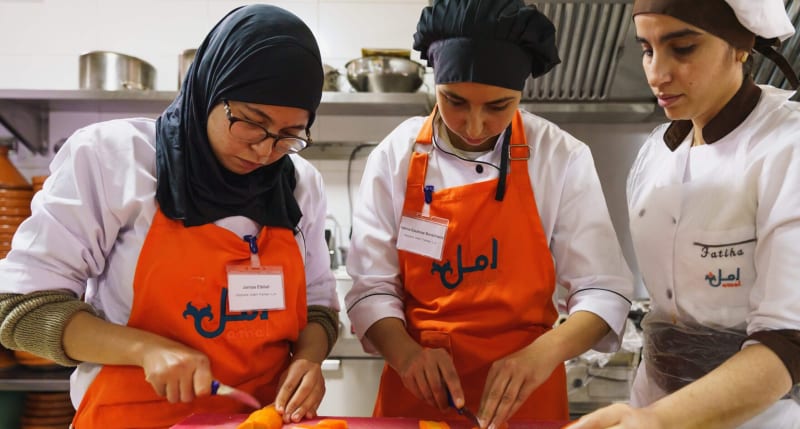
Oumaima Elhiba, 27, started her chef training just three months earlier. Now she's mastering everything from traditional tajine stews to her new favorite cuisine: sushi.
"Even my mom asks me to cook it for her," says Elhiba, who's become such a fan that she's now hooked on Japanese anime and K-dramas.
Elhiba is one of more than 350 women trained by Amal, a Marrakesh nonprofit founded in 2012. In a country ranked 137th out of 148 nations for gender equality, Amal saw an opportunity where others saw obstacles.
The numbers tell a stark story. Moroccan women represent just 22% of the workforce despite making up half the population. Many face discrimination and barriers that keep them trapped in poverty, especially single mothers rejected by their communities.
American-Moroccan founder Nora Fitzgerald Belahcen started small, baking brownies and cheesecakes with two struggling mothers. That tiny kitchen operation has risen into something extraordinary.
Today, Amal runs a flagship restaurant, cooking schools, and even a sign language cafe staffed by deaf women. About 30 women are selected yearly from hundreds of applicants, all in economic need.
"The first week can be very difficult," says chef trainer Ismail El Batalani. "Some women don't know how to read or write."
The nine-month program goes far beyond recipes. Women receive free cooking training, language lessons, life coaching, health insurance, a monthly stipend, and childcare support. They learn French gastronomy alongside traditional khobz bread and modern sushi techniques.
Sana Ait Lamallame, 22, had to drop out of university to support her mother. When she started Amal's program in 2023, she couldn't cook at all.
"I started seeing life in a different respect," says Lamallame, who now works as a server despite traveling nearly two hours by bus each day. "I have dreams. I want to be financially independent."
The Ripple Effect
The transformation extends far beyond individual kitchens. Amal graduates increase their earning capacity two to five times on average, and 87% find employment in the culinary sector.
"It's not just giving jobs to women, it's giving them back their dignity," says Professor Fatima-Zohra Iflahen, a gender expert at Cadi Ayyad University. The program teaches women to respect and love themselves while building skills that provide lasting autonomy.
If one job disappears, these women now have the confidence and ability to find another. They're not just learning to cook; they're learning to thrive in a society that too often tells them they can't.
What started as two women baking brownies is now a recipe for revolution, one meal at a time.
Based on reporting by Reasons to be Cheerful
This story was written by BrightWire based on verified news reports.
Spread the positivity!
Share this good news with someone who needs it