Morocco Hosts World-Class AFCON Final After 50-Year Journey
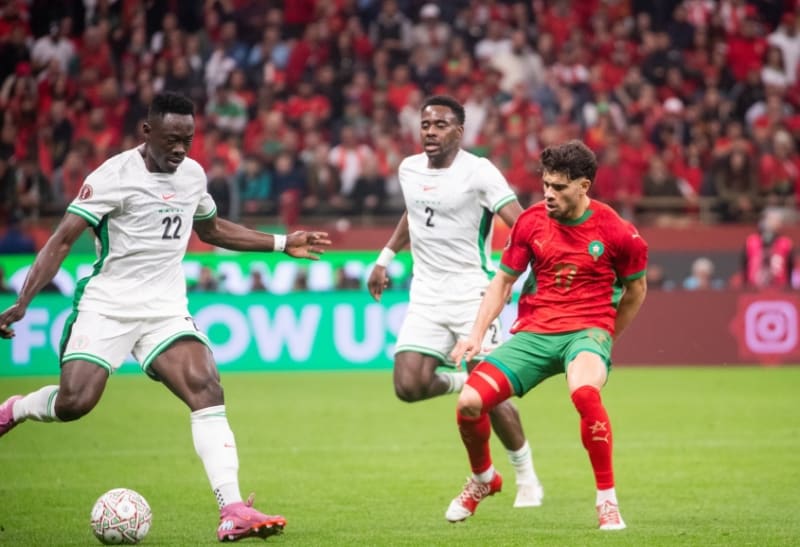
Morocco will play in its first Africa Cup of Nations final since 2004 after defeating Nigeria in a thrilling penalty shootout, showcasing how decades of investment in youth and infrastructure have transformed African football. The championship match against Senegal represents a coming-of-age moment for a continent now recognized as more than just a talent pipeline.
When Morocco takes the field Sunday against Senegal in the AFCON final, they'll be playing for more than a trophy—they'll be celebrating 50 years of remarkable transformation in African football.
The Atlas Lions secured their spot with a dramatic 4-2 penalty shootout victory over Nigeria after extra time couldn't separate the two sides. Their opponent, Senegal, defeated Egypt 1-0 to set up a showdown between Africa's two highest-ranked teams: Morocco at 11th and Senegal at 19th in FIFA's world rankings.
The matchup features global superstars like Senegal's Sadio Mané facing Morocco's Achraf Hakimi, the 2025 CAF Player of the Year. But the real story extends far beyond individual talent.
Since 2016, FIFA has invested over $1 billion in African football through its Forward program. That investment shows in the quality of play and infrastructure across the continent.
Nearly three dozen Premier League players competed at AFCON 2025, alongside dozens more from La Liga, Ligue 1, and the Saudi Pro League. Importantly, Morocco's own Botola Pro league now offers world-class opportunities, proving Africa has become a destination rather than just a training ground.
The tournament also announced major changes: AFCON will shift from every two years to every four, and a new African Nations League will launch, mirroring Europe's successful format. These changes acknowledge the continent's depth of talent and crowded international schedules.
The Ripple Effect
The transformation extends beyond the pitch. When Morocco last won AFCON in 1976, just 30,000 fans watched in Ethiopia's Addis Ababa Stadium.
This year's semifinal drew 65,000 fans to Rabat's Prince Moulay Abdellah Stadium, a sleek modern venue that will host 2030 World Cup matches when Morocco co-hosts with Spain and Portugal. The experience of managing crowds, transportation, lodging, and media will serve Morocco and future African hosts well.
Morocco itself has undergone stunning development. The country's population has doubled from 17 million to 38 million since 1976. Primary school attendance jumped from under 50% to 98%.
Morocco's GDP has grown eighteen times larger, expanding from textiles and tourism to aerospace manufacturing and financial services. Development challenges remain, but hosting talent from across the continent symbolizes remarkable progress in human development and infrastructure.
Young players like Morocco's Othmane Maamma are attracting attention from Liverpool and Manchester United, while Senegal's Lamine Camara represents the next generation of global superstars. Even last year's Ballon d'Or finalists, Lamine Yamal and winner Ousmane Dembélé, have strong African family ties.
Whether Sunday's final becomes an instant classic or not, the entire continent has already won by showcasing world-class talent, infrastructure, and hospitality on the global stage.
Based on reporting by Morocco World News
This story was written by BrightWire based on verified news reports.
Spread the positivity! 🌟
Share this good news with someone who needs it