Museum Scientists Solve Decades-Old Frog Mystery, Celebrate Power of Careful Research
A dedicated team at the University of Kansas successfully corrected a 25-year-old species identification error, demonstrating how meticulous detective work and well-maintained museum collections help science self-correct. Their discovery shows how modern technology and careful scholarship work together to give us a clearer picture of our planet's amazing biodiversity.
In a heartwarming testament to scientific persistence and collaboration, researchers at the University of Kansas Biodiversity Institute have solved a colorful mystery that had puzzled herpetologists for decades—and their success story highlights everything that's right about how science evolves and improves over time.
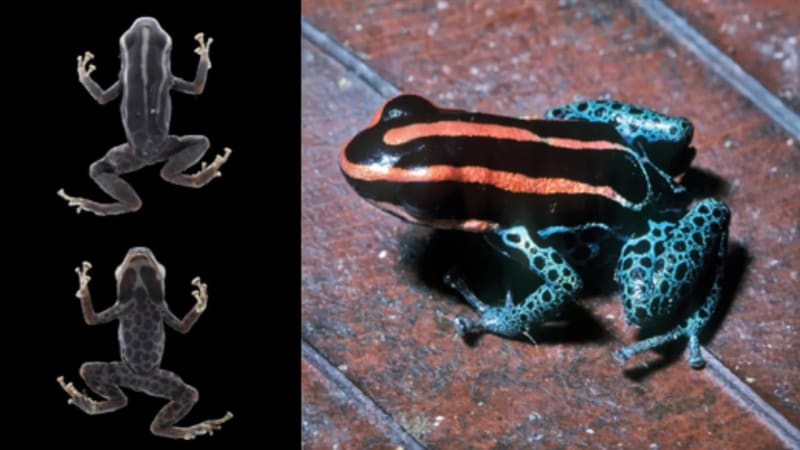
The tale begins with a beautiful poison frog from the Peruvian rainforest. Back in 1999, a researcher spotted a photograph of a strikingly colorful specimen and, unable to match it to known species, described it as new to science, naming it Dendrobates duellmani. It seemed like a straightforward discovery at the time, but this little frog had a secret that would take years of careful work to uncover.
The breakthrough came when visiting scientists asked to examine the official specimen, called a holotype, which serves as the permanent reference for that species name. What they found was surprising: the physical specimen was brown, not the vibrant colors shown in the original photograph. Rather than being discouraged, the team saw an opportunity.
"When they got the specimen with the described number, they realized: This is not it," explained Ana Motta, the collection manager of herpetology who led the investigation. What could have been viewed as an embarrassing mistake instead became a chance to showcase the power of scientific collaboration and meticulous record-keeping.
The researchers transformed into scientific detectives, carefully piecing together field notes, photographs, and specimen records. Their patient work paid off beautifully. They discovered that a simple catalog number mix-up had occurred—the photograph showed one specimen while a different one had been assigned the official catalog number. Both frogs existed; they just needed to be properly matched.
The resolution brought an even more delightful revelation. The colorful frog wasn't a separate species after all, but rather a stunning color variant of the already-known Amazon poison frog, Ranitomeya ventrimaculata. This discovery perfectly illustrates how nature's diversity expresses itself in wonderful and unexpected ways.
"Things that look different morphologically can be the same species genetically," Motta explained warmly. "The populations have different colorations but are not reproductively isolated. They share a lot of genetics. They are one species, just with variation. When you keep collecting, you find a spectrum."
This success story, published in the journal Zootaxa, celebrates several important aspects of modern science. First, it demonstrates science's remarkable ability to self-correct—errors don't persist forever when dedicated researchers remain curious and thorough. Second, it showcases the invaluable treasure that museum collections represent, preserving specimens and records that allow future scientists to verify and build upon earlier work.
The case also highlights an exciting evolution in how scientists work today. Motta describes an era of the "extended specimen," where genetic data, recordings of frog calls, detailed photographs, and other information all contribute to our understanding of species. This holistic approach combines traditional careful specimen work with cutting-edge technology.
Rather than being a story about scientific failure, this is truly a celebration of how science progresses—through collaboration, careful record-keeping, openness to questioning previous conclusions, and the dedication of researchers who care deeply about getting things right. The little Peruvian frog that caused such confusion has ultimately helped demonstrate that science, like nature itself, is beautifully self-correcting when given the attention and care it deserves.
Based on reporting by Science Daily
This story was written by BrightWire based on verified news reports.
Spread the positivity! 🌟
Share this good news with someone who needs it
More Good News
 ✨ Daily Mix
Scientists Embark on Ambitious Mission to Catalog Every Species in California
 ✨ Daily Mix
Nature's Living Lanterns: Celebrating 100 Years of Glow-Worm Wonder
 ✨ Daily Mix
Heartwarming Card Left at Texas Target Spreads Joy and Inspires Community
Joke of the Day
Why did the librarian get kicked out of class?
Explore Categories
Quote of the Day
"Do not go where the path may lead, go instead where there is no path and leave a trail."
— Ralph Waldo Emerson