NASA Prepares for Historic Return to Moon with 4 Astronauts in February
After more than 50 years, humans are heading back to the moon. NASA's Artemis 2 mission could launch as early as February 6, 2026, carrying four astronauts on a journey that will test the systems needed for future deep space exploration and mark a new era of lunar discovery.
Something extraordinary is about to happen at Kennedy Space Center in Florida. NASA is preparing to send humans back to the moon for the first time since 1972, and the launch could happen in just weeks.
The Artemis 2 mission, originally scheduled for April 2026, has been moved up with the first launch opportunity now set for February 6. Four astronauts will embark on a 10-day journey that represents humanity's boldest step into deep space in over half a century.
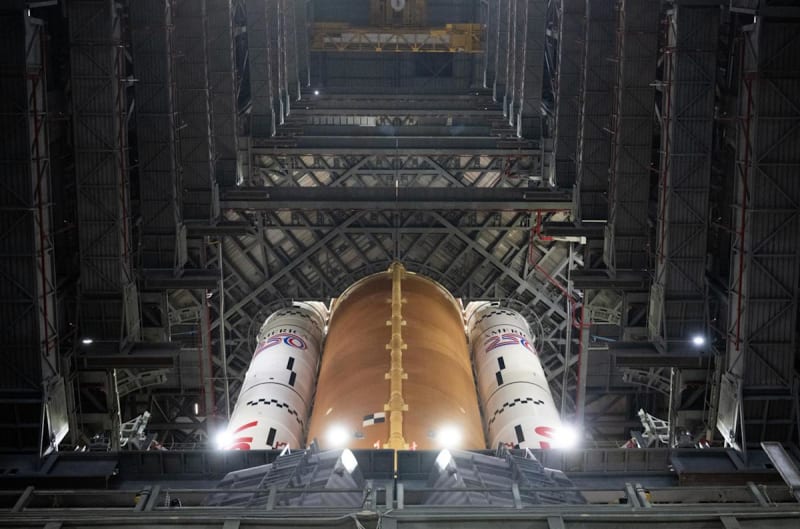
Right now, teams at Kennedy Space Center are making final preparations to roll out the massive Space Launch System rocket and Orion spacecraft to Launch Pad 39B. The four-mile journey from the assembly building to the launch pad will take up to 12 hours, a slow and careful procession for one of the most powerful rockets ever built. NASA is targeting January 17 for the rollout, weather permitting.
This isn't just a symbolic return to the moon. The four crew members will be testing Orion's critical life support systems to prove they can sustain human passengers on future longer missions. After orbiting Earth twice, they'll travel an incredible 4,700 miles beyond the far side of the moon, venturing farther from our planet than any humans have gone before.
The Ripple Effect
This mission represents far more than a single flight. Artemis 2 is paving the way for Artemis 3, which will land the first woman and first person of color on the lunar surface. Beyond that, the program aims to establish a sustainable human presence on and around the moon, creating a stepping stone for eventual missions to Mars.
The technologies being tested on this flight will benefit life on Earth too. Innovations in life support systems, radiation protection, and spacecraft design have already led to advances in medical equipment, water purification, and materials science. Every moon mission creates a ripple of innovation that touches countless lives.
Before launch day arrives, NASA will conduct a wet dress rehearsal at the end of January. Engineers will load cryogenic propellants into the rocket and run through a complete launch countdown, ensuring every system is ready for the real thing. It's the final major test before four humans climb aboard for the journey of a lifetime.
The Artemis program takes its name from the Greek goddess of the moon and twin sister of Apollo. Just as the Apollo missions inspired generations of scientists, engineers, and dreamers, Artemis is already capturing imaginations worldwide. Schools are incorporating the mission into curricula, and young people everywhere are seeing themselves in the diverse crew preparing for this historic flight.
After five decades of robotic missions and orbital flights, we're returning to deep space exploration with human eyes, hearts, and hands. The countdown has begun, and the future of space exploration is closer than ever.
More Images

Based on reporting by Engadget
This story was written by BrightWire based on verified news reports.
Spread the positivity! 🌟
Share this good news with someone who needs it


