NASA Safely Returns 4 Astronauts in First Medical Evacuation
In a historic first, NASA brought four astronauts home from the International Space Station more than a month early after a crew member developed health concerns. The precautionary evacuation ended successfully with a nighttime Pacific Ocean splashdown near San Diego.
NASA made space history Thursday, but not the kind anyone expected when they proved that getting astronauts home safely matters more than sticking to a schedule.
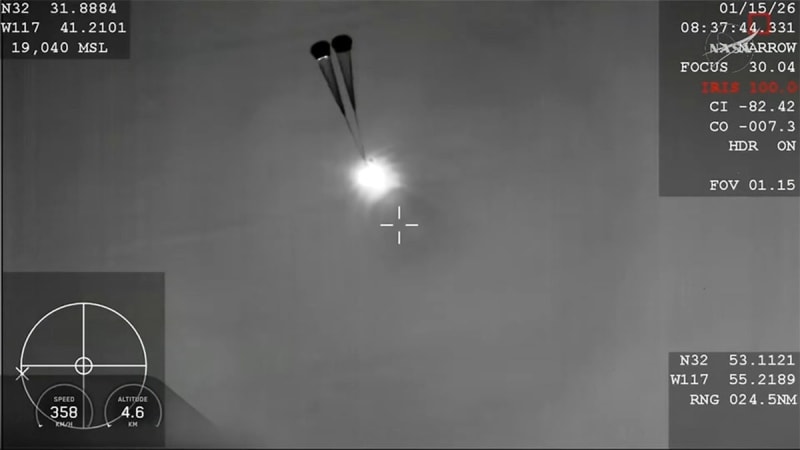
Four crew members splashed down in the Pacific Ocean off San Diego less than 11 hours after leaving the International Space Station, cutting their mission short by over a month. One astronaut had reported health issues on January 7, prompting NASA to make a call no mission control team had ever made before.
The SpaceX Dragon capsule glided to a smooth nighttime landing, with the affected astronaut remaining stable throughout. NASA emphasized this was precautionary, not an emergency, choosing early return to allow proper medical testing that simply can't be done in orbit.
"Splashdown of Dragon confirmed," SpaceX announced, welcoming home the international crew. Standard medical teams met them during recovery, using normal procedures without any special emergency protocols.
The decision left just three astronauts aboard the station temporarily, limiting some operations including spacewalks and emergency repairs. But NASA confirmed this smaller crew configuration is manageable until the next team arrives.
The Bright Side
This evacuation actually showcases how far space medicine and mission flexibility have come. NASA and SpaceX worked together to execute a complex early return that would have been nearly impossible during earlier space program eras.
The agency is already working to move up the next crew launch from mid-February, demonstrating the rapid response capabilities that keep astronauts safer than ever. While Russian space programs made similar medical decisions decades ago, this marks the first time the United States has prioritized astronaut health over mission timelines in this way.
The fact that this ended successfully, with the crew safely home and the station still operational, proves that space agencies can respond to medical concerns with the same care and caution used on Earth.
NASA's willingness to adapt on the fly shows that human spaceflight has matured into an endeavor where safety protocols work, international cooperation functions smoothly, and bringing people home healthy always comes first.
More Images



Based on reporting by Fox News Latest Headlines (all sections)
This story was written by BrightWire based on verified news reports.
Spread the positivity! 🌟
Share this good news with someone who needs it

%2Ffile%2Fattachments%2F2986%2F13646506_477354.jpg)