Nature's Genius: Grasshopper Wings Unlock Future of Energy-Efficient Flight
Scientists are making exciting breakthroughs in sustainable flight technology by studying the remarkable gliding abilities of grasshoppers. This beautiful collaboration between biologists and engineers shows how nature continues to inspire innovations that could transform robotics and aviation for a greener future.
In a delightful example of nature-inspired innovation, researchers from Princeton University and the University of Illinois Urbana-Champaign have uncovered the secrets behind grasshoppers' extraordinary gliding abilities—and the discoveries could revolutionize energy-efficient flight technology.
The project began with an endearingly hands-on approach: scientists chasing grasshoppers across a sunny parking lot. What started as an adventurous field study evolved into groundbreaking research that bridges the natural world with cutting-edge engineering.
Professor Marianne Alleyne, an entomologist at the University of Illinois, explains the fascination: grasshoppers possess an amazing ability to glide long distances while expending minimal energy. The American grasshopper's hindwings, which are large and membranous, act as natural gliders that fold neatly when not in use—a perfect example of nature's elegant engineering.
"Gliding is a mode of cheap flight," says Aimy Wissa, professor of mechanical and aerospace engineering at Princeton. "When we want to conserve energy, we fully deploy the wings and glide." This simple principle could have enormous implications for creating more sustainable flying robots and aircraft.
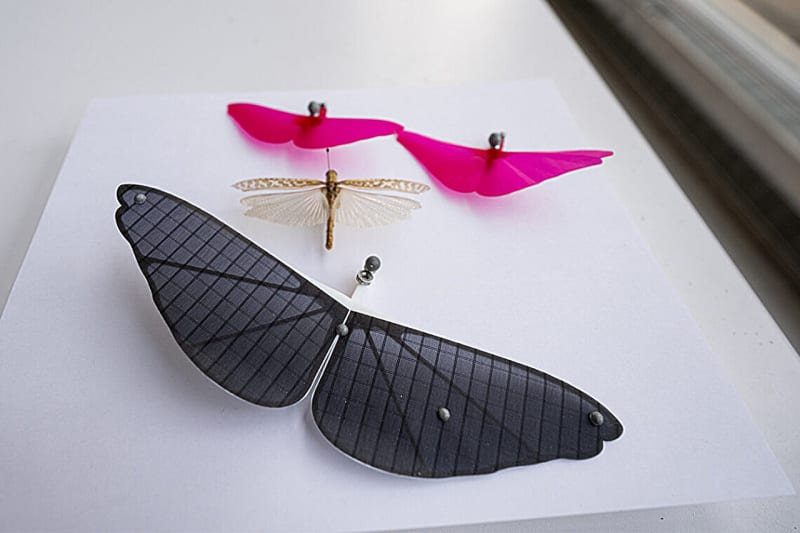
The collaborative team discovered something fascinating: when grasshoppers spread their wings to glide, the wings aren't flat—they're beautifully corrugated, like tiny rippled sculptures. This observation sparked an important question: Is this corrugation beneficial, or simply a neutral byproduct of wing-folding capability?
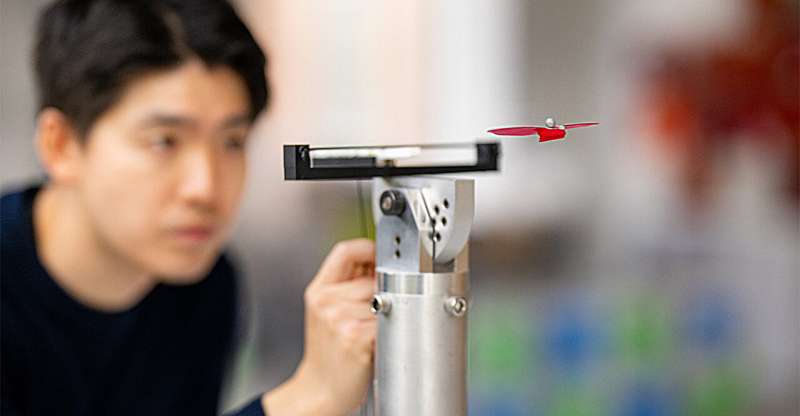
To find answers, the researchers employed impressive technology, using CT scans to capture every detail of grasshopper wing geometry. They then 3D-printed model wings and tested various designs in water chambers and by launching gliders across the Princeton Robotics Laboratory. The hands-on experimentation represents the best of scientific curiosity in action.
The findings revealed something unexpected and valuable. While corrugation does help with lift, smooth wings actually performed best for gliding. This discovery opens exciting new avenues for research, as scientists now aim to incorporate corrugations that enable practical wing folding while maintaining maximum gliding efficiency.
What makes this research truly heartwarming is the spirit of collaboration it represents. Engineers and biologists worked side-by-side, each bringing unique perspectives to solve complex problems. Professor Alleyne notes that while her laboratory often collaborates with engineers for biology-inspired design, the partnership works beautifully in both directions—engineers' tools can help answer fundamental biological questions too.
The implications extend far beyond academic curiosity. Energy-efficient gliding robots could revolutionize environmental monitoring, search and rescue operations, and package delivery—all while consuming far less energy than current technologies. As the world seeks more sustainable solutions, looking to nature's time-tested designs offers tremendous promise.
This research, published in the prestigious Journal of the Royal Society Interface, reminds us that some of our best innovations come from observing and learning from the natural world. Grasshoppers have been perfecting their flight for millions of years, and now their wisdom is helping us build a more efficient, sustainable future.
The journey from chasing grasshoppers in a parking lot to designing next-generation gliding robots showcases the joy of scientific discovery and the endless inspiration nature provides when we take time to observe its wonders.
More Images

Based on reporting by Phys.org - Technology
This story was written by BrightWire based on verified news reports.
Spread the positivity! 🌟
Share this good news with someone who needs it
More Good News
 🚀 Innovation
Vegas Robot Fighting League Shows Amazing Future of Human-Tech Teamwork
%2Ftpg%252Fsources%252F6420f08b-cf5c-4cfd-b9ea-63ccd60937d2.jpeg) 🚀 Innovation
🚀 InnovationKorean Tech Giants Unveil Life-Changing AI & Battery Breakthroughs at CES 2026
 🚀 Innovation
Scientists Create Revolutionary Color-Changing Skin Inspired by Ocean's Master of Disguise
Joke of the Day
Why did the calendar go on vacation?
Explore Categories
Quote of the Day
"A friend is someone who knows all about you and still loves you."
— Elbert Hubbard