New Inhaled mRNA Vaccine Could Replace Needles
Scientists in Germany created tiny particles that deliver mRNA vaccines through breathing instead of shots. The breakthrough could make future vaccines needle-free and more effective at preventing respiratory infections.
Getting your next vaccine might be as simple as taking a breath.
Researchers at Ludwig Maximilian University of Munich have developed a new way to deliver mRNA vaccines directly into the lungs through inhalation. No needles required.
Professor Olivia Merkel and her team spent years solving a tricky problem. mRNA molecules are fragile and lungs are protected by thick mucus that blocks foreign particles. The challenge was creating a delivery system that could slip past these defenses while keeping the genetic material safe.
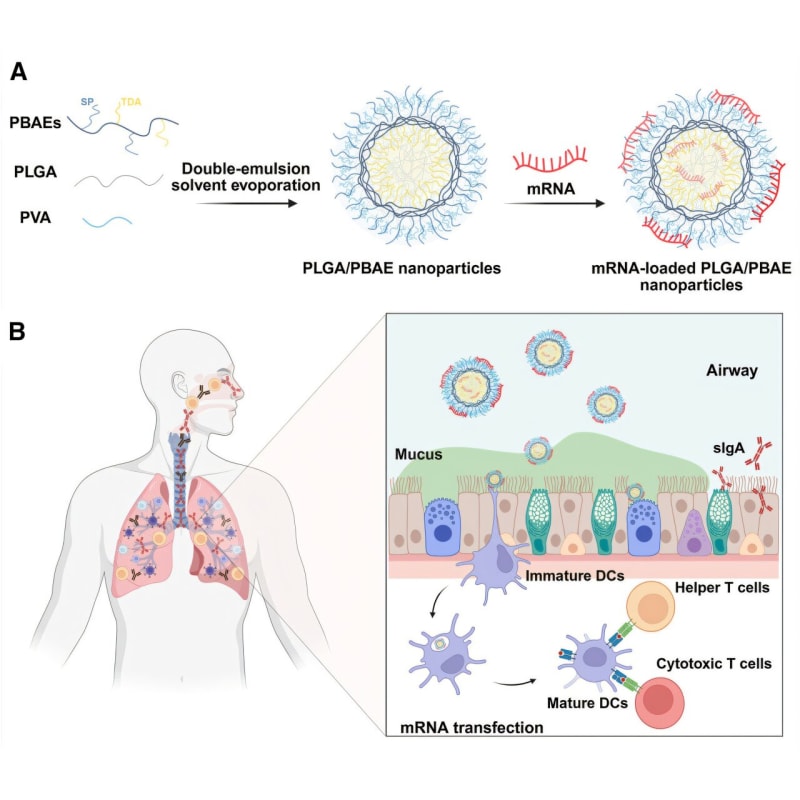
Their solution combines two types of biodegradable polymers into hybrid nanoparticles smaller than a speck of dust. These tiny carriers successfully navigate through lung mucus and deliver their mRNA payload directly to immune cells. Once inside, the cells read the mRNA instructions and trigger a protective immune response.
The team tested their system on human lung tissue samples and found something remarkable. Their nanoparticles worked better than the lipid nanoparticles currently used in approved COVID vaccines, especially after being converted into an inhalable mist.
The Ripple Effect
This discovery could transform how we prevent respiratory diseases like flu, COVID, and RSV. Inhaled vaccines would create immune protection right where airborne viruses enter the body, potentially stopping infections before they start.
The needle-free delivery method could also help millions of people with needle phobia get vaccinated. Studies show up to 25% of adults avoid vaccines partly due to fear of injections.
Beyond convenience, mucosal vaccines delivered through breathing could provide stronger, longer-lasting protection against respiratory infections than traditional shots. They activate specialized immune cells in the lungs that injectable vaccines cannot reach effectively.
The polymer system is stable, easy to manufacture, and breaks down naturally in the body. These practical advantages mean the technology could be scaled up for widespread use faster than other experimental delivery methods.
While human trials are still needed, the research team says their platform is ready for the next phase of development. They are already working with partners to test the system in clinical studies.
Future vaccines might come in pocket-sized inhalers instead of syringes.
More Images


Based on reporting by Phys.org
This story was written by BrightWire based on verified news reports.
Spread the positivity! 🌟
Share this good news with someone who needs it


