New Rural Health Fund Offers States $10 Billion, With Strategic Policy Incentives
The federal government launches a $50 billion rural healthcare fund with innovative policy incentives. States can receive up to $200 million annually by aligning with specific health initiatives.
In a groundbreaking initiative aimed at transforming rural healthcare, the federal government will distribute $10 billion to states in 2026 through a strategic funding program that challenges traditional healthcare approaches.
The Rural Health Transformation Program, part of the administration's 'One Big Beautiful Bill', represents a significant investment in rural medical infrastructure, with an ambitious five-year plan totaling $50 billion. Every state applied for funding, but the distribution won't be uniform, with officials implementing a nuanced allocation strategy that considers population health, medical facility economics, and state-level policy alignment.
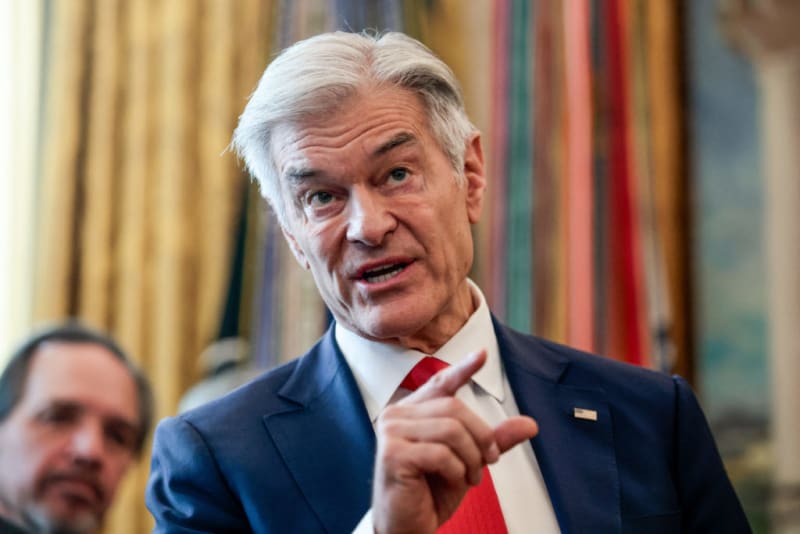
Under the program's innovative framework, half of the funding will be equally distributed across all states, while the remaining funds will be allocated using a complex formula developed by the Centers for Medicare and Medicaid Services. Dr. Mehmet Oz, the agency's administrator, emphasized the program's design to encourage state-level creativity and policy innovation, stating, 'This fund was crafted to push states to be creative.'
A critical aspect of the funding model ties $12 billion to states' implementation of specific health policies from the 'Make America Healthy Again' initiative. These policies include mandatory nutrition education for healthcare providers, school participation in Presidential Fitness Tests, and potential restrictions on SNAP benefit usage for certain food items. Several Republican-led states, including Arkansas, Iowa, and Texas, have already adopted similar nutritional guidelines.
The funding mechanism includes a unique annual recalculation process that allows the administration to potentially 'claw back' funds if states do not meet promised policy objectives. Dr. Oz emphasized that these adjustments are not punitive but rather provide governors a strategic tool for policy implementation. 'I've already heard governors express that this is not a threat, but an empowering element,' he explained.
While some state leaders, particularly in Democratic-controlled regions, have expressed hesitation about adopting certain policy restrictions, the program represents a significant potential investment in rural healthcare. Representative Don Bacon of Nebraska characterized the fund as a critical lifeline, noting, 'This money is meant to keep hospitals afloat.'
However, healthcare experts caution that the $50 billion fund may not fully offset the substantial federal budget cuts projected over the next decade, which could total approximately $1.2 trillion, primarily impacting Medicaid. The National Rural Health Association's Chief Policy Officer, Carrie Cochran-McClain, highlighted the complex political dynamics surrounding the funding strategy.
As states navigate this new healthcare funding landscape, the Rural Health Transformation Program stands as a bold experiment in incentivizing policy innovation while addressing critical rural healthcare challenges. With an average state award projected at $200 million, the initiative represents a significant potential turning point in rural medical infrastructure and health policy development.
Based on reporting by PBS NewsHour
This story was written by BrightWire based on verified news reports.
More Good News



Start Your Day With Good News
Join 50,000+ readers who wake up to stories that inspire. Delivered fresh every morning.
No spam, ever. Unsubscribe anytime.