Norway's Flying Kite Technology Shows Exciting Future for Clean Energy Innovation
A groundbreaking 600 kW flying kite prototype successfully tested in Norway demonstrated the exciting potential to power 300 homes with renewable energy. Though the project paused, it inspired a new generation of airborne wind technology innovations worldwide, proving that creative solutions for clean energy are taking flight.
Imagine looking up at the Norwegian sky and seeing the future of renewable energy soaring overhead—a massive flying kite gracefully harnessing the wind to power hundreds of homes. This isn't science fiction; it's the remarkable reality that was tested off Norway's coast, and it's inspiring innovators around the globe.
The story begins with a group of adventurous kitesurfers in Alameda, California, who founded Makani in 2006. These visionaries saw potential where others saw recreation, imagining how kite technology could revolutionize clean energy production. Their dream caught the attention of tech giant Google, which acquired the company in 2013, providing resources to turn this ambitious concept into reality.
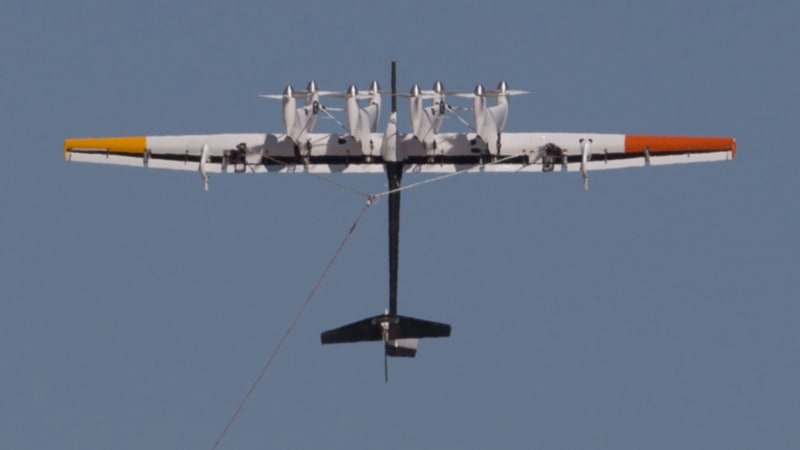
After years of dedicated research and development, Makani created the M600—a stunning carbon-fiber energy kite that represented a leap forward in wind technology. The Norwegian testing phase proved the concept worked beautifully in real-world conditions. The prototype generated an impressive 600 kilowatts of clean electricity, enough to power approximately 300 homes with renewable energy.
What makes this technology so exciting is its elegant efficiency. The M600 used ninety percent less material than traditional wind turbines while producing fifty percent more energy at significantly lower costs. The lightweight carbon-fiber design allowed the kite to operate at heights between 80 and 350 meters, where winds blow stronger and more consistently than at ground level.
The system worked through an ingenious combination of hardware and smart software. Turbines attached to the kite generated power as it flew in large circles, connected to a ground station by a tether that transmitted electricity to the grid. A sophisticated computer system controlled all operations, launching the kite when conditions were optimal and safely returning it to base when needed.
Beyond its technical achievements, this flying kite technology addressed important environmental and social concerns that traditional wind turbines sometimes create. The compact, portable design meant less disruption to landscapes, wildlife habitats, and local communities. For Norway specifically, this offered a promising way to expand renewable energy while respecting Indigenous Sami communities' lands and reindeer herding traditions.
Although Alphabet decided to close the Makani project in 2020, the innovation didn't disappear—it evolved. The pioneering work inspired other companies to pursue airborne wind technology. Dutch company Kitepower, for example, has developed a portable flying kite system producing 30 kilowatts at impressive altitudes. The concept continues attracting interest as the world seeks diverse, creative solutions for clean energy production.
The Makani story reminds us that the path to sustainable energy isn't always linear. Sometimes breakthrough ideas need time to mature, inspire others, and find the right moment for widespread adoption. As artificial intelligence and other technologies increase our energy demands, innovative concepts like flying wind kites may yet have their day in the sun—or rather, the wind.
The legacy of those California kitesurfers and Norwegian test flights lives on, proving that thinking differently about renewable energy can lead to extraordinary possibilities. The future of clean power might just be looking up.
More Images



Based on reporting by Google News - Wind Energy
This story was written by BrightWire based on verified news reports.
Spread the positivity! 🌟
Share this good news with someone who needs it
More Good News
 🚀 Innovation
Four Sisters Build Europe's First Electric Tractor, Win National Energy Award
 🚀 Innovation
California's New Solar Bill Could Save Renters $450/Year on Power Bills
 🚀 Innovation
Breakthrough Battery Technology Promises Safer, Longer-Lasting Energy Storage
Joke of the Day
Why did the dog apply for a job at the bank?
Explore Categories
Quote of the Day
"The greatest thing you'll ever learn is just to love and be loved in return."
— Moulin Rouge (from the film, popularized by Ewan McGregor)