
Oregon's Sunriver Observatory Offers Largest US Telescope Set
Stargazers in Oregon's high desert can peer through the nation's largest collection of public telescopes at a NASA-designated Dark Sky Place. The Sunriver Observatory opens its doors multiple nights weekly, offering everyone from first-timers to space enthusiasts stunning views of nebulas, planets, and meteor showers.
Imagine standing under a moonless sky so dark that meteors streak overhead every few minutes while you gaze through powerful telescopes at the swirling colors of distant nebulas.
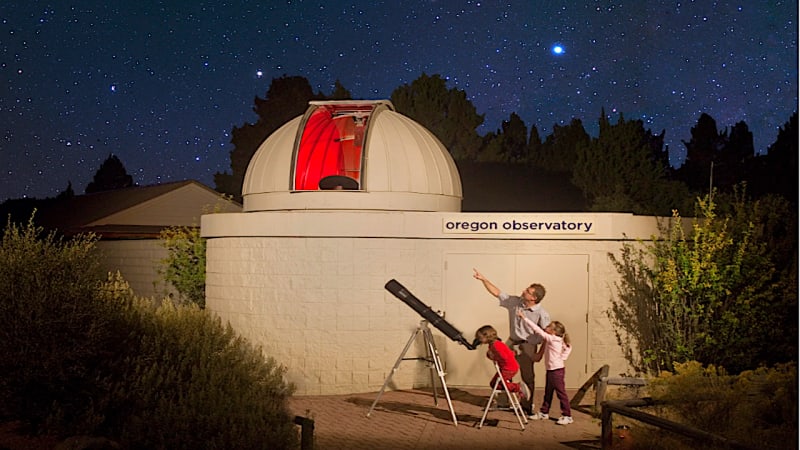
That's exactly what happens several nights each week at Oregon's Sunriver Observatory, perched in the high desert near Sunriver Lodge and Resort. The private nonprofit hosts public stargazing sessions that attract dozens of visitors bundled up against the cold to witness cosmic wonders most people only see in textbooks.
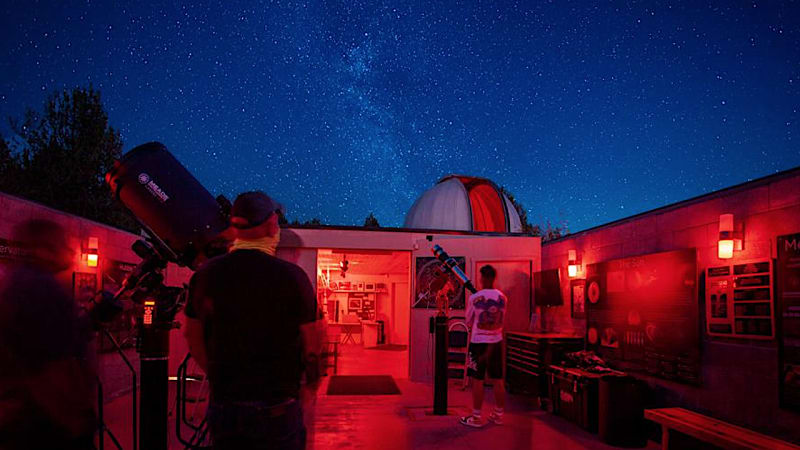
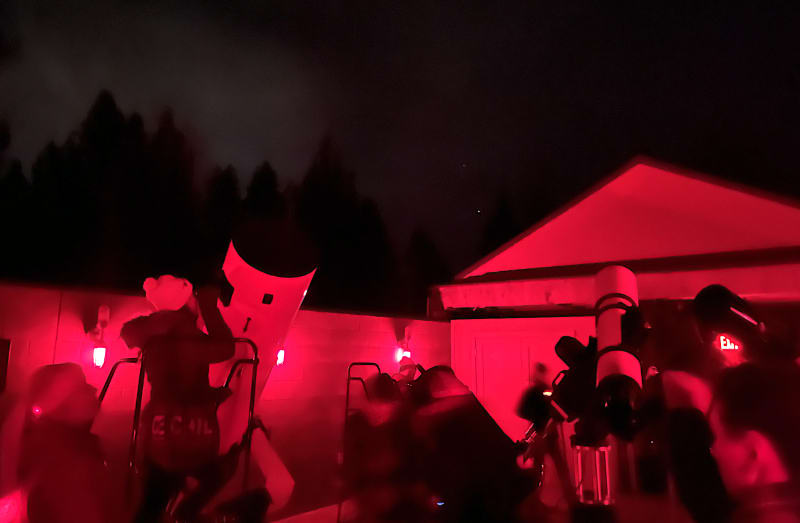
Observatory Assistant Manager Alex Yeager recently guided a group of nearly 50 people through an evening of celestial exploration during the peak of the Geminid Meteor Shower. Armed with red-lit glow strips to preserve their night vision, visitors shuffled between telescopes already focused on Saturn's rings, the Orion Nebula, and the neighboring Andromeda galaxy.
The facility claims the largest collection of publicly available telescopes in the United States. NASA designated it as an International Dark Sky Place in 2020, recognizing the exceptional viewing conditions in Central Oregon's high desert.
Built in 1991 by Larry Pratt, the observatory features a main 20-inch aperture Ritchey-Chretien telescope housed in a domed building flanked by two side wings with rollback roofs. A half-dozen large white telescopes in each viewing area come complete with stepladders so everyone can reach the eyepieces, already zeroed in on planets and distant galaxies.
The Bright Side: First-time visitors might fumble in the crimson-lit darkness, accidentally peering into the wrong end of a telescope. But friendly student volunteers wearing illuminated name tags gently correct course, ensuring no one misses the chance to see a planetary nebula or supernova remnant. The staff recently upgraded their solar telescope with a new Lunt Calcium K module, letting daytime visitors observe different layers of the sun's surface in far greater detail.
Winter proves ideal for stargazing in the high desert. The cold, crisp air creates crystal-clear viewing conditions, and planets like Saturn and Jupiter rise high in the sky during evening programs. Visitors on that perfect December night witnessed the Ring Nebula, the Witch's Broom portion of the Veil Nebula, and more than a dozen shooting stars painting bright trails across the darkness.
Under those vast, star-filled skies, space feels a little closer and the universe a little more inviting.
More Images

Based on reporting by Space.com
This story was written by BrightWire based on verified news reports.
Spread the positivity! 🌟
Share this good news with someone who needs it


