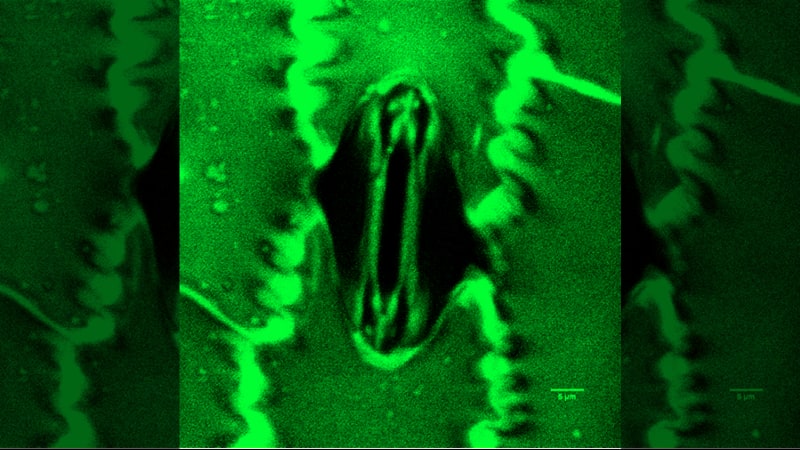
Palm-Sized Tool Watches Plant Breathing in Real Time
Scientists created a device that watches thousands of tiny plant pores breathe at once, helping engineers grow crops that need less water. The breakthrough could make food systems more resilient as the climate changes.
A team of scientists can now watch plants breathe, and it's already helping create crops that survive droughts with less water.
Researchers at the University of Illinois developed a palm-sized tool called Stomata In-Sight that observes thousands of microscopic pores on plant leaves in real time. These tiny openings, called stomata, control how much carbon dioxide plants take in and how much oxygen and water vapor they release.
"It's very important for us to understand stomata better," said plant biologist Andrew Leakey. Our entire food system depends on these microscopic mouths working properly.
The challenge has been connecting what scientists see under microscopes with what's actually happening inside plants. Despite studying stomata for over a century, researchers struggled to match pore size and number with the actual flow of gases and water.
The new tool combines three technologies into one device: a microscope, a gas measurement system, and machine learning image analysis. Small leaf pieces sit in a climate-controlled chamber while the system tracks how thousands of stomata respond to changing temperature, humidity, and other conditions.
Getting it right took five years and three failed prototypes. Even tiny vibrations from a fan could blur the images and ruin the data.
Why This Inspires
The team has already put their invention to work engineering sorghum plants that use less water. They identified the genes controlling stomata density and created plants with more spread-out pores that still function perfectly.
That success matters for farmers and communities facing water shortages. Crops that need less irrigation could thrive in drier conditions, keeping food production steady as climate patterns shift.
The technology is patented, and Leakey hopes companies will manufacture it for other research groups worldwide. He's also working on improvements using robotics and artificial intelligence to speed up the painstaking manual work of tracking individual stomata as they open and close.
Right now, scientists need to manually observe 40 to 50 stomata to account for natural variation, and each stomata can take minutes to respond to new conditions. Automating that process could turn this from a breakthrough into a production line for climate-resilient crops.
Some scientists remain skeptical about whether the combined tool offers enough advantage over existing techniques. But for Leakey and his team, watching plants breathe has already unlocked genetic secrets that could help feed the world with less water.
The tiny pores that keep our crops alive are finally giving up their secrets.
More Images



Based on reporting by Live Science
This story was written by BrightWire based on verified news reports.
Spread the positivity! 🌟
Share this good news with someone who needs it