Pulitzer Winner Percival Everett Rewrites Classic History
Pulitzer Prize-winning author Percival Everett charmed the Jaipur Literature Festival by sharing how he reimagined a classic American novel to center the voice of an enslaved person. His wit and wisdom about rewriting literary history from a new perspective sparked hope for more inclusive storytelling.
A Pulitzer Prize-winning author just showed the world how to honor classic literature while making it better for everyone.
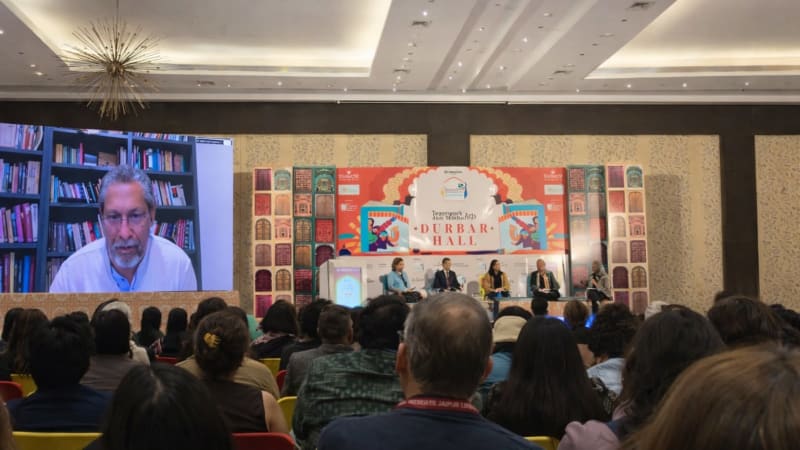
Percival Everett appeared at India's Jaipur Literature Festival this week to discuss his celebrated novel James, which retells Mark Twain's Adventures of Huckleberry Finn from the perspective of the enslaved character Jim. The book won the 2024 Pulitzer Prize for reimagining American literary history through a voice that deserved to be heard.
Everett joined the festival via video link and immediately captivated the audience with his sharp insights. When asked how many times he reread the original novel while writing, his answer was precise: exactly 15 times.
The goal wasn't admiration but artistic distance. "Ten times is probably love," Everett explained, suggesting he needed to move beyond reverence to create something new.
His approach to Twain's legacy was refreshingly honest. While calling Huckleberry Finn "important," Everett didn't hesitate to critique it, flatly stating his dislike for the character Tom Sawyer.
The author also reflected on how oppressed people adapt their language to survive. People who are imprisoned or marginalized "find a way" to speak how their oppressors expect, he explained, a theme central to his retelling of Jim's story.
Why This Inspires
Everett's success shows how literature can evolve to include voices historically left out of the conversation. By centering an enslaved character's perspective, he transformed a canonical American novel into something richer and more complete.
His humble approach to his craft also offered a refreshing take on creativity. "I don't know what any of my books mean," Everett told the crowd with characteristic wit. "I wait for the readers to tell me, and then I take credit for it."
The comment drew knowing laughter but revealed something genuine: great art belongs to everyone who experiences it.
Meanwhile, the festival itself demonstrated the hunger for these conversations. Another panel on particle physics was so packed that speaker Marcus du Sautoy, a renowned mathematician, was initially stopped at the door by staff who didn't recognize him.
Everett's work proves that honoring the past and creating a more inclusive future aren't opposing goals. Stories can be both timeless and ready for transformation, classic and calling out for new voices to complete them.
Based on reporting by Indian Express
This story was written by BrightWire based on verified news reports.
Spread the positivity! 🌟
Share this good news with someone who needs it


